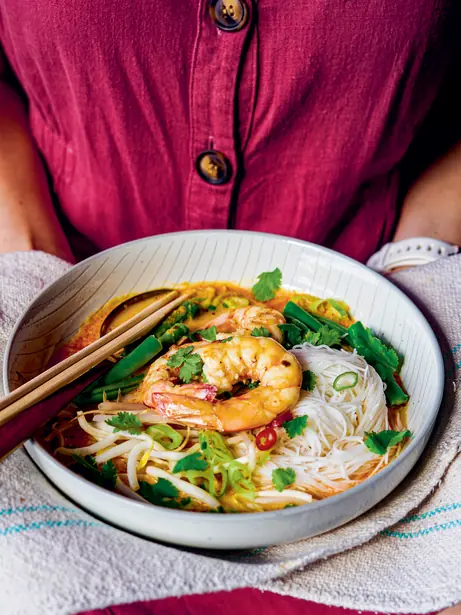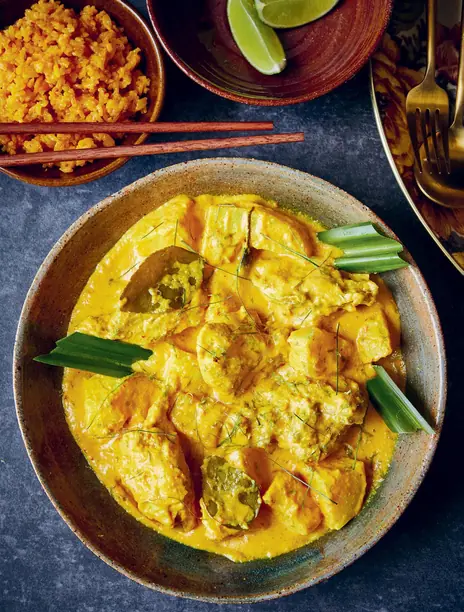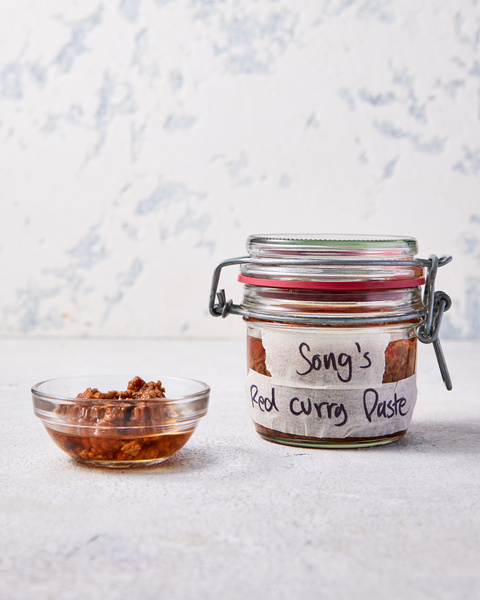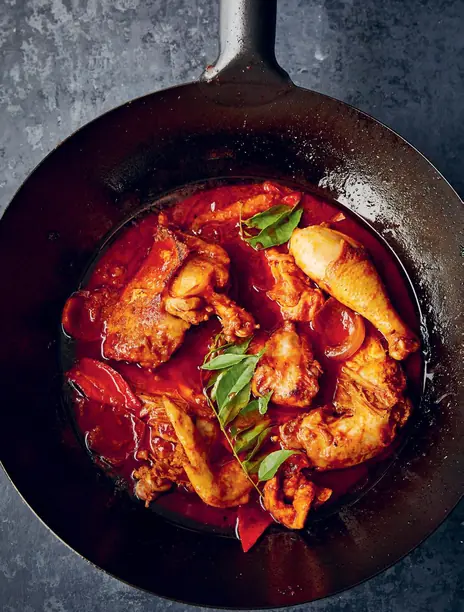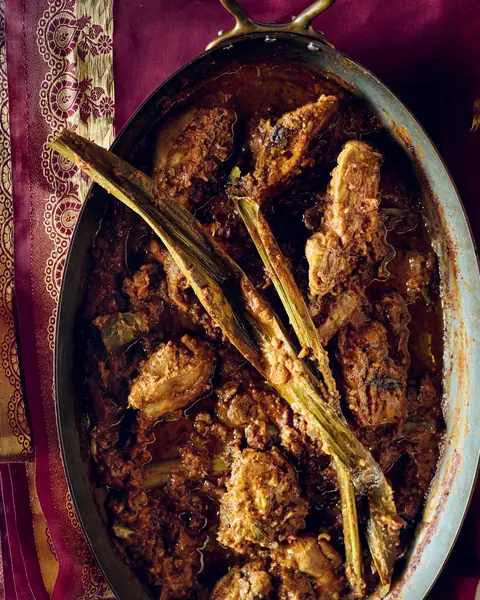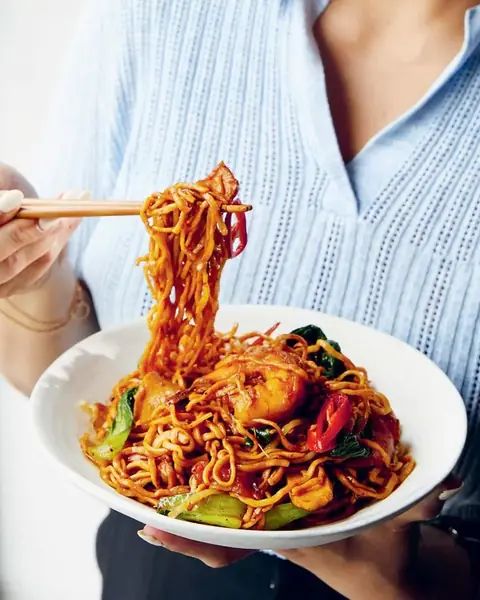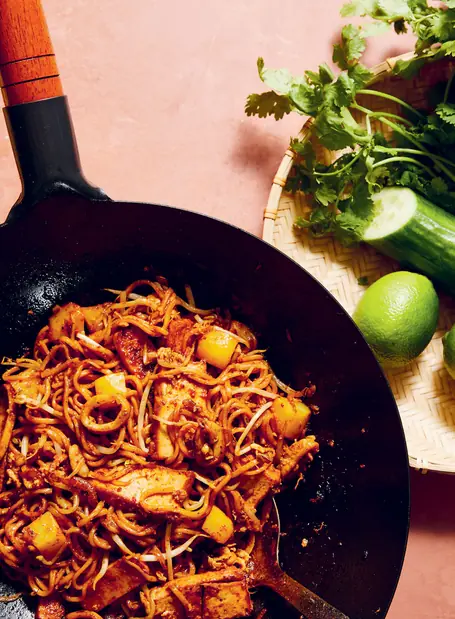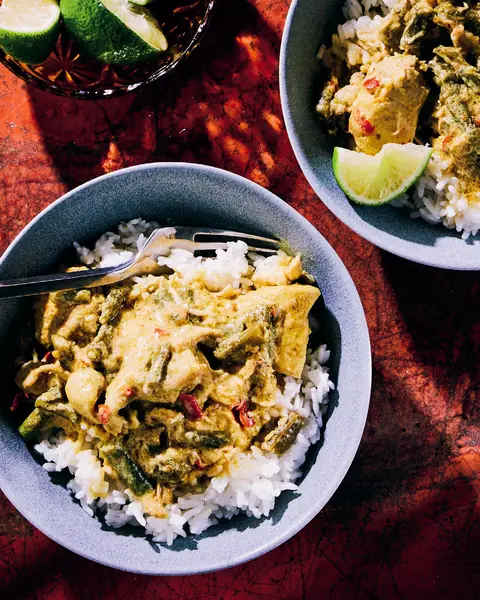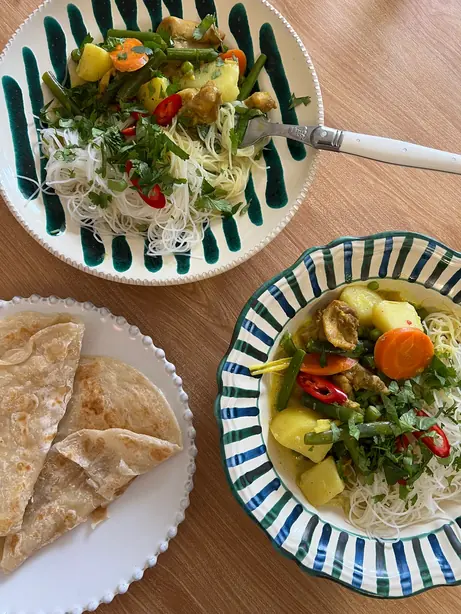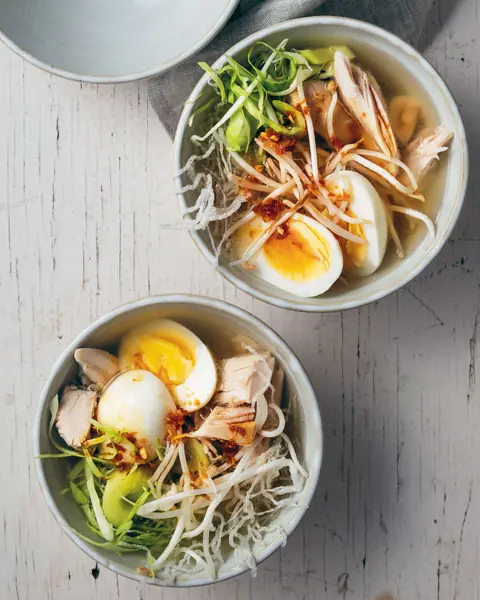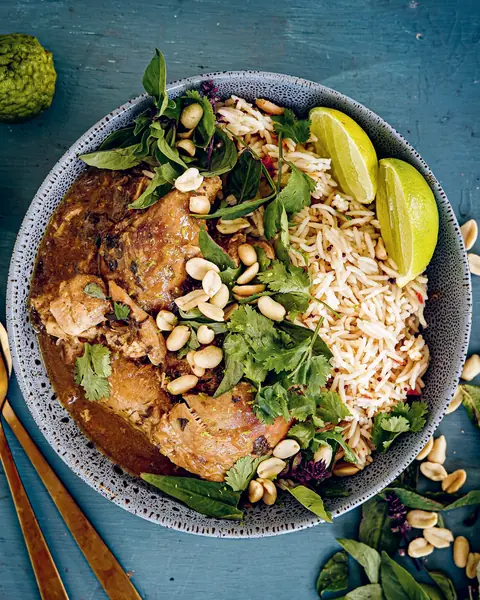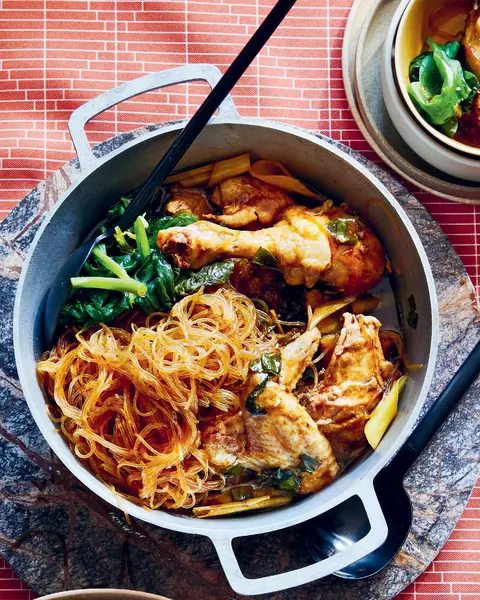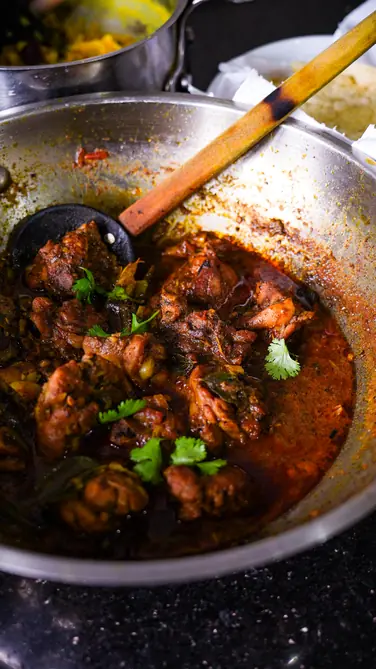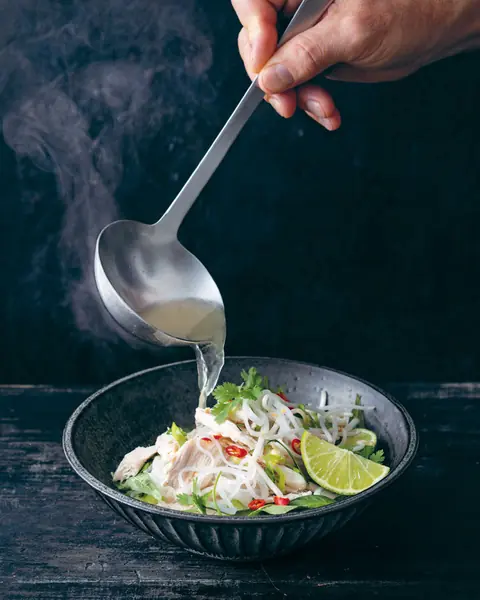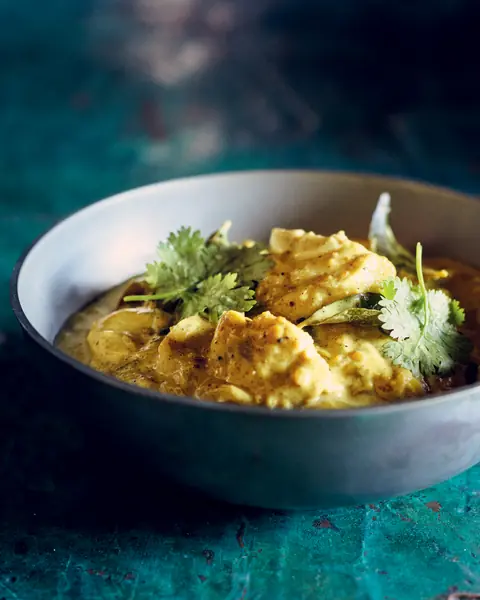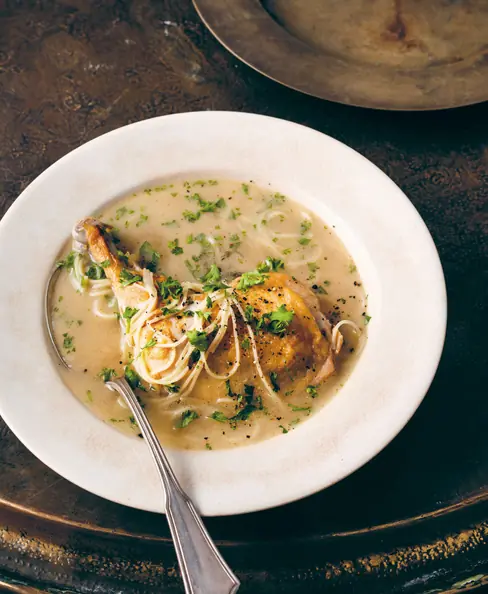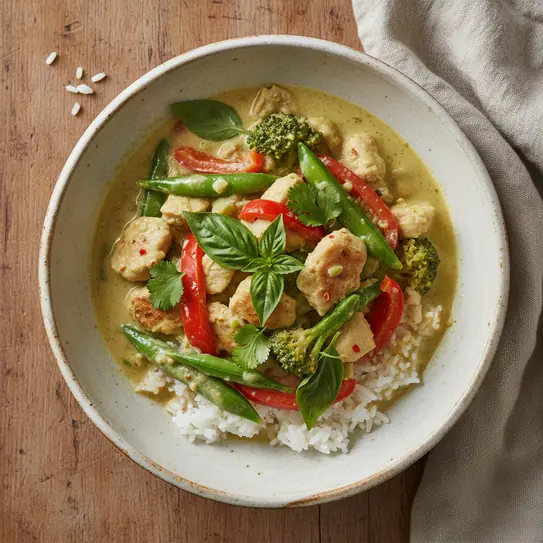
Versions of this fragrant laksa paste (curry) are seen in Malaysia, Singapore, Indonesia and Southern Thailand. It is believed to have originated as a blend of Chinese ingredients and Southeast Asian cooking practices. Chinese wheat noodles can replace rice noodles, and seafood can be used to replace chicken. Laksa paste is a bit labor-intensive to make, and some ingredients may take an extra trip out, but it is worth it. Laksa paste can be made a week ahead, stored airtight in the refrigerator, or can be frozen in ice-cube trays for up to two months.
Ingredients 23
For The Laksa Paste
For The Soup
Your new home
for cooking
Turn your recipe chaos into a plan for the week.
Browse 1000+ inspiring creator recipes
Unlimited recipe import from social media, blogs and more
Generate shopping lists and meal plans in seconds with AI
Method 7
Place the , , , , , , , , , 60 ml of the vegetable oil, and the in a blender and process until very fine. Set aside.
Place the in a bowl and cover with cold water, then place a plate on top of the noodles to keep them fully submerged. Soak for 15 minutes, then strain and set aside.
Heat a large pot over a high heat and add the remaining . Add the curry paste mixture and cook for 45 seconds, stirring and smearing the paste into the oil, until aromatic.
Slowly whisk in the , or stock and , then add the and bring to a simmer.
Cook for 30 minutes, turning the occasionally, until tender and the broth is very flavorful. The meat should separate from the end of the leg bone when cooked and a thermometer will read 74°C (165°F) when inserted into the thickest part of the leg.
Season to taste with fish sauce and salt. Add the and cook for another 1–2 minutes until tender.
Serve garnished with , , , , and sambal oelek.

Jenn Louis's tips
Laksa paste can be made a week ahead, stored airtight in the refrigerator, or frozen in ice-cube trays for up to two months.