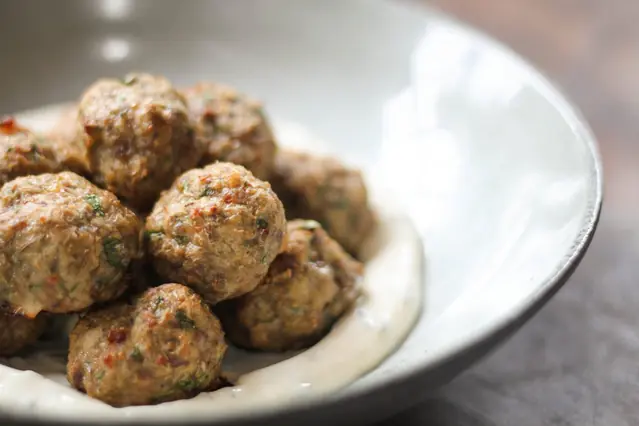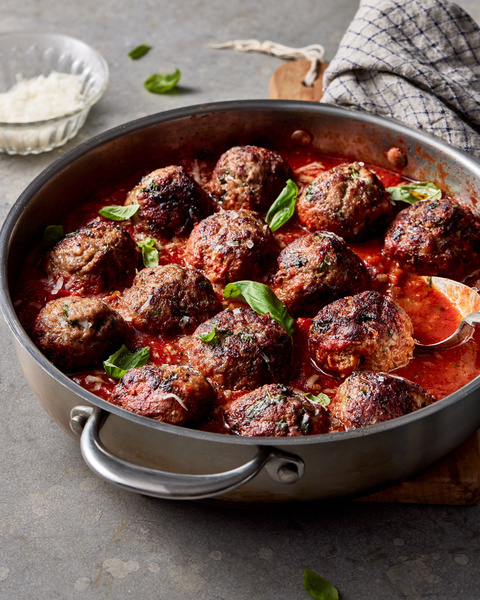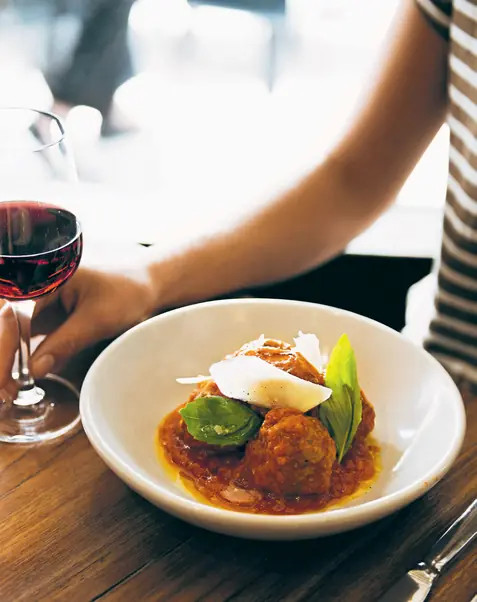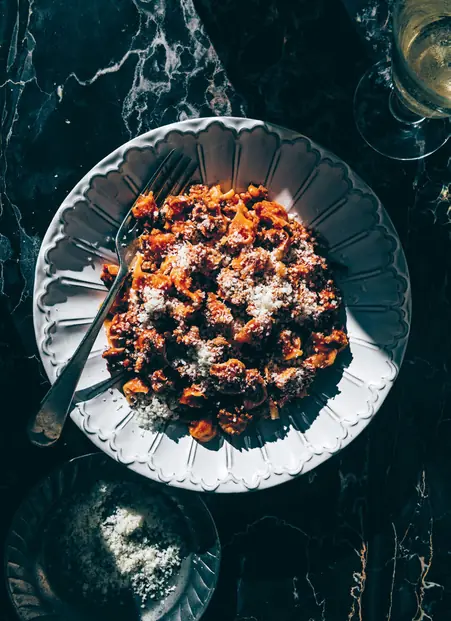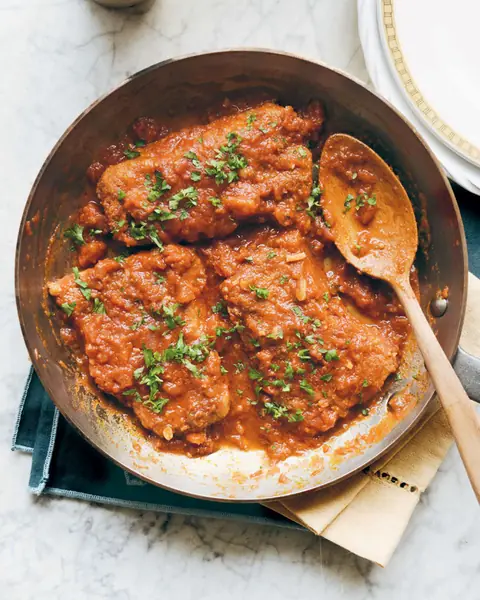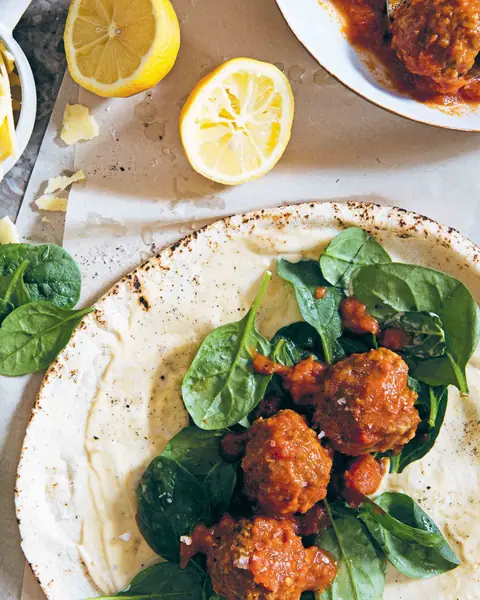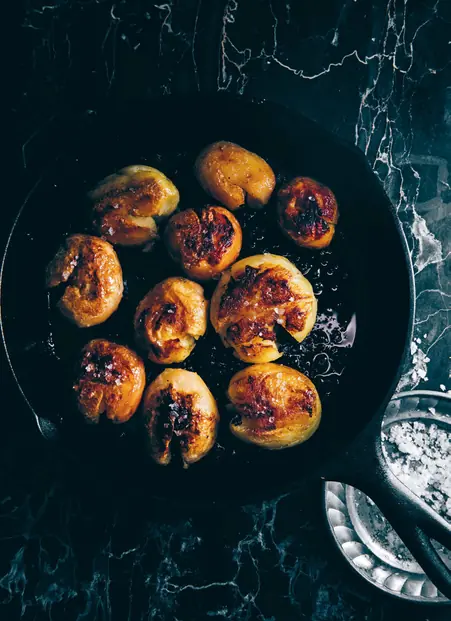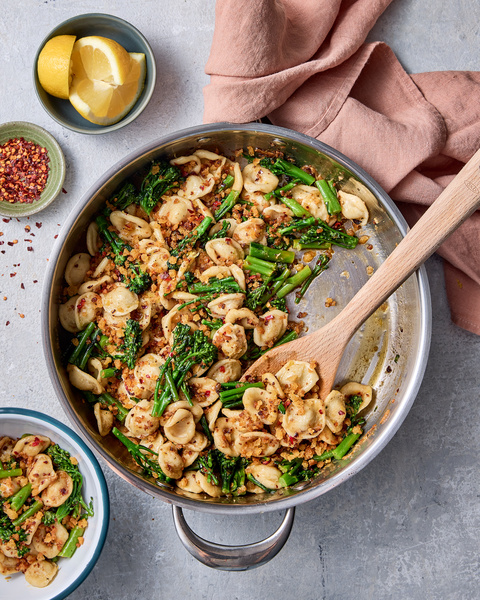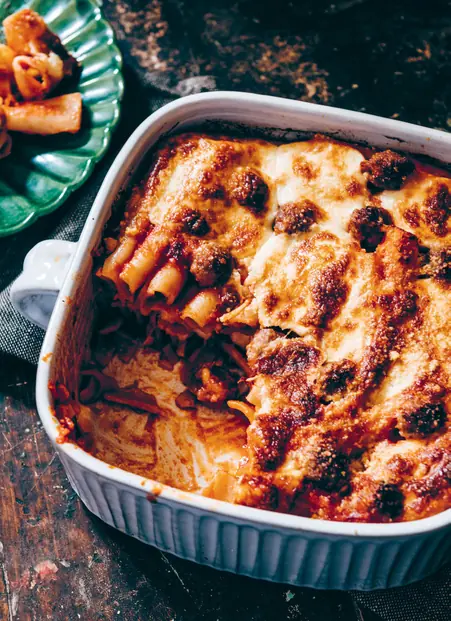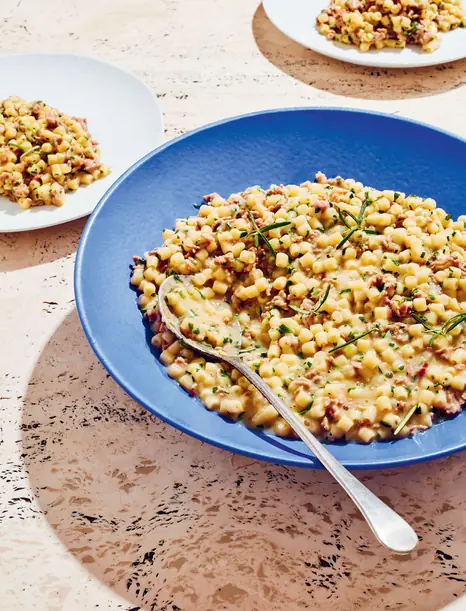
I’ve made a few of my own very slight adjustments to the recipe that was recounted to me by both Angela and her sister-in-law, Franca. My main break from the family tradition is to add breadcrumbs. I ate these very similar polpette in a lovely little restaurant called Macchiaviva in Grottaglie, in the province of Taranto, and I couldn’t help but compare them to Angela’s version. The Macchiaviva polpette, which were served in a tall, terracotta pot, were so tender that they seemed to melt in the mouth. I asked what the secret was and the chef assured me it was the addition of breadcrumbs to the mixture. In fact, in very traditional recipes for these polpette, you will always find breadcrumbs or delicious, spongy, slightly stale, pugliese bread soaked in some milk. Also, if you want to make this with just beef, visit your butcher and choose a cut with quite a bit of fatty marbling (beef ribs, for example, work wonderfully) that they can mince for you. The best part of this recipe is perhaps the sauce, richly flavoured with pancetta and the polpette themselves, which is used to dress pasta to be eaten as the first course. The rest of the polpette are served as the main dish, along with roasted potatoes and a crisp salad. It is, like so many dishes in the Pugliese tradition, a perfect two-course meal.
Ingredients 11
Your new home
for cooking
Turn your recipe chaos into a plan for the week.
Browse 1000+ inspiring creator recipes
Unlimited recipe import from social media, blogs and more
Generate shopping lists and meal plans in seconds with AI
Method 4
Combine the , , , , , , and some freshly ground black pepper in a large bowl. Mix very well – using your hands is best – until you have a firm, well-amalgamated mixture. Shape into balls a little larger than golf balls. Set aside on a plate.
Heat the over a medium–high heat in a deep casserole pot. Sear the polpette in batches, for about 2 minutes each side, until they are lightly browned. (You don’t need to cook them through; just colour them.) Once the meatballs are browned, reduce the heat to low and gently fry the slices and for about 7 minutes, or until the onion is softened and the pancetta melts and begins to crisp slightly.
Return the meatballs to the pot. Add the , along with the water. Season the sauce with and pepper and bring to a simmer over a low–medium heat. Cover and cook for 25 minutes, stirring occasionally. Uncover and cook for a further 15 minutes, or until the sauce has reduced to a rich, thick consistency.
Serve the polpette as is, with plenty of sauce, together with roasted potatoes and a crisp green salad, or set aside the meatballs separately (keeping them warm) and toss your favourite pasta, cooked al dente, through the sauce. Serve this as the first course with some and , then serve the meatballs as the main.