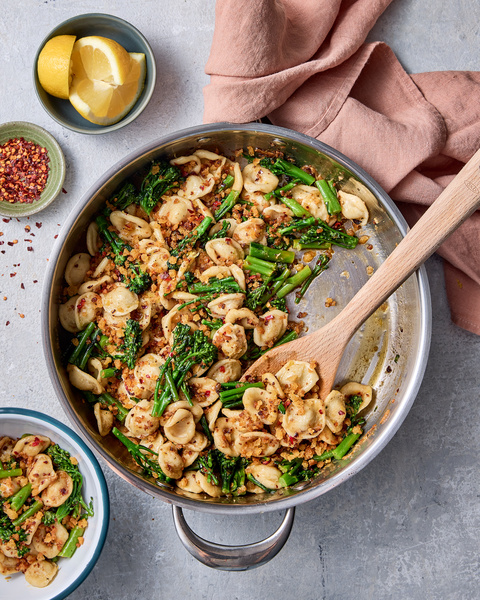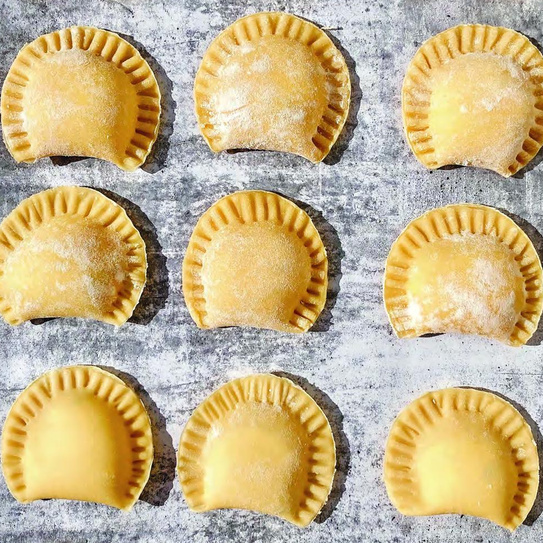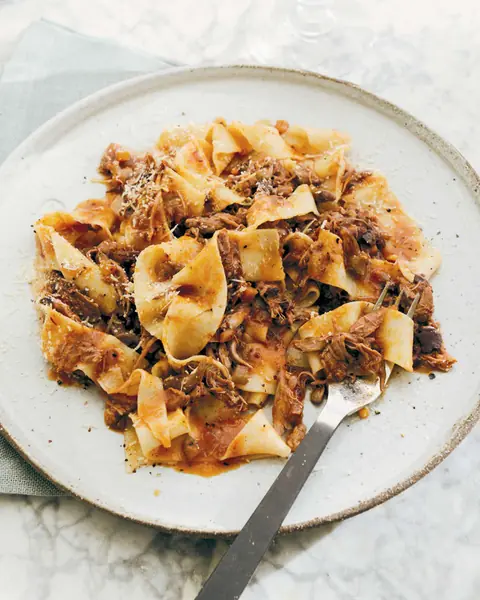
If you don’t have the time to make the pasta by hand, you can of course use dried orecchiette, and if you would like to keep this vegetarian, you can leave out the anchovies. However, if you leave
them out only because you think you or someone you’re serving doesn’t like anchovies, I urge you to try it at least once! And then, if you’re still certain that you don’t like them, pancetta can be used
instead. Make sure you get really good-quality anchovies – the kind that are conserved in salt are better than those in oil. The anchovies lend depth, not to mention a delicious saltiness, that together with the bitter cime di rapa are a match made in heaven.
Ingredients 9
Orecchiette
Sauce
Your new home
for cooking
Turn your recipe chaos into a plan for the week.
Browse 1000+ inspiring creator recipes
Unlimited recipe import from social media, blogs and more
Generate shopping lists and meal plans in seconds with AI
Method 12
To Make The Pasta
Combine the with the until you have a very soft dough. Let it rest for 30 minutes under a slightly damp tea towel (dish towel) and you’ll find it has become even more soft and supple.
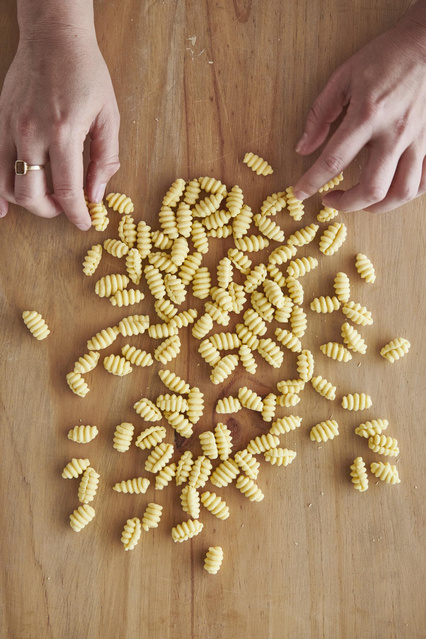
Cut the into four portions and take one piece, keeping the rest covered with a damp tea towel so it doesn’t dry out. Roll the dough into a long snake, no more than 1 cm (1⁄2 in) thick, then, with a small knife (preferably something small and simple such as a butter knife with a rounded, slightly flexible tip), cut the snake on the diagonal into pieces about 1.5 cm (1⁄2 in), maximum 2 cm (3⁄4 in), long. It is easier to make orecchiette with smaller pieces the first time.
Moving diagonally, use the rounded tip of the knife to roll from one corner to the other. Pick up the piece of on the tip of your index finger of your non-dominant hand, then use the second and third finger of your other hand to flip the orecchiette inside out onto the thumb of your non-dominant hand. Continue with the remaining dough until they’re finished.
Place the finished on clean, dry tea towels to dry out. It’s best to let them sit overnight before cooking, or at least for a few hours. If fully dried, they will take 10 minutes to cook; if fresh or partially dried, they will take about 5 minutes.
To Make The Sauce
Bring a large pot of salted water to the boil.
In the meantime, prepare the by washing and draining it, then cutting off the thickest stems, keeping all the leaves, heads and the most tender parts of the stems.
Boil the for about 3 minutes (in batches if necessary), or until it is a deep but still bright green and is slightly wilted. Remove the cime di rapa from the water, reserving the cooking water for the pasta.
Rinse the cooked in cold water to halt the cooking process. Squeeze out any excess water, then chop roughly (any flowering broccoli florets can be sliced in half lengthways or in quarters if large) and squeeze again. This can all be done in advance, if needed.
Bring the pot of cooking to the boil again.
Heat half of the in a frying pan over a low, gentle heat. Add the and and, once the garlic begins to get fragrant but not coloured and the anchovies are sizzling and breaking down (about 3–5 minutes), add the (if using), followed by the cooked .
Add the or pasta cooking water and the rest of the and continue cooking for a further 5 minutes, or until the greens turn deep green and glossy. Taste and season with salt and pepper, if necessary.
In the meantime, cook the until al dente. Drain the pasta, reserving a little of the cooking water, and toss with the until well combined. If you feel it is a little dry, add the rest of the reserved cooking water and an extra drizzle of . Serve with finely grated cheese