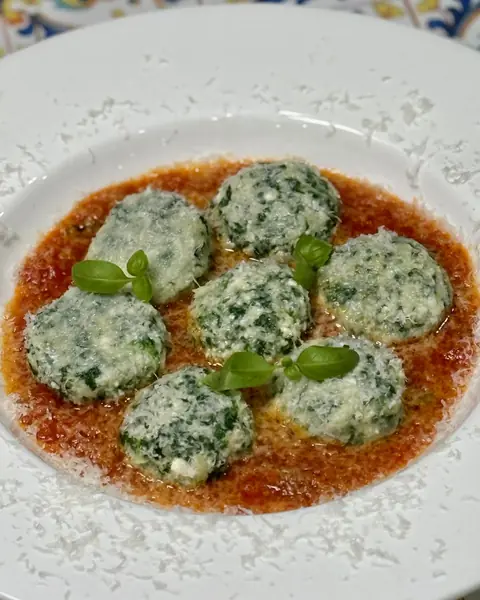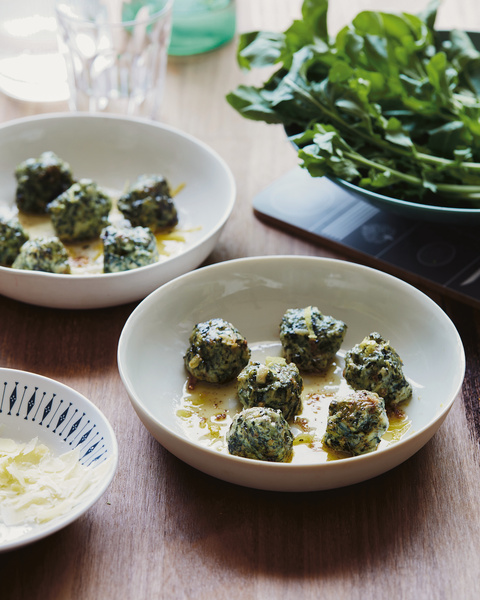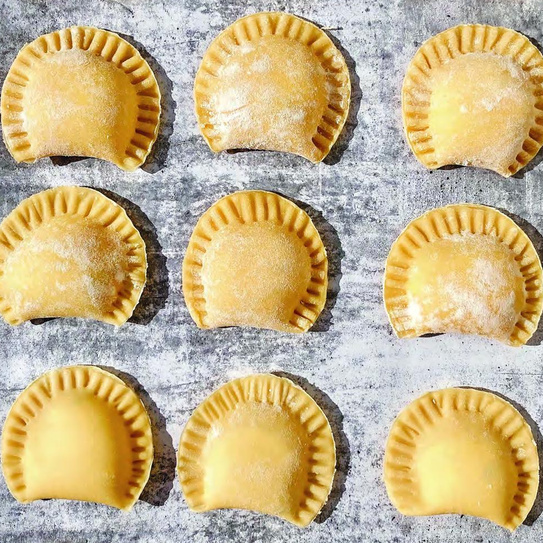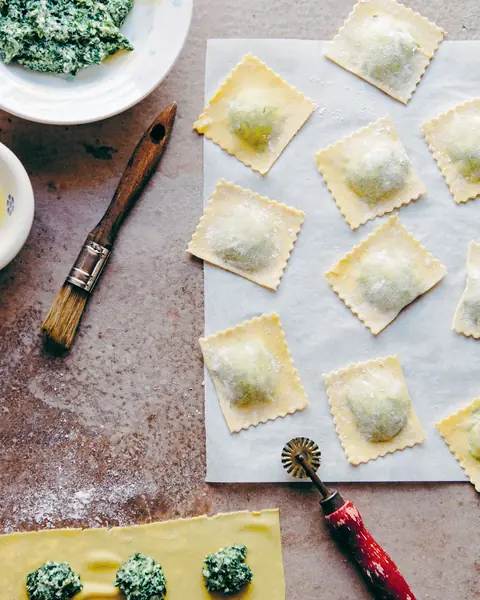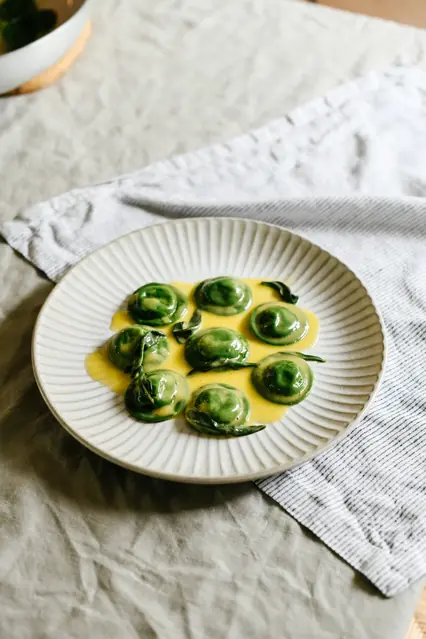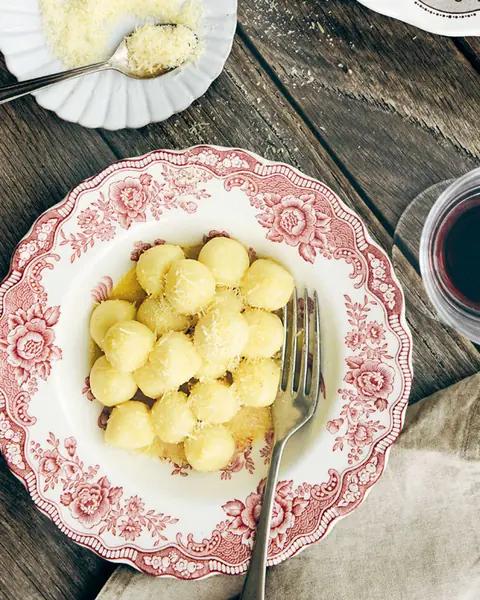
This charmingly named dish means ‘nude’ and refers to the fact that these dumplings are essentially the filling for a popular ravioli dish, minus their pasta coats. They are almost always served in a simple but elegant sauce of sage and sweet, just-melted butter.
The key to these delicate gnudi is to not use flour inside the dumplings, which can often make them heavy and even gummy. Just a dusting of flour on the outside helps keep their shape and ensures a fluffy, light outcome. Prepare these fresh just before you intend to cook them – they do not do well when made ahead of time or frozen.
Makes about 20 gnudi.
Ingredients 10
Your new home
for cooking
Turn your recipe chaos into a plan for the week.
Browse 1000+ inspiring creator recipes
Unlimited recipe import from social media, blogs and more
Generate shopping lists and meal plans in seconds with AI
Method 5
Make the gnudi by mixing the , cooked and until well combined. Add the and . You should have a thick, compact mixture.
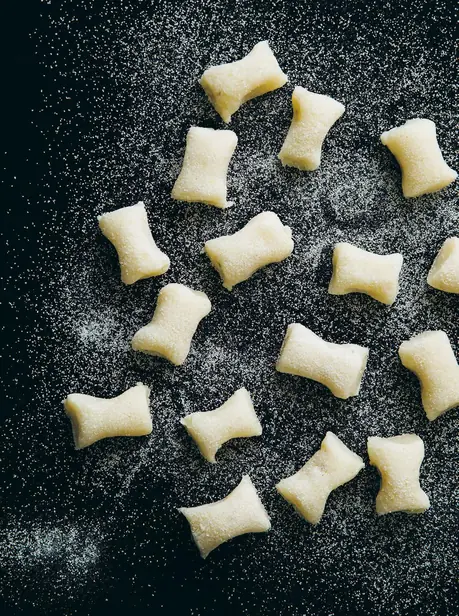
Place the in a bowl. With floured hands, roll walnut-sized spoonfuls of mixture into the flour to coat and then place on a lightly floured plate or board until they are all ready.
Prepare a large pot of simmering, salted water and set over a low heat. Carefully drop the gnudi one by one into the water and cook for about 4-5 minutes or until they begin to float.
In the meantine, prepare the sauce by melting the in a frying pan. Add the and 2–3 spoonfuls of the cooking water and swirl the pan to create a thick sauce. Season with salt and pepper.
When the gnudi are ready, remove them from the water with a slotted spoon and place them in the sauce. Turn the heat to low. Swirl the pan gently to coat the gnudi in the sauce for 1 minute, and serve with .

Emiko Davies's tips
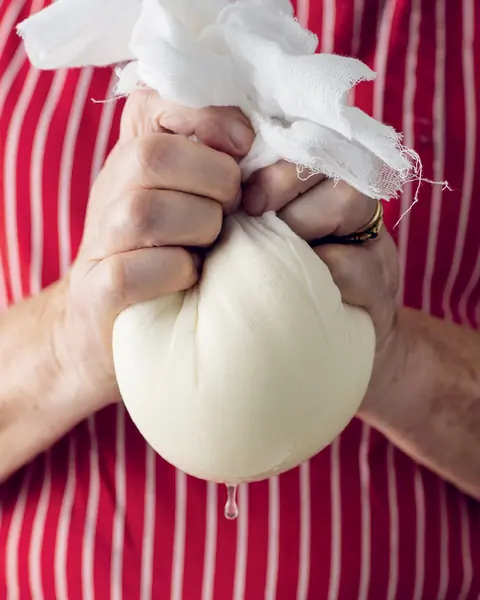
If you can, buy your ricotta from a delicatessen rather than the supermarket and go for the ricotta that is usually sold by weight and is firm enough that it can stand on its own. This type of ricotta, with a slightly crumbly texture is closer to the real thing that you find in Italy. Tubs of ricotta from the supermarket have an entirely different texture smooth, watery, more like thick yoghurt – that will affect the result of this recipe. If your ricotta is watery, leave it to drain for an hour before using in a sieve lined with a dish towel over a bowl. Discard the liquid.