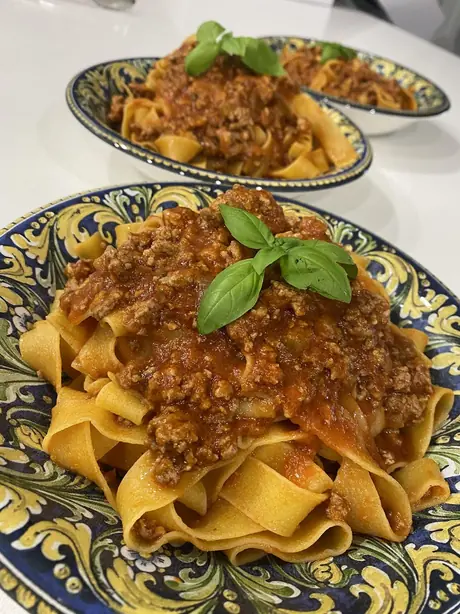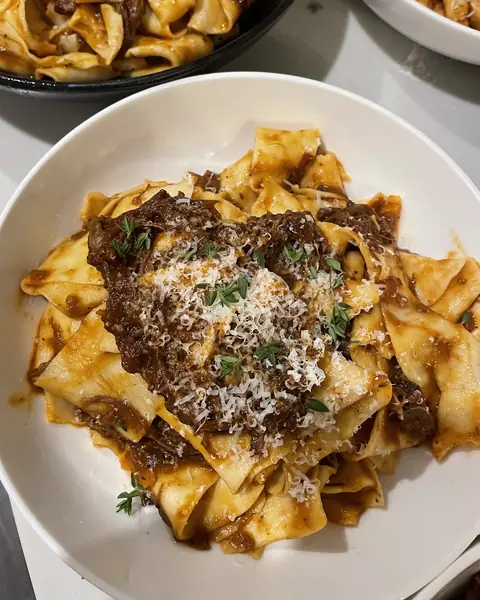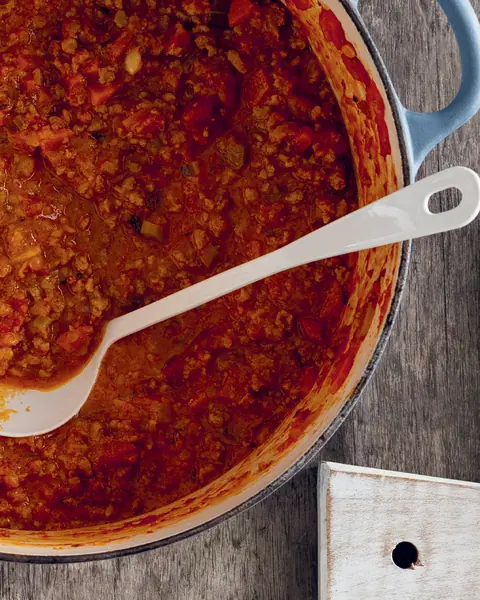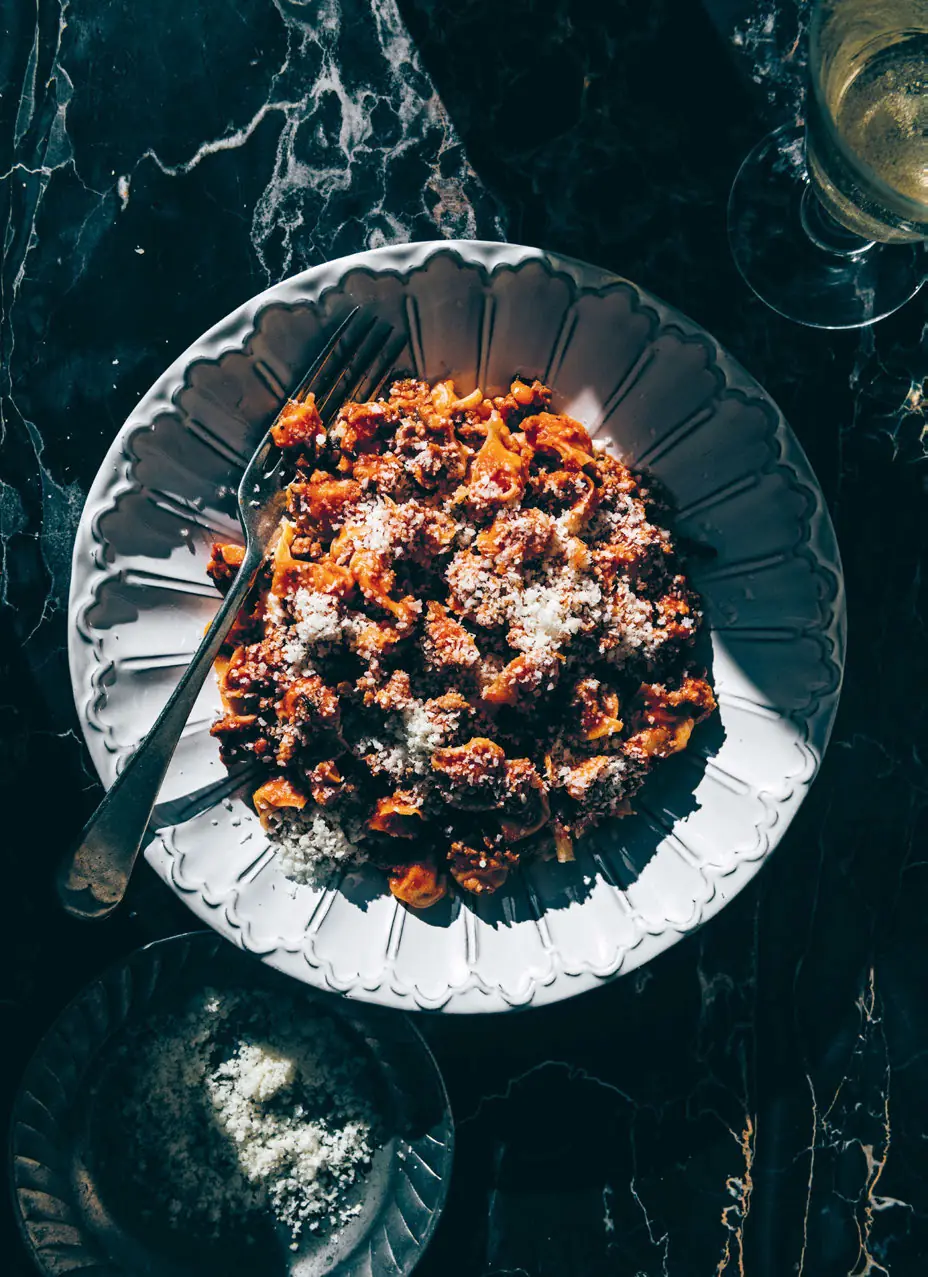
Sugo di Carne di Nonna Lina (Meat Sauce)
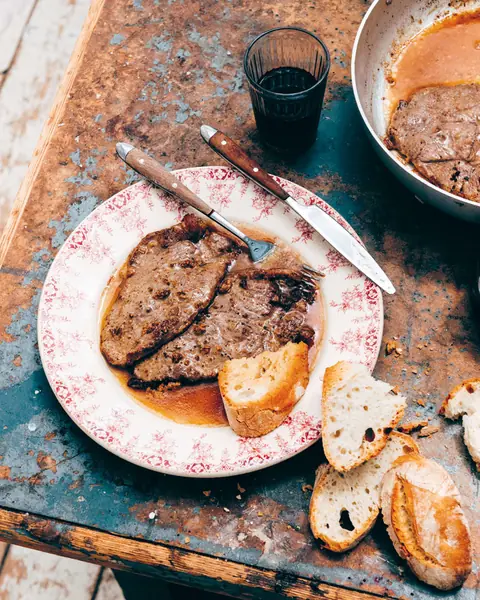
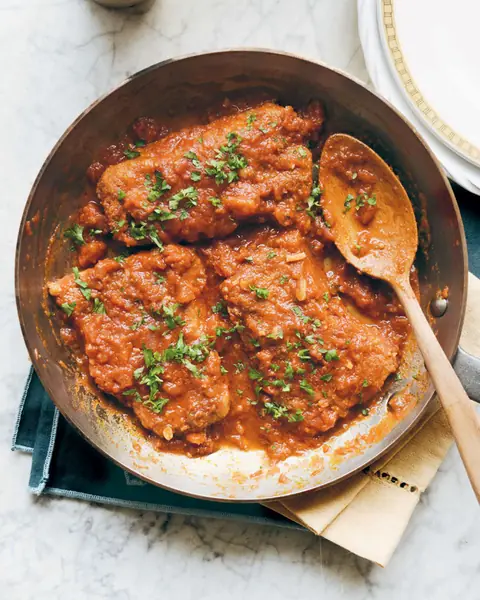
Nonna Lina was a pedantic cook, she preferred to make her sugo with cuts of meat that she was familiar with – a cut from the rump that, in Tuscany, is known as bicchiere, usually – which she would cook whole, in slices, directly in the sugo, and then chop finely herself afterwards. If she had one, she would often add a sausage, too.
Ingredients 11
750 g beef ribs, boneless, sliced, seasoned with salt and freshly ground black pepper
1 pork and fennel sausage, casing removed, optional
60 ml extra-virgin olive oil
1 onion, large, finely chopped
1 carrot, finely chopped
1 stalk celery, finely chopped
1 garlic clove, finely chopped
1 sprig sage, flat-leaf parsley, basil, and rosemary, each
250 ml white wine
330 g tomato passata (puréed tomatoes)
330 ml vegetable stock
Your new home
for cooking
Turn your recipe chaos into a plan for the week.
Browse 1000+ inspiring creator recipes
Unlimited recipe import from social media, blogs and more
Generate shopping lists and meal plans in seconds with AI
Method 4
Sprinkle the with a couple of pinches of salt and freshly ground black pepper and remove the casing of the , if using. Set aside.
Heat the in a large casserole pot over a low heat. Gently cook the , , , and with a three-fingered pinch of salt for about 10 minutes, or until softened. Add the and crumble over the , if using, then increase the heat to medium and cook for about 15 minutes, or until the meat is opaque.
Add the , increase the heat to high and bring it to a lively simmer. Cook for 7–10 minutes, or until the wine is almost entirely reduced. Pour in the , add another pinch of salt and some pepper, along with the and bring to the boil. Reduce the heat to low and simmer for 1 hour, uncovered, topping up with water as necessary if the liquid is reducing too quickly.
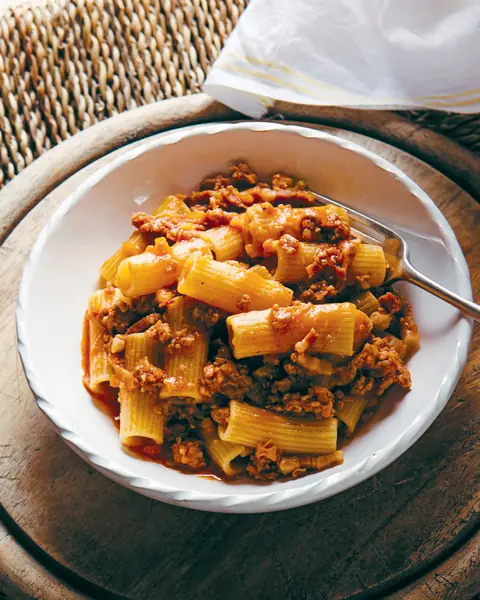
Lina would have transferred the to her chopping board and then cut it into tiny pieces with the mezzaluna. A less messy option is to pulse it in a food processor until reduced to tiny pieces, then return to the pan, stirring to combine well. Check for seasoning and adjust as you like.

Emiko Davies' tips
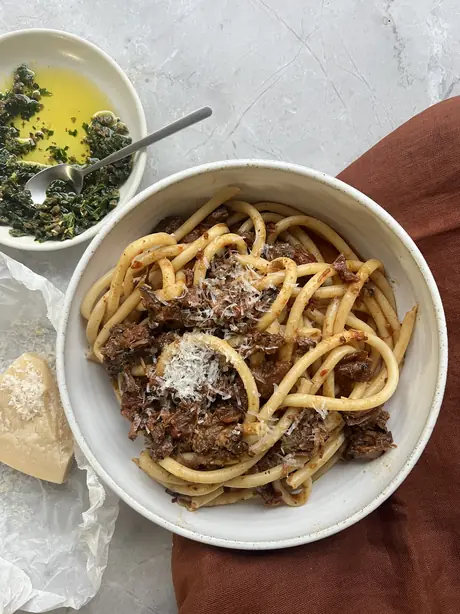
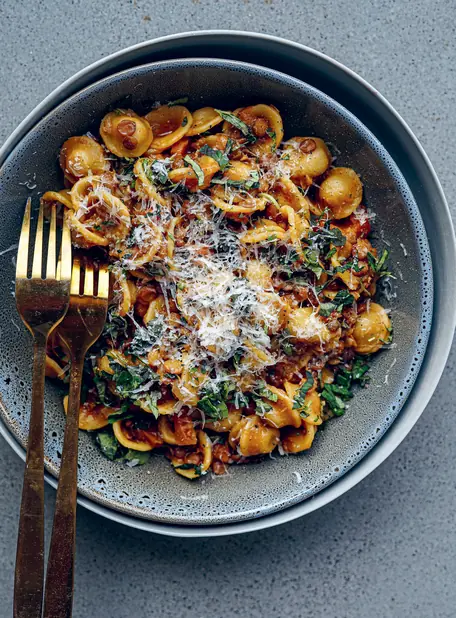
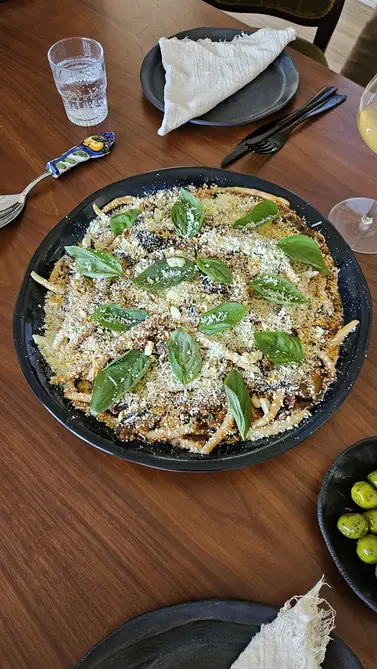
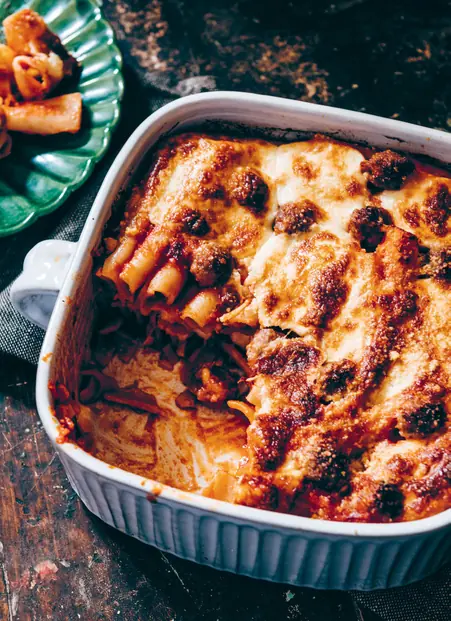
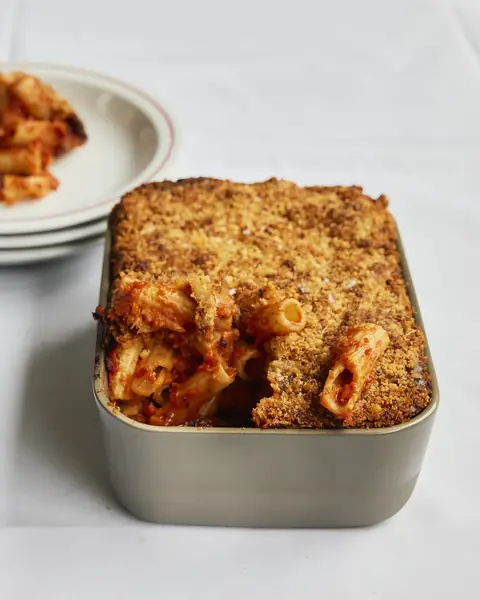
This could be used for lasagne, for tortellini, or simply for enjoying with your favourite pasta – bucatini were Nonno Mario’s preference.