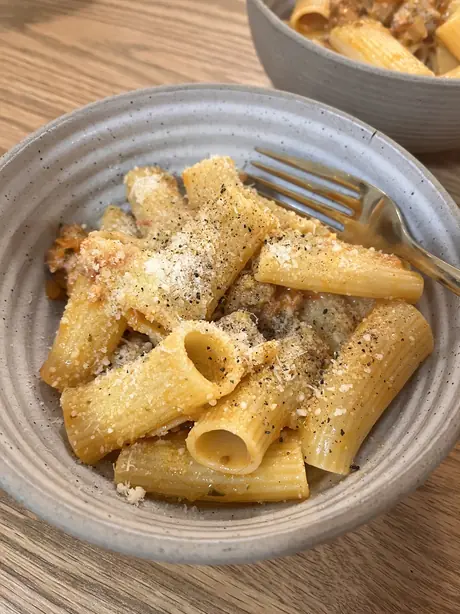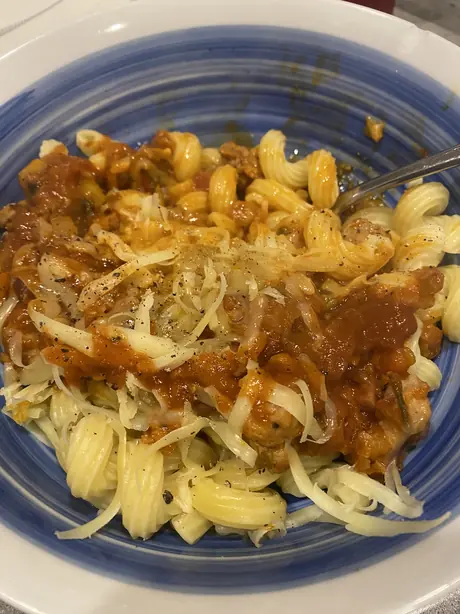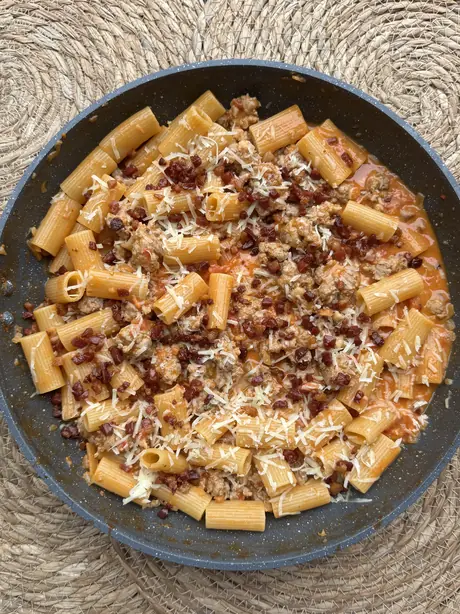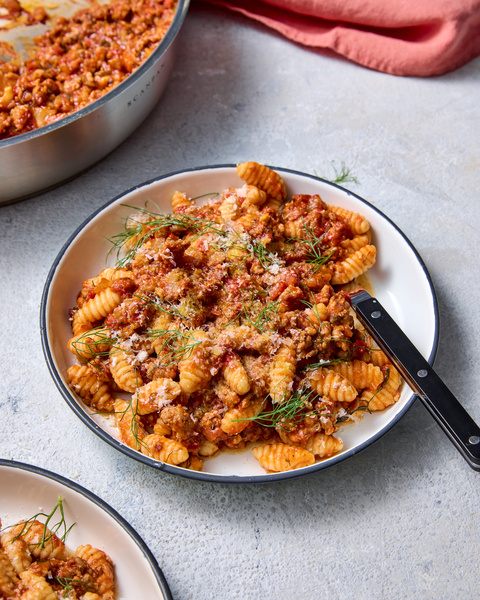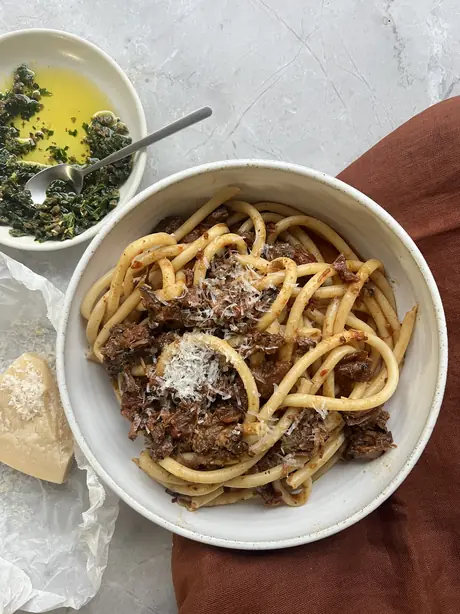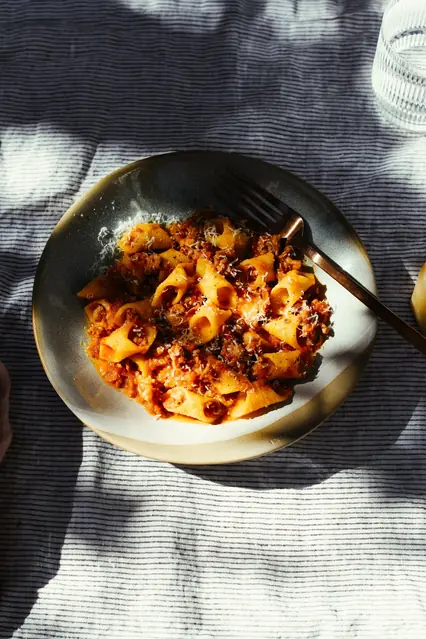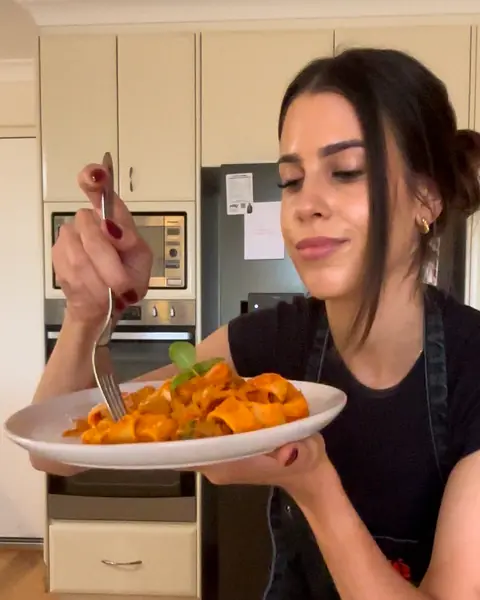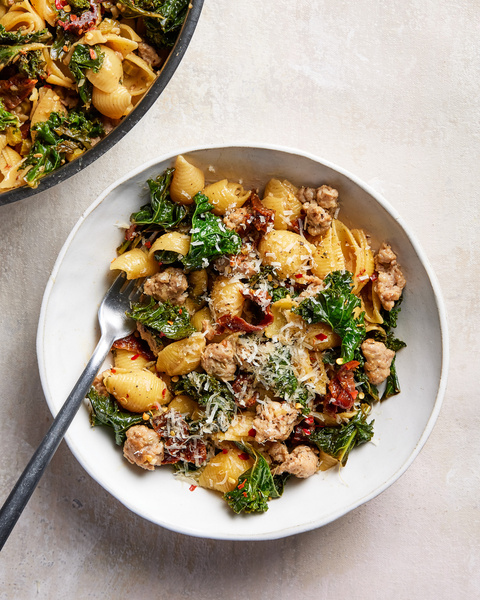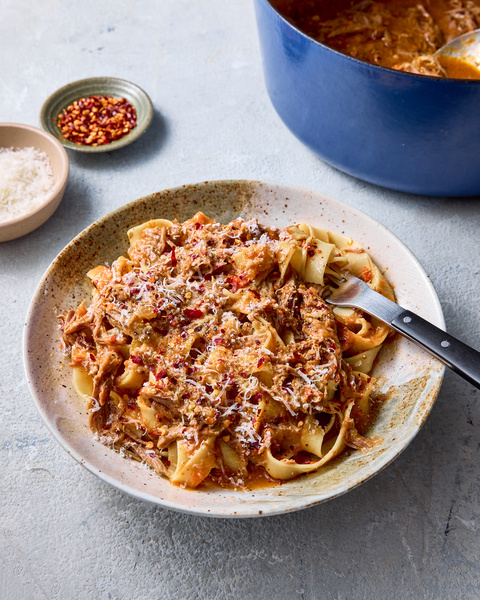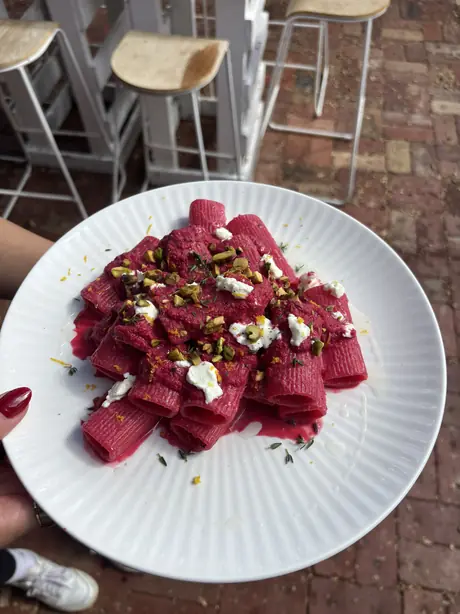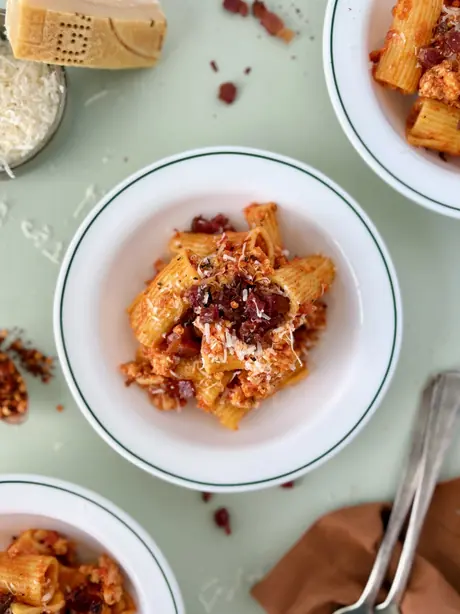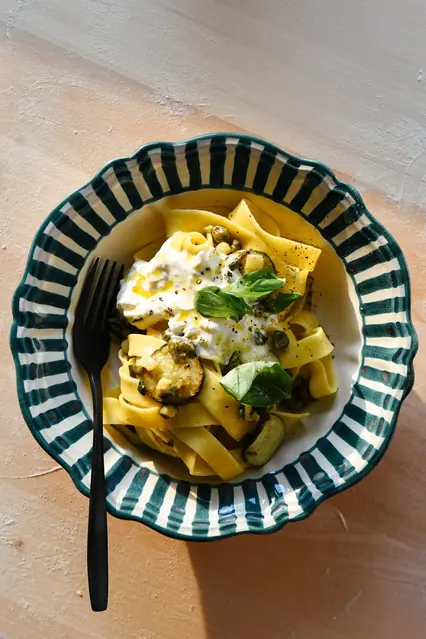
Once, at a sagra in Capalbio, we ordered rigatoni alla buttera. It’s a popular dish in southern Maremma, where butteri (cowboys – or in this case, their wives) are local icons. It arrived, steaming, in a flimsy plastic bowl, with a plastic fork, and we sat under fluorescent lights on the long, communal table with a cheap, cold bottle of Bianco di Pitigliano. The mosquitoes were out in full force and every now and then the breeze brought over a waft of smoke from the nearby grills, where cooks charred thick pork sausages and meat of all kinds.
A blanket of pecorino cheese covered the pasta, and I swirled it in a little bit before taking a bite. I can still remember the incredible flavour. I gave a forkful to Marco and watched his eyes light up. ‘What do you think is in this?!’ I asked him. With every bite we tried guessing the possible combination of ingredients that made it so good. It was something salty. Something rich. Something umami. It was quite possibly the tastiest plate of pasta I have ever eaten, and every plate of rigatoni alla buttera eaten since has had to try to match that one.
Afterwards, we found the list of ingredients of the dishes (it’s always posted somewhere at a sagra) and we realised our guesses were, for the most part, wrong. Marco was convinced its tastiness was due to chicken livers, but it was actually something so simple. Pork sausages, pancetta, the usual battuto of onion, celery and carrot. Wine. Tomato. I had to try this at home.
Ingredients 15
Your new home
for cooking
Turn your recipe chaos into a plan for the week.
Browse 1000+ inspiring creator recipes
Unlimited recipe import from social media, blogs and more
Generate shopping lists and meal plans in seconds with AI
Method 6
Pour the into a wide frying pan and add the , , , , , and and , with a pinch of salt. Cover the pan with a lid and cook over low heat, stirring occasionally, for about 10 minutes or until the vegetables have softened and the fat is transparent.
Add the , crumbling the meat into the pan. Cook over medium heat for about 10 minutes, stirring to brown all sides.
Pour over the and let it cook down for about 5–7 minutes.
Add the and and bring to a simmer. Cook on low for about 30 minutes, stirring occasionally. Check for seasoning and add salt and pepper as necessary (this is a fairly robust sauce with lots of flavour from the , and , so you may not need any extra salt), then continue cooking for a further 10 minutes or so. You should have a well-reduced, thick, rich sauce. Set aside.
Put the in a large pot of boiling, well-salted water. Boil until al dente, then drain and toss with the sauce.
Serve with plenty of finely grated or parmesan cheese.

Emiko Davies's tips
In Tuscany, sausages are always pork, have natural casings and are only flavoured with a few fennel seeds. Choose good quality sausages. Go for fresher sausages over aged ones (they will be softer, so easier to crumble and incorporate into the sauce). Make sure there is no gluten or anything else added that might affect the texture of the cooked sausages in the ragu. If you can’t find rigatoni, go for penne pasta.
Notes
5