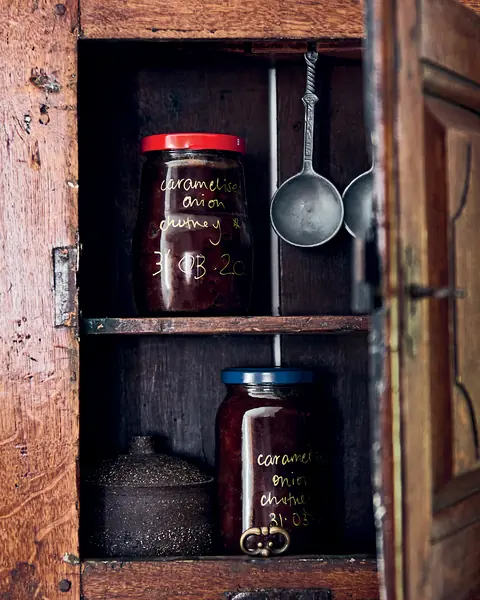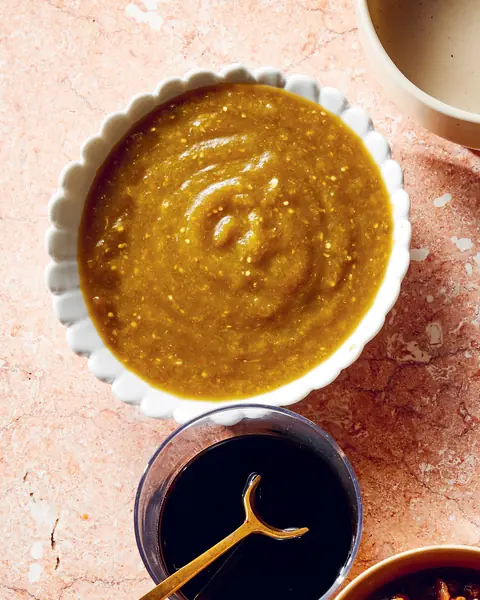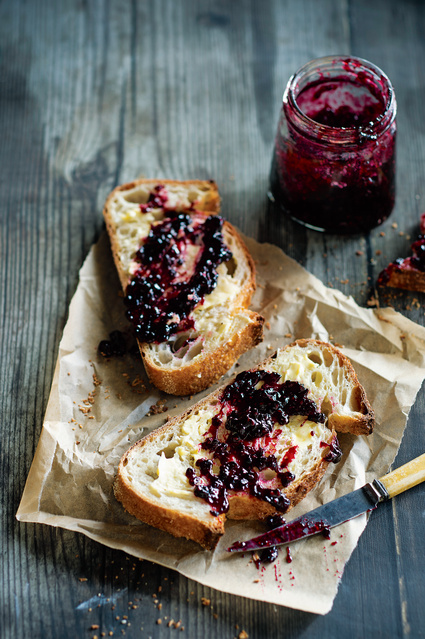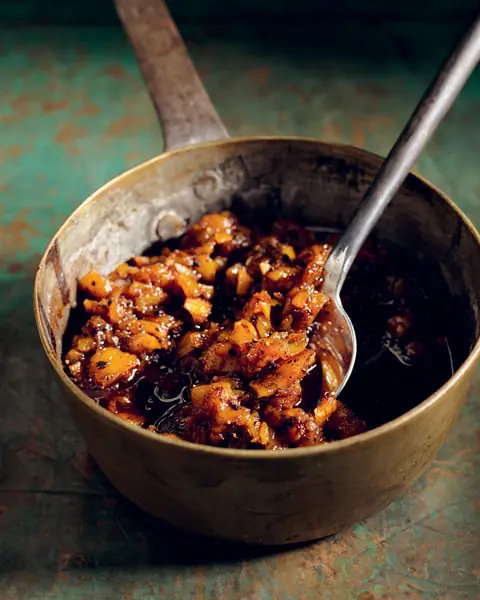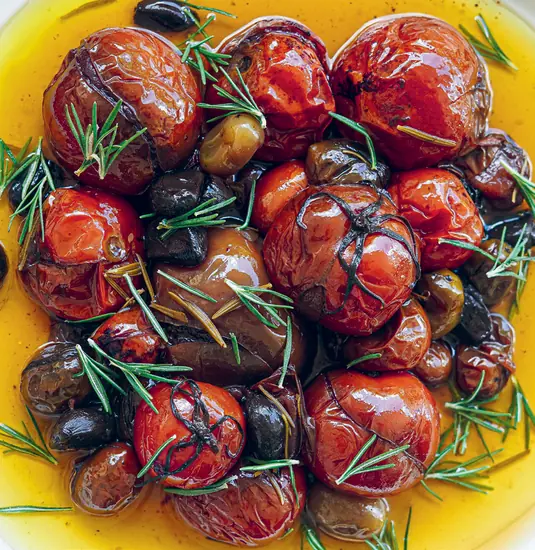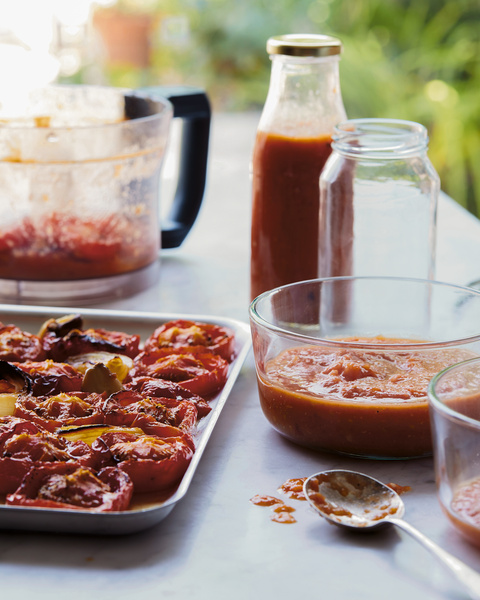
A great classic chutney that keeps the taste of summer in your kitchen all year.
Makes approx 4 x 300ml jars.
Ingredients 11
Your new home
for cooking
Turn your recipe chaos into a plan for the week.
Browse 1000+ inspiring creator recipes
Unlimited recipe import from social media, blogs and more
Generate shopping lists and meal plans in seconds with AI
Method 8
Wash the and cut into 2 cm chunks. Put into a bowl, sprinkle with , mix well and leave to sit for at least an hour and up to overnight.
Pour the into a medium-sized saucepan over medium heat. Add the and sauté until softened and collapsed, but not browned. Add the , , , and and sauté until fragrant.
Drain the excess liquid off the and discard. Add the tomato chunks to the pan and let simmer until some of the tomato liquid has evaporated and the tomato has thickened slightly.
Add the and and mix well.
Cook on medium–low heat for around an hour or so or until the has thickened. The surface will look rich and glossy and there will be no puddles of liquid on top. Taste the chutney and add more or pepper if needed.
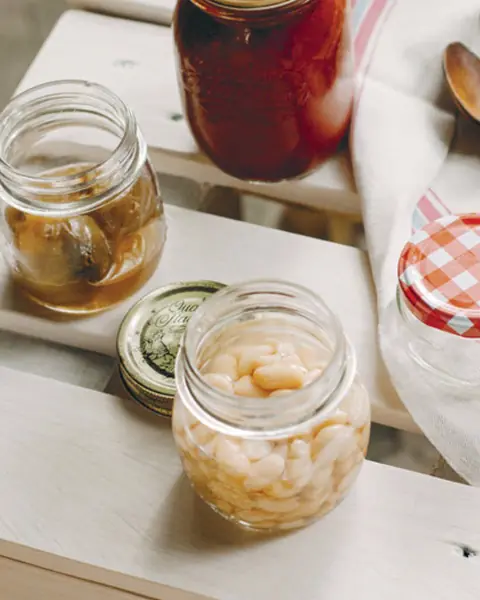
Meanwhile, sterilise your jars and lids - you'll need 4 x 300ml jars. Give jars a good hot soapy wash and rinse well. Put jars in the oven at 110°C for 15 minutes, about 15 mins before the chutney has finished cooking. Boil the lids for 5 minutes in a small saucepan, then let air dry.
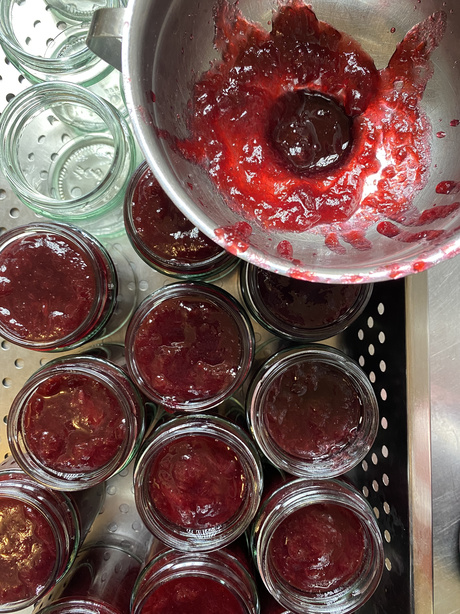
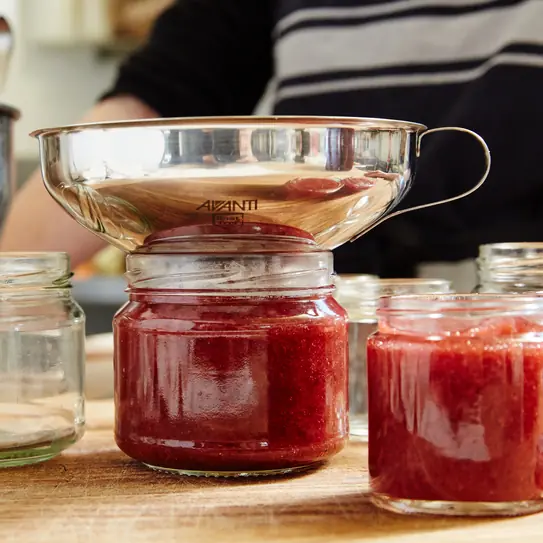
Fill the hot jars with the hot chutney. Remove any air bubbles by gently tapping each jar on the work surface and sliding a clean butterknife around the inside to release any hidden air pockets. Wipe the rims of the jars with paper towel or a clean damp cloth and seal immediately.
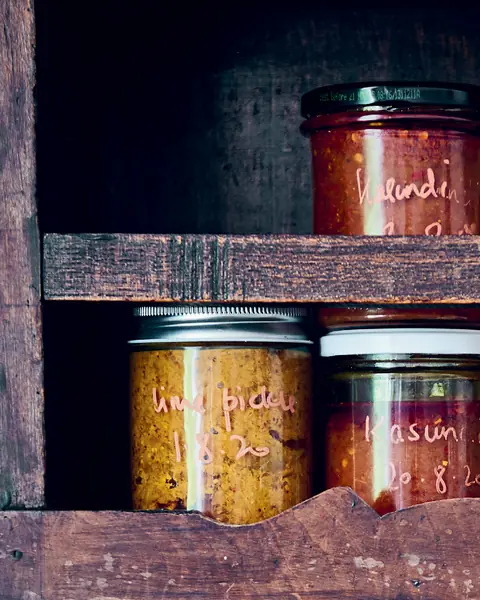
Heat-process the jars for 15 mins (see my notes below), then store in a cool, dark place for up to 2 years. Once opened, refrigerate and use within 3 months.

Cornersmith's tips
To Heat Process: Get the biggest pan you have, such as a stock pot - the taller the better - and put it on the stove top. Lay a folded tea towel in the bottom of the pan, then sit your jars on the tea towel, taking care not to cram them in, and keeping them clear of the sides of the pan.
Roughly match the water temperature to the temperature of the jars (to prevent thermal shock) then pour enough water to cover the jars, either completely or at least three-quarters submerged. Bring to the boil over medium heat, then start the heat processing time as indicated in the recipe once boiling.
Once the time is up, the lids should be puffed up and convex. Carefully remove the hot jars from the water with preserving clamps or oven mits and a thick cloth to protect your hands.
Place your jars on the bench top and let them sit overnight. As they cool, a vacuum will form inside each jar and suck down the lid, sealing them securely. Once sealed, the lids should be concave, even if only slightly (lay a pencil across the top of the lid to check). If you have concerns about any of the seals, store them in the fridge and use within a few weeks.