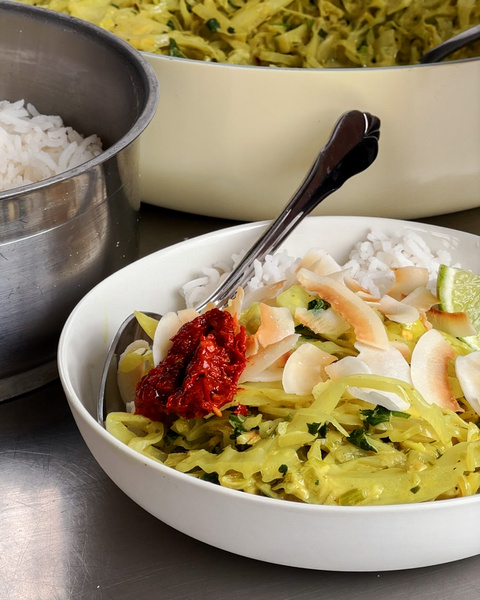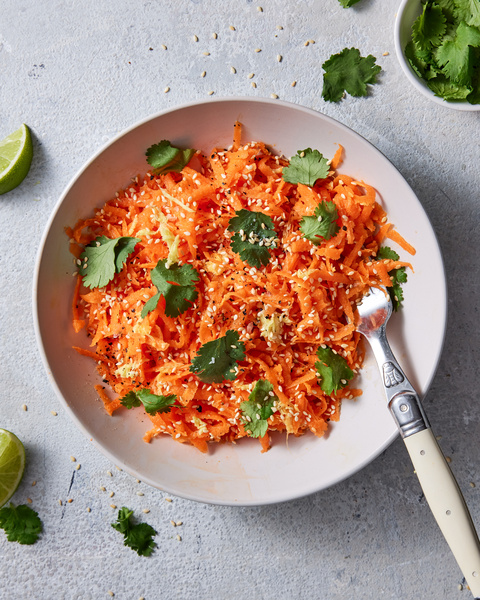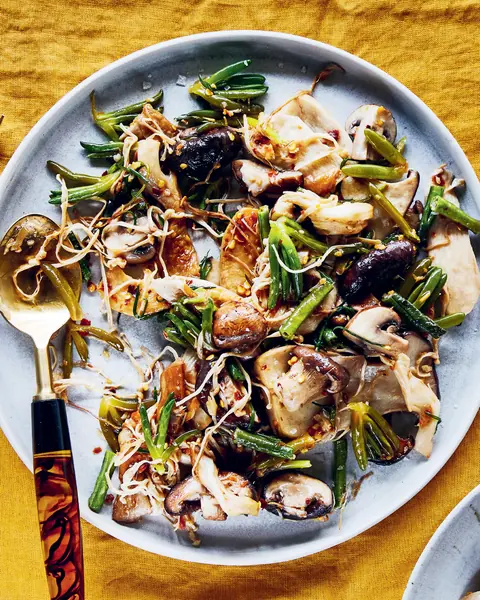
Carrots are another vegetable I wouldn’t really associate with a tropical island but they have been cultivated in Asia for many centuries, so who am I to question? I have eaten carrot sambols in Sri Lanka but never came across this dish. I discovered it in written form on my hunt for recipes and liked the sound of the flavours. So here is my version.
Ingredients 14
Your new home
for cooking
Turn your recipe chaos into a plan for the week.
Browse 1000+ inspiring creator recipes
Unlimited recipe import from social media, blogs and more
Generate shopping lists and meal plans in seconds with AI
Method 5
Melt the in a wok or large frying pan over a medium heat, add the and cook for a minute until they start to change colour.
Add the and cook briefly to crisp up, then add the , and . Cook, stirring, for 2–3 minutes until the eschalot starts to soften.
Add the and and give everything a good stir. Season with salt flakes and black pepper and cook, stirring occasionally, for 2–3 minutes.
Stir in the , , and , then season to taste with a splash of coconut vinegar. Cook for another 2–3 minutes until the is tender but still has a little crunch and holds its shape.
Taste and check the seasoning – there should be a slight tang from the vinegar, a little heat, with the at the forefront. Serve hot or at room temperature.

O Tama Carey's tips
Grated coconut in this book always means freshly grated (either fresh or frozen). If you can’t find it at all, you can make do with desiccated coconut. Add 30 ml (1 fl oz) of water or any milk for each 100 g (3½ oz) of desiccated coconut, mix with your hands and let it sit for at least 5 minutes before using. It isn’t nearly as good, but it will do.