Parmigiana di Melanzane (Eggplant Parmigiana)
Parmigiana is a layered vegetable dish that has nothing to do with parmesan cheese or the northern Italian town of Parma (as it is often mistakenly thought), and everything to do with southern Italian cooking. It has all the hallmarks of a true icon of Italian cuisine; it is resourceful, seasonal, economic and deliciously satisfying all at once.
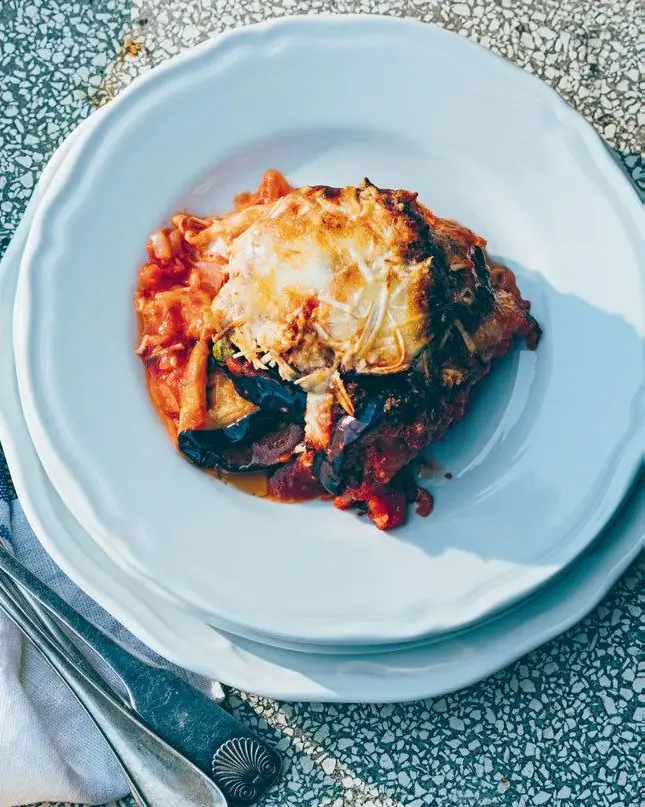
I always think of Parmigiana as a piatto unico: a dish that isn’t a primo or a secondo, but is basically hearty enough that it covers the entire meal (especially if, like some, you add to it mortadella, sausage or a couple of eggs, beaten and poured over the top to form a lovely golden crust – this last one was an addition Lina always made). But in Puglia, Parmigiana is considered an antipasto, and, indeed, if you serve it in small enough portions, you could get away with eating this as a starter or even a side dish. But when we make Parmigiana, this is all we eat, along with a bright and simple salad of greens.
Ingredients 8
1 kg eggplants, large, cut into 1 cm (1⁄2 in) thick slices
2 tbsp extra-virgin olive oil
1 onion, small, finely chopped
500 g tomato passata (puréed tomatoes)
Handful basil leaves, fresh, torn
500 ml vegetable oil, for frying
1 mozzarella ball, large, sliced
80 g pecorino, aged, grated
Your new home
for cooking
Turn your recipe chaos into a plan for the week.
Browse 1000+ inspiring creator recipes
Unlimited recipe import from social media, blogs and more
Generate shopping lists and meal plans in seconds with AI
Method 9
Peel the if you like, then cut them lengthways into 1 cm (½ in) thick slices. Layer them in a colander and sprinkle each layer generously with salt (don’t worry, you will rinse it off later). Finish layering and salting the slices, then place a plate on top followed by a weight (such as a tin of beans or tomatoes).
Leave for a minimum of 30 minutes and up to 1 hour. During this time, the will weep a brownish liquid. Rinse them under cold water and carefully pat them dry with clean tea towels (dish towels).
While the are draining, prepare the tomato sauce by heating the in a deep pan over a low heat. Add the and cook gently until soft and translucent but not coloured, about 10 minutes.
Add the , along with a few , a splash of water and a pinch of salt (try not to salt this sauce too much; it should be bright and fresh – also keep in mind the , especially if using caciocavallo, which will add some saltiness too). Increase the heat to medium and leave to simmer for 15 minutes, or until the sauce is as thick as you like it. Set aside until needed.
Pour the into a wide saucepan, preferably one that will fit three or four slices at a time. Set over a medium–high heat. The oil is hot enough when a cube of eggplant dropped into the oil sizzles immediately. Fry three or four slices at a time, a few minutes on each side, or until they are evenly golden brown. Drain well on paper towels and leave to cool. Change the paper towels as necessary and continue frying until all the slices are cooked.
Preheat the oven to 180°C (350°F).
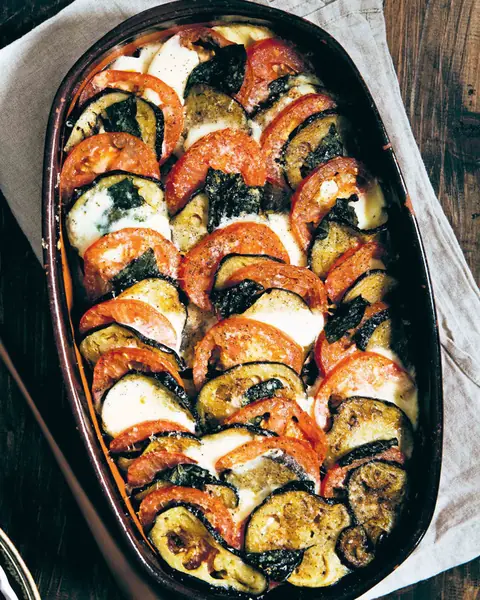
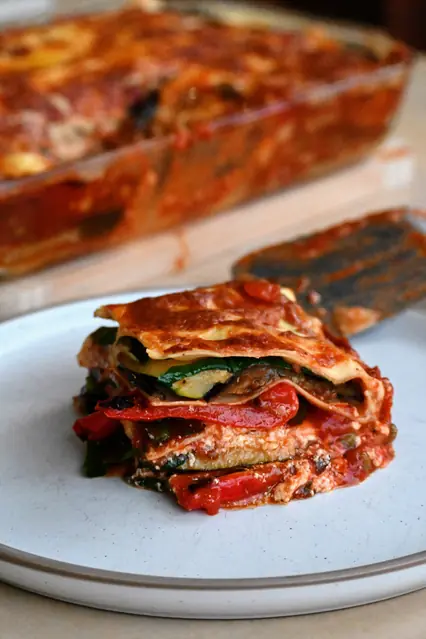
Assemble the Parmigiana by first spooning some tomato sauce in a thin layer over the bottom of a rectangular or oval ceramic or glass casserole dish (ideally, the kind that you can also present at the table). Top with a single layer of , then spoon over some more tomato sauce, a few torn and a handful of cheese – both and .
Continue layering , tomato sauce and torn , ending with a more generous layer of cheese, in particular the . Bake for 25–30 minutes, or until you can see the edges bubbling and a golden-brown crust has formed.
It’s best to let the Parmigiana sit for about 15–20 minutes before cutting into it, and it’s also delicious served tepid rather than piping hot – a real treat on a hot summer’s night.

Emiko Davies' tips
How the eggplants are treated is probably the most important part of a successful Parmigiana. Those who shy away from deep-frying usually go for grilling the eggplants, but this is neither traditional nor the best way to prepare eggplants for this particular dish. Deep-frying is the preferred method of purists for a good reason: fried, the eggplant slices give way to an utterly silky, almost melting texture.
But some go a step further, first dusting with flour, dipping in egg and then deep-frying. This way, the eggplant slices hold their shape a little more as they drink up a bit less oil and the result is a heartier, richer dish. Some even flour, egg and breadcrumb their eggplants before frying.
And some like to peel the eggplants before frying – it is simply a matter of personal taste and preference.
Either way, the most important thing you can do in preparing eggplants for frying is to salt the slices before cooking. Don’t skip this part; doing this removes excess water in the eggplants, which means they fry better, improving both taste and texture tenfold.
Just don’t leave them longer than necessary as they can become too salty.