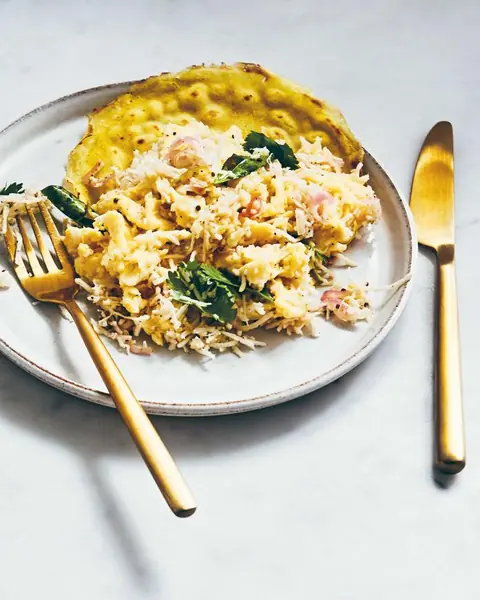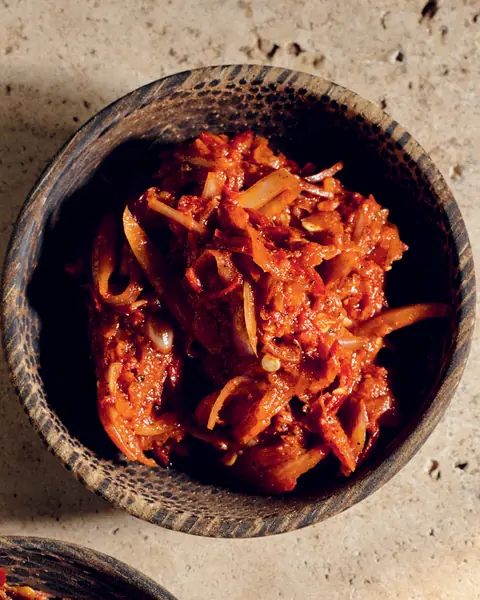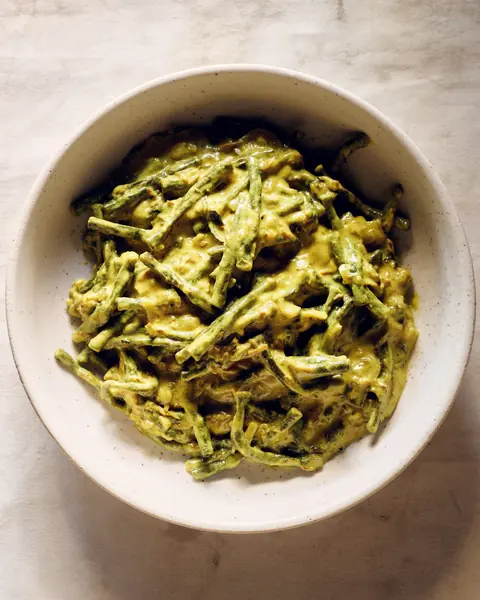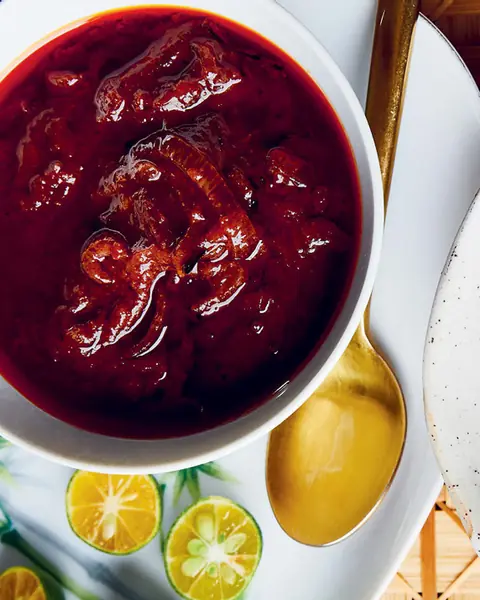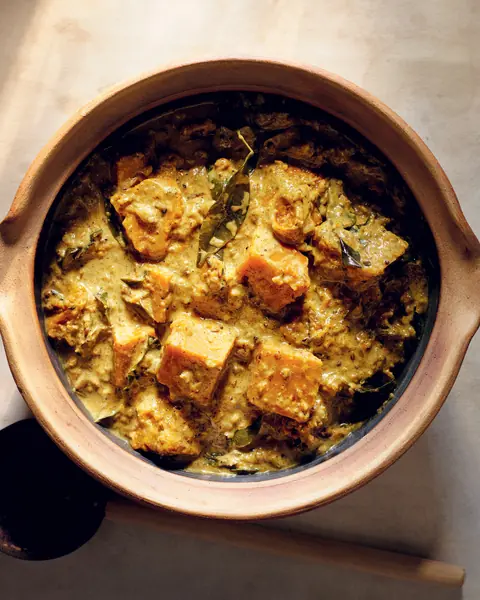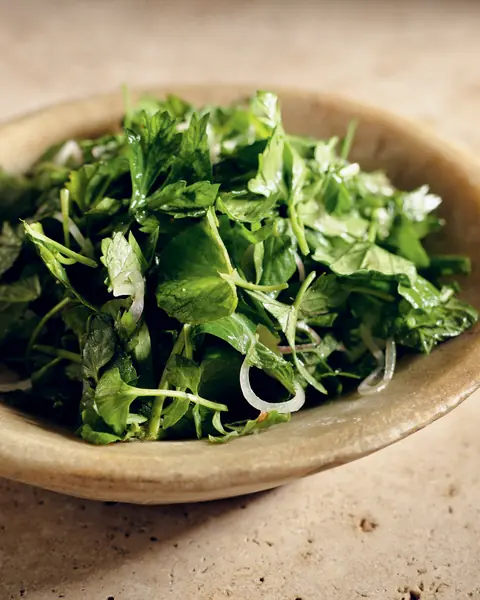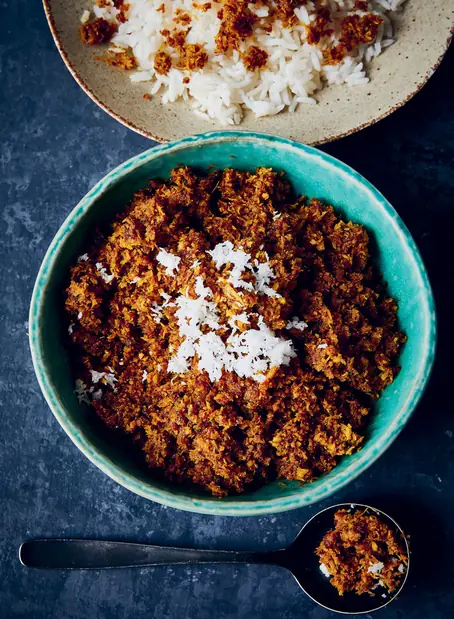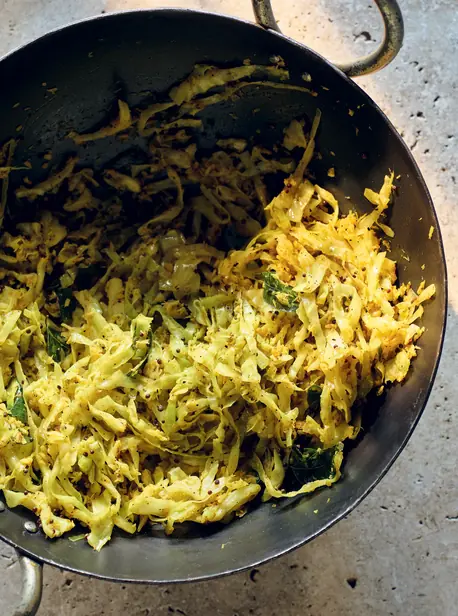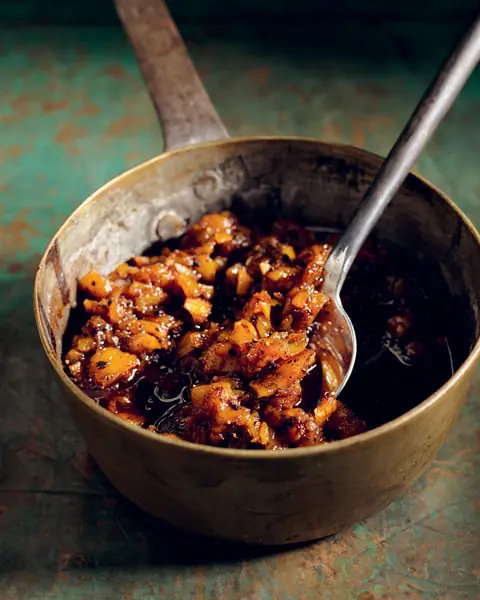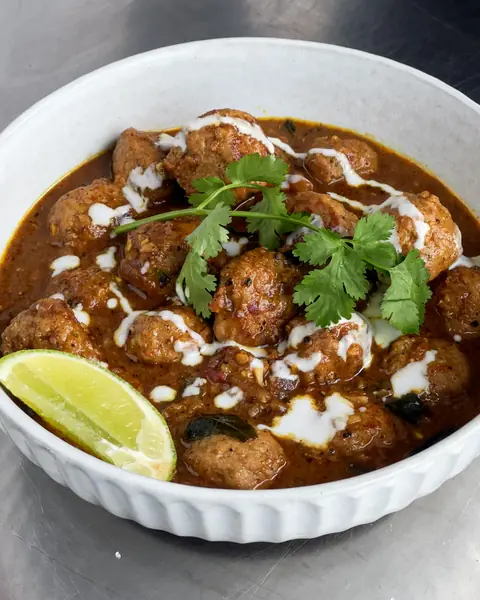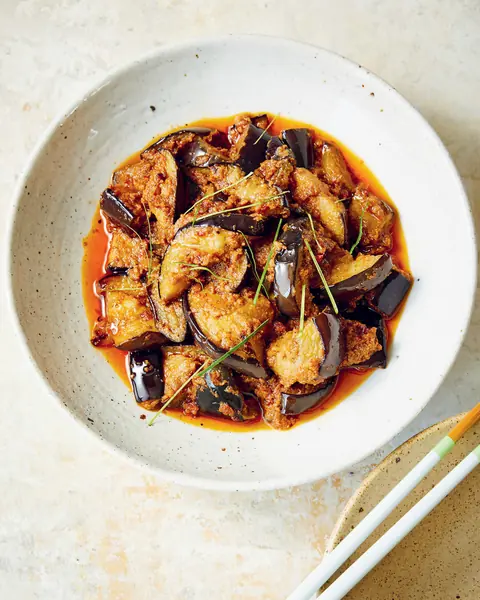
Meaning coconut sambol, this is the most ubiquitous sambol in Sri Lanka. During any given day on the island you would be hard pressed to not eat a version of it at some stage. It’s the first sambol my mum taught me to make. The flavour is perfectly balanced: sweet from the coconut, smoky and umami from the Maldive fish, hot from the chilli and pepper, and sour from the lime. This recipe makes more than you need for an average meal (about 450 g/1 lb) but it will keep for a good week in the fridge and is delicious on many things. I like it on toast with butter, particularly if there is a poached egg involved.
Ingredients 9
Your new home
for cooking
Turn your recipe chaos into a plan for the week.
Browse 1000+ inspiring creator recipes
Unlimited recipe import from social media, blogs and more
Generate shopping lists and meal plans in seconds with AI
Method 2
Place the grated , , , , , , and in a bowl and firmly mix them together with one hand, using a squeezing and kneading motion. This not only combines the ingredients, it also helps release the oils from the coconut. Keep going until the texture of the sambol is almost a little sticky.
Season to taste with lime juice and a generous amount of salt, mixing and squeezing again. Serve at room temperature.

O Tama Carey's tips
Grated coconut in this book always means freshly grated (either fresh or frozen). If you can’t find it at all, you can make do with desiccated coconut. Add 30 ml (1 fl oz) of water or any milk for each 100 g (3 1/2 oz) of desiccated coconut, mix with your hands and let it sit for at least 5 minutes before using. It isn’t nearly as good, but it will do.