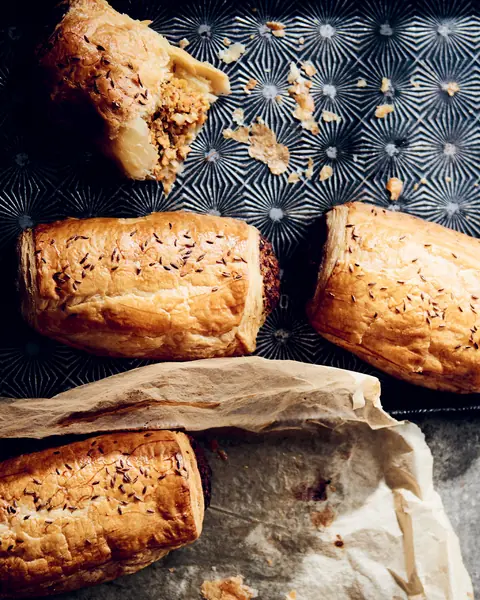
Soy is a valuable source of protein, but unfortunately it is also one of the world’s most intensively farmed, genetically modified crops – it’s worth being selective about where you buy your soybeans and how they’re grown. Always buy organic; they should be smooth and look clean. Soybeans do require soaking overnight in plenty of water, so you’ll need to start this recipe a day in advance.
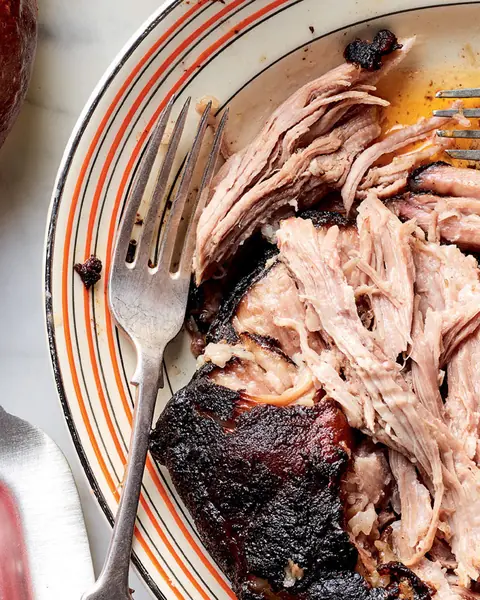
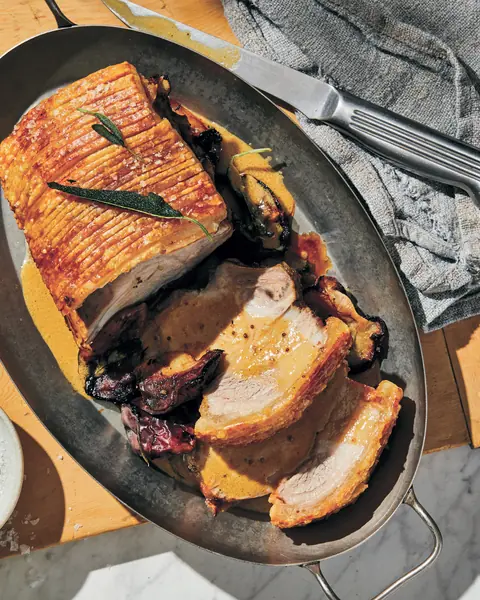
And it goes without saying that when selecting meat, you need to be vigilant about how the animals were reared and slaughtered. We buy our pork from Bundarra Berkshires in Barham, New South Wales. Lauren and Lachie Mathers raise healthy, happy pigs on their regenerative farm using biodynamic preparations on the soil and no antibiotics or chemicals of any kind. It’s well worth getting to know your farmers so you can learn and understand how they farm, and the impacts of what they do on everything from the flavour and cost of your food to the environment.
Ingredients 18
Your new home
for cooking
Turn your recipe chaos into a plan for the week.
Browse 1000+ inspiring creator recipes
Unlimited recipe import from social media, blogs and more
Generate shopping lists and meal plans in seconds with AI
Method 9
Heat the in a frying pan over a medium heat. Fry the for 10–12 minutes until softened and starting to colour. Stir in the and and cook for a further minute until fragrant. Set aside to cool.
In a small bowl, combine the , , , , and , mixing thoroughly to ensure the miso and honey are fully incorporated.
Drain the and transfer to a large bowl. Add the cooled onion mixture, miso mixture, , , and . Mix with your hands or a spoon, ensuring all the elements are evenly distributed.
Transfer the mixture into a large piping bag with a 3 cm (1 1/4 in) diameter hole. (A piping bag will make it easier to distribute the filling, but you can always spoon it onto the if you don’t have one.) Refrigerate while you prepare the pastry.
Line a large baking tray with baking paper. Put the on a lightly floured kitchen bench and roll it out into a rectangle measuring 30 × 60 cm (12 × 23½ in) and 4 mm (1/8 in) thick. Lay the pastry so that one long side is parallel with the edge of the bench. Cut the pastry in half lengthways so you have two sheets, 15 × 60 cm (6 × 23½ in).
Pipe half the filling in a horizontal line one-third of the way up each . Brush the pastry above each line of filling with egg wash. Lift up the pastry along the edge closest to you and fold it up and over the filling. Seal the pastry along the egg-washed edge, so the seam sits underneath the filling. The pastry should hold the filling evenly, and not be too tight.
Brush the tops and sides of both rolls with egg wash, lightly pierce along the top with a fork, then sprinkle the tops with . Cut each roll into 15 cm (6 in) logs. Lay your sausage rolls on the lined tray and rest them in the fridge for 30 minutes. At this stage, you can freeze them until required.
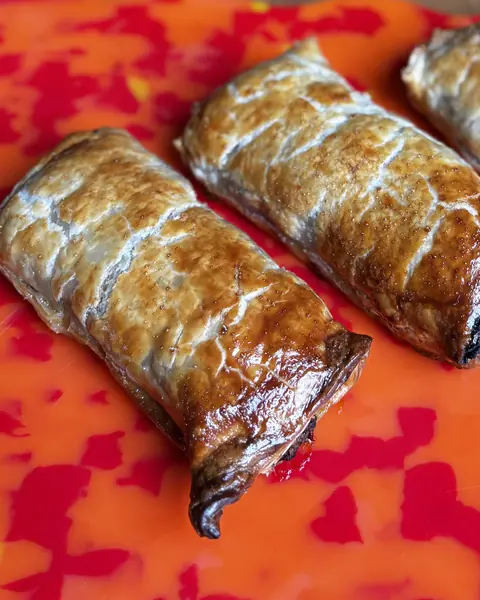
To bake the sausage rolls, preheat the oven to 190°C (375°F). Bake from cold for 10 minutes, then reduce the oven to 180°C (360°F).
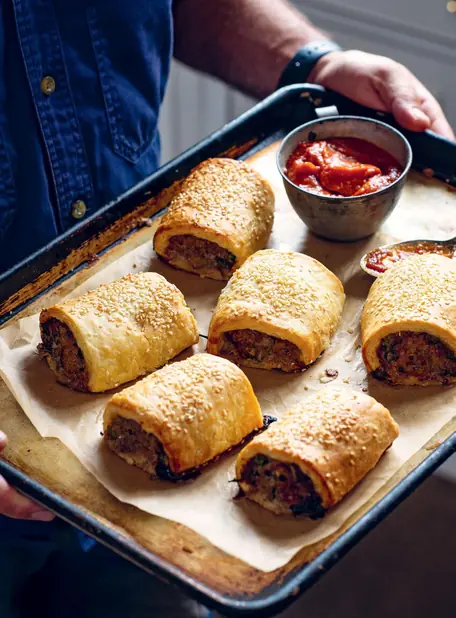
Bake for a further 25–30 minutes, turning the tray halfway through, until the is golden, puffed and flaky. Transfer to a wire rack to cool for 10 minutes before eating.

Urbanstead's tips
Wakame marries well with the miso and ginger in these sausage rolls, adding a touch of salt and umami. You can find dried wakame in health food shops and Asian supermarkets – it also makes a delicious and healthy snack.