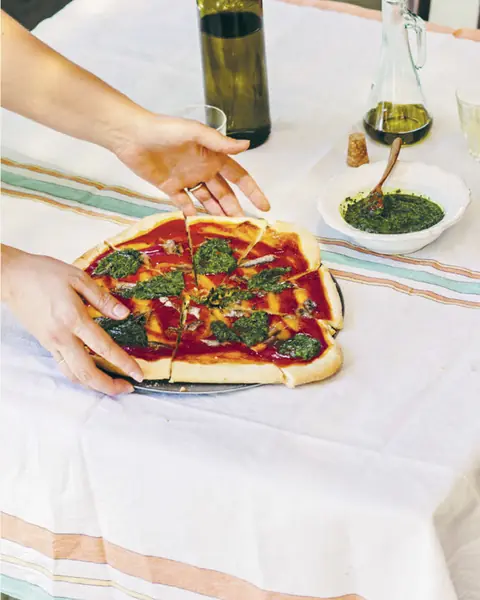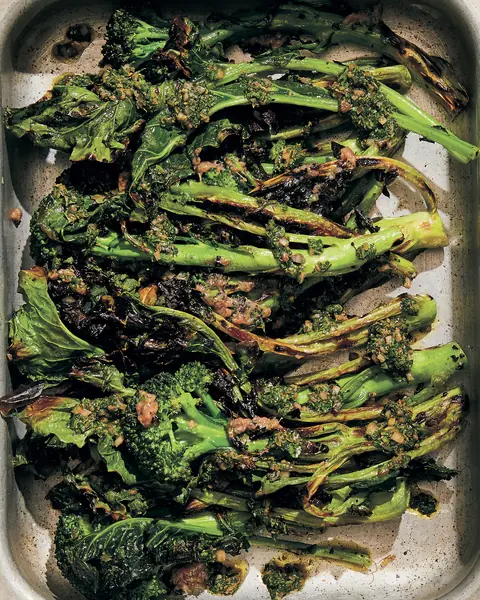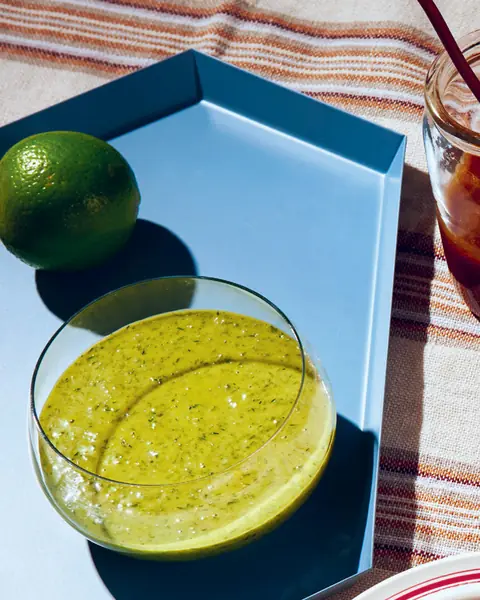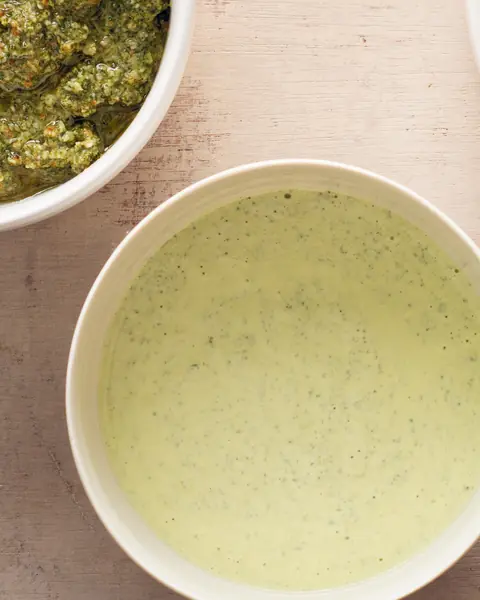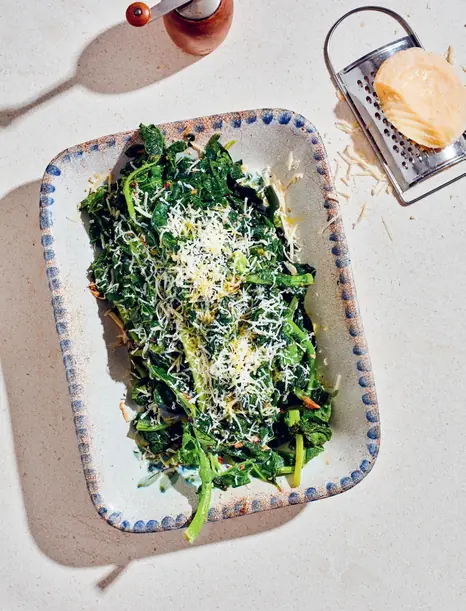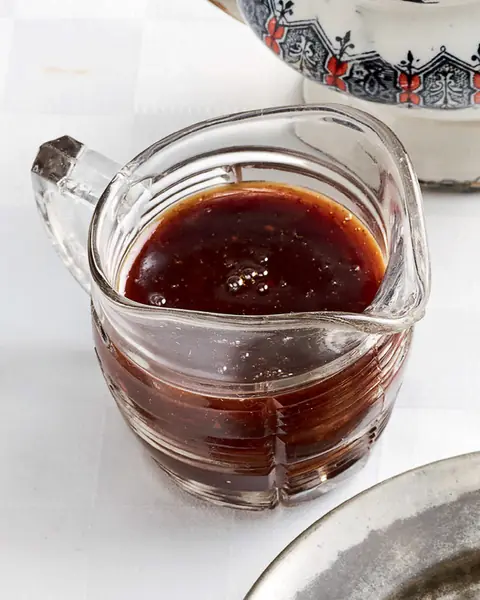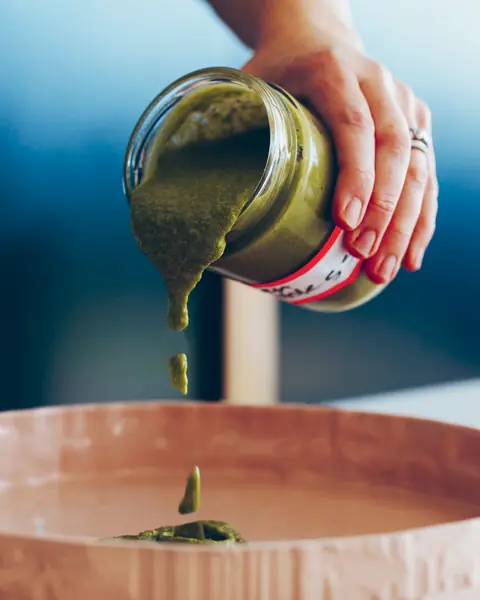
When my creativity is a little low and I need a sauce to go on fish, meat or vegetables, or even eggs, salsa verde is my go-to, and it’s why I regard it as one of my most important staple recipes. Unlike vinaigrettes or even aioli, I’m less specific about what goes in it. You should use what’s on hand and whatever herbs are at their best.
Salsa verde has its origins in Italy, Spain and France. At its core, it’s a piquant green, herbaceous condiment made punchy by either vinegar, mustard or lemon juice. Almost all versions include flat-leaf (Italian) parsley, but, after that, all bets are off. The French often include chopped cornichons and perhaps a bit of dijon; Italian versions can have capers, maybe anchovies and a bit of soaked bread, while Spanish versions would surely include lots of fresh garlic. Basically, you can’t really go wrong if you know what purpose you want it to serve.
If I am serving it with fish, I want something delicate, so I would probably omit bread or mustard, opting instead for a thinner version with more olive oil and herbs such as chervil and chives, and perhaps lemon instead of vinegar. If I am serving it with boiled beef short ribs, I would definitely add mustard, some freshly grated horseradish and perhaps some crunchy breadcrumbs for texture.
The results are different, but the goal is the same: to heighten the flavour of whatever I am serving it with. I’ll leave it to you to experiment, but here is a good all-around version that works with almost everything.
Ingredients 8
Your new home
for cooking
Turn your recipe chaos into a plan for the week.
Browse 1000+ inspiring creator recipes
Unlimited recipe import from social media, blogs and more
Generate shopping lists and meal plans in seconds with AI
Method 4
This recipe starts the same way as a vinaigrette: soak the finely chopped in the and . Set aside.
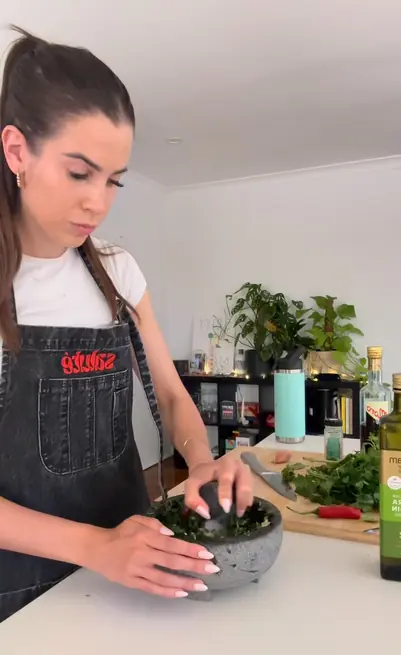
Wash and pick the leaves from the and and dry completely. Don’t be too fussy about the stems, thin and fine stems are perfectly fine to go in the salsa.
Chop quite finely – you need a sharp knife for this; a dull knife will bruise the herbs and muddy their bright, verdant flavour. I also am opposed to making salsa verde in a blender; hand-chopped produces the cleanest flavour and the extra effort is worth it.
Add the , and to the herbs, then add the shallot vinegar. Mix well and set aside for at least 1 hour. This allows the flavours to meld and become cohesive. This sauce can be saved for the following day, but it will discolour due to the acid being in contact with the herbs, so it’s best served the day it is made.

Danielle Alvarez's tips
Variations
For poached chicken, the anchovies are optional, use vinegar and add 2 tablespoons minced cornichons.
For a light springtime version, remove the capers and the anchovies and cut the acidic element down to 2 tablespoons, but add 3 g (⅛ oz) chopped tarragon leaves, 5 g (⅛ oz) chopped dill and 8 g (¼ oz) snipped chives.
For a punchy version to serve with poached beef short ribs or rich meats, add 2 tablespoons prepared or freshly grated horseradish, 3 tablespoons chopped watercress and 2 teaspoons dijon mustard.
For a Spanish type, use sherry vinegar, omit the capers, but add 1 tablespoon good-quality smoked paprika and 1 large garlic clove, either crushed in a mortar and pestle or microplaned.
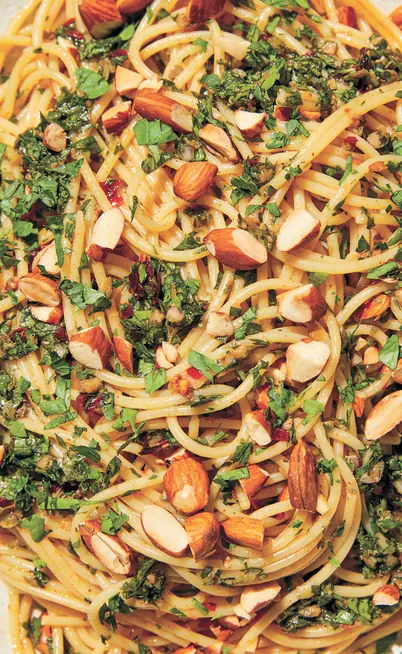
For pasta or to mix with a grain salad, remove the capers and anchovies, but add 2 teaspoons finely minced fresh, de-seeded red chilli.