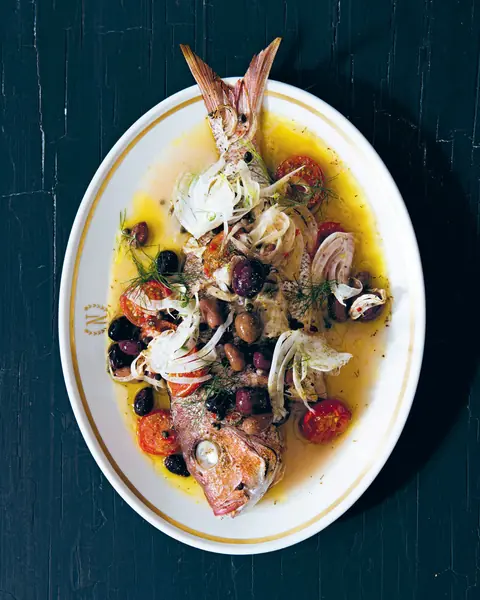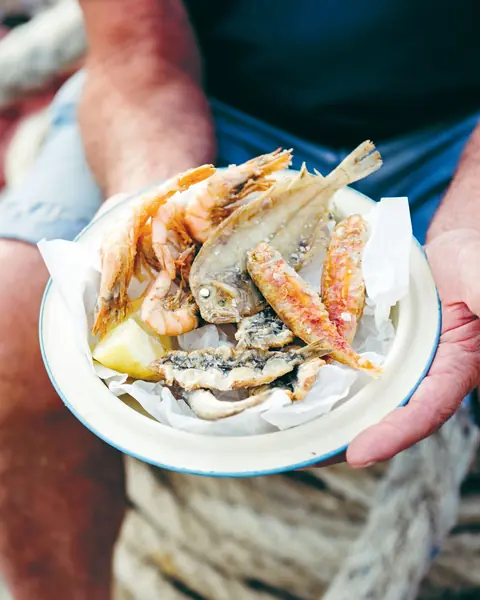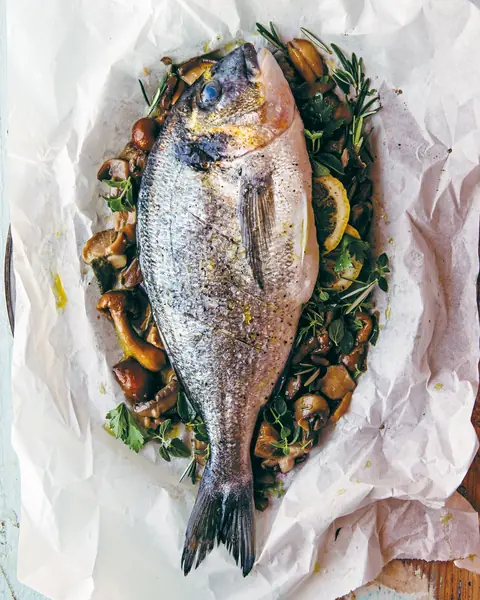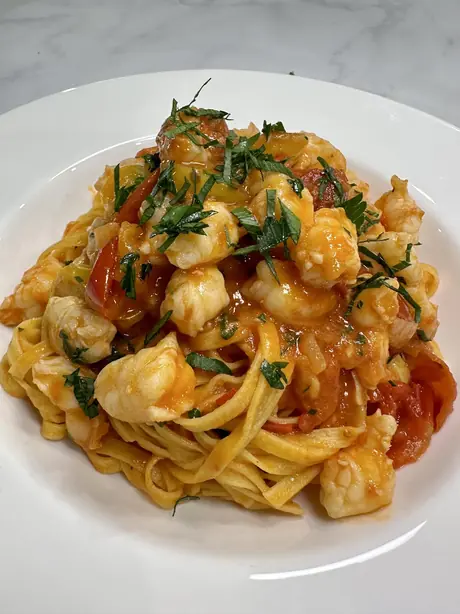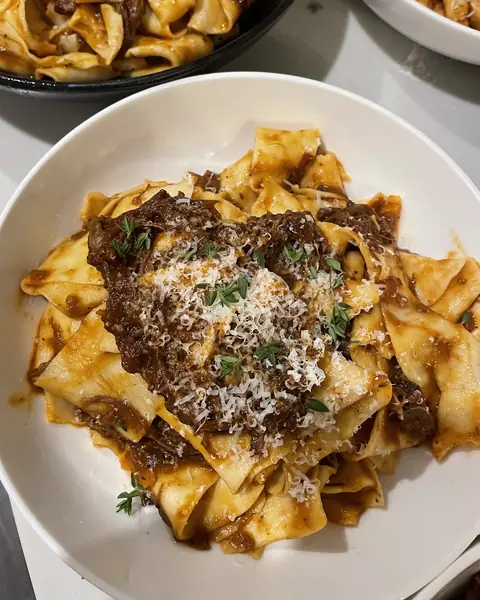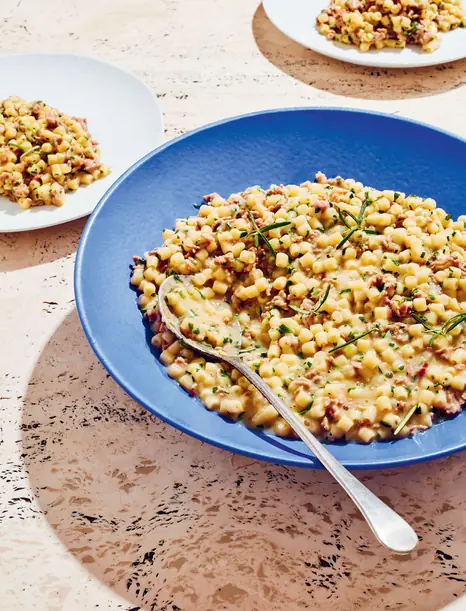
Sea bass, or branzino or spigola in Italian, is found on menus everywhere around Argentario and Orbetello – the main reason is the lagoon situated between these two places, which is the source of Italy’s most famous and best-regarded farmed sea bass. The lagoon is also the source of sea bream, eels and grey mullet, which are used in a number of traditional dishes.
Farming fish has been a tradition in these parts since ancient Roman times. Just minutes away, off Giannella, the sandbar that blocks off Orbetello’s lagoon to the sea to the north, there is a small beach known as Bagni di Domiziano, where you can find the ruins of a Roman villa that date to 36 BC. During low tide, you can just make out the partially submerged ruins of the stone pools used to raise sea bass and grey mullet. According to The Twelve Caesars – the famous biographies of twelve Roman emperors, written in AD 121 by Suetonius – the Roman Emperor Nero spent childhood summers at this villa, tending to the fish, which were fed a diet of prawns (shrimp), mussels, crabs, corbezzoli (fruit from the strawberry tree) and figs, to make them exceptionally tasty. Nero’s was a family of noble bankers, who owned the whole of Monte Argentario – the promontory probably takes its name from this history, as argentario was the name for ‘money lenders’.
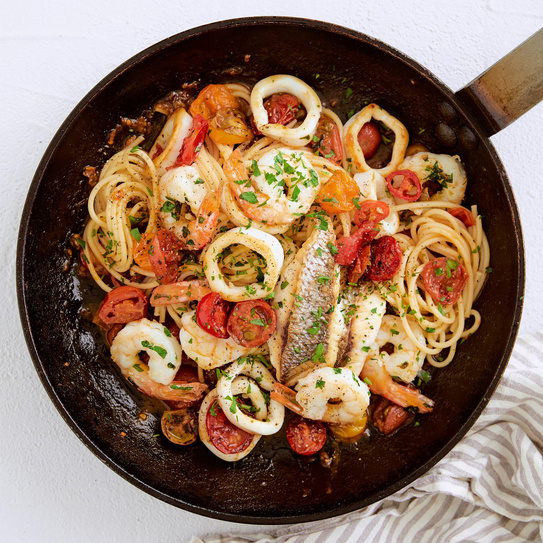
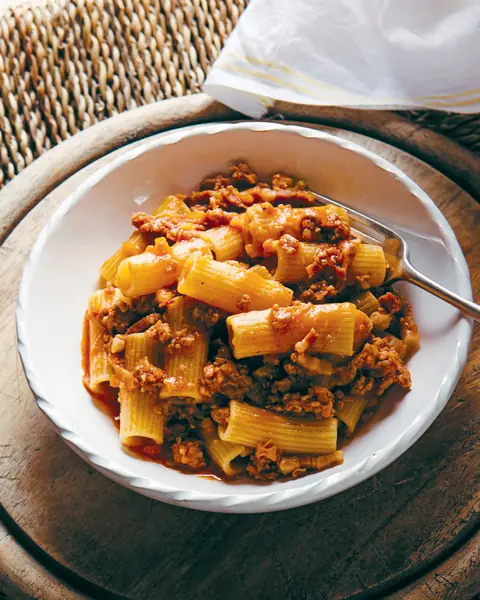
Bavette are a typical Ligurian pasta shape – flat, narrow but thick. You can use any pasta with this, but it is nice with something long and thin like square-cut or regular spaghetti or tagliolini.
Ingredients 10
Your new home
for cooking
Turn your recipe chaos into a plan for the week.
Browse 1000+ inspiring creator recipes
Unlimited recipe import from social media, blogs and more
Generate shopping lists and meal plans in seconds with AI
Method 8
Cut the into 1.5 cm (½ in) cubes. Set aside.
Heat the in a frying pan over low heat and add the , and . Season with a pinch of salt and cook gently for about 10–15 minutes, until the onion ‘sweats’ and is softened but not coloured (add a splash of water if needed).
Put a large pot of well-salted water on to boil for the pasta.
Pour the over the onion mixture and turn the heat up to medium. Let it simmer for 2 minutes, then add the and and cook for a further 10 minutes. Add the diced and continue cooking for 5 more minutes. Remove from the heat.
When the water is boiling, add the and cook until al dente (refer to the packaging for the cooking time).
Drain, reserving about 60 ml (2 fl oz / 1/4 cup) of the cooking water if needed.
Add the and the chopped to the fish ragu, and toss to combine. If you need some extra liquid to bring it all together, add some of the reserved cooking water.
Serve immediately.

Emiko Davies's tips
If buying a whole fish to fillet yourself, you will need double the weight of the fillets. Save the heads and bones for making fish stock.
This dish is often made using whole fish, cooked directly in the pan with the onion, garlic, parsley and white wine. It is then removed, so the bones, head and tail can be discarded, and the meat picked over before being returned to the pan. It’s a nice way of making a fish ragu, as using the entire fish adds good flavour and you don’t need the stock if you do it this way. Using fillets makes this easy (and a little less messy), and if you have filleted the fish yourself, you can use the head and bones for a homemade Fish Stock. Red mullet, tub gurnard or sea bream are also good prepared this way.