If I had to bottle the sound of summer in Monte Argentario, it would be the song of cicadas whirring in the trees, the eerie echoing call of the enormous seagulls circling over the port, and the crunch of pine needles underfoot, fallen from the thick huddle of umbrella pines along the beach. If it was a scent, it would be the perfume of just-cut watermelon, combined with the waft of fritto, as you walk past someone’s kitchen, their windows wide open in an attempt to make the smell of deep frying fish escape.
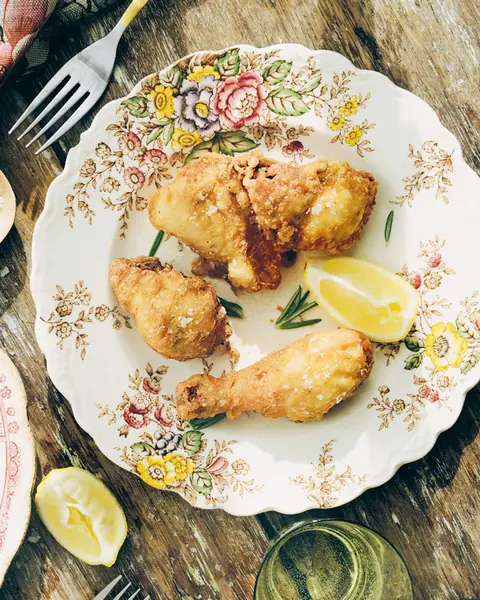
This isn’t a dish that belongs strictly to this one place. You will find it anywhere along Italy’s long coast. It’s a dish synonymous with summer, when restaurants open along the beaches and offer one form or another of frittura di paranza (which is named after traditional coastal fishing boats and their nets of the same name).
The small fish used for frying can be spotted at the markets or at fishmongers labelled pesce per fritto (fish for frying) and seem to be simply the small, miniature versions of larger fish – no larger than the width of your palm – that might be thrown back into the water in most other places. I suggest using naturally smaller sized whole fish, such as anchovies and sardines, mixed with some fillets of larger fish such as cod, red mullet and mackerel. You can also add small, whole prawns (shrimp). When deep-fried, they become so beautifully crisp and crunchy on the outside, you can eat the whole thing – shell, head and all.
Ingredients 6
Your new home
for cooking
Turn your recipe chaos into a plan for the week.
Browse 1000+ inspiring creator recipes
Unlimited recipe import from social media, blogs and more
Generate shopping lists and meal plans in seconds with AI
Method 6
can remain whole, shell and all, if using small ones. If they are very large, you may want to remove the shell but keep the head and tail on. Likewise, small can be kept whole, but clean their interiors as these will taste bitter – cut a small slit from their throat along their belly and pull out what’s there. Rinse and pat dry. Larger fish fillets can be cut into 4–5 cm (1½–2 in) pieces for easy eating.
Put the in a bowl or on a plate, and dredge the and to coat lightly but evenly in the flour – shake off any excess.
Heat a medium saucepan or deep frying pan with enough oil to allow the seafood to float – about 4 cm (1½ in) deep at least. When the oil reaches about 170°C (340°F), it’s ready for the seafood. You can test the temperature by dipping the end of a wooden spoon in the oil – when it’s surrounded immediately by many tiny bubbles, it’s ready.
Begin frying in batches. Do not overcrowd the pan or you will lower the temperature of the oil too much.
Fry the for 1 minute and remove; drain on plenty of pieces of paper towel. Fry the for about 2 minutes for the fillet pieces, and 3 minutes for the whole small fish. Drain on paper towel.
Sprinkle with salt and serve immediately with .

Emiko Davies's tips
You can also use rice flour for this, instead of regular flour. Although it’s not traditional, it gives the fish a light-as-air coating.
Notes
1