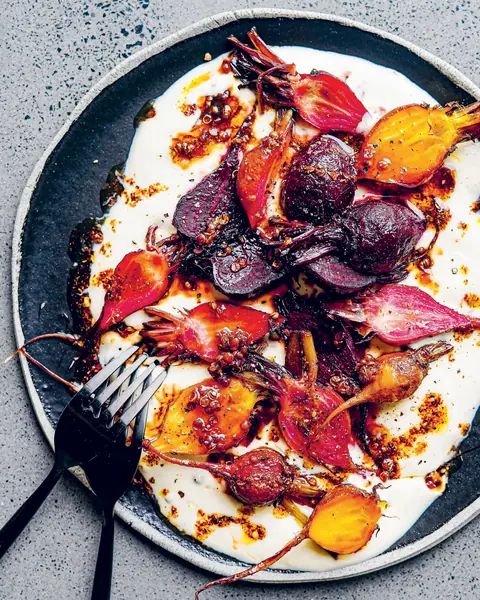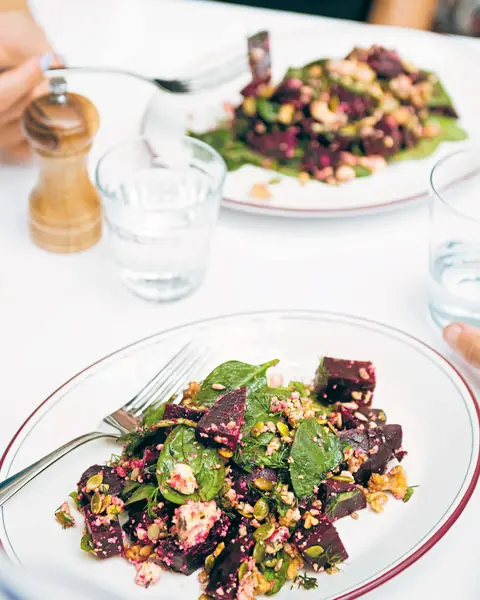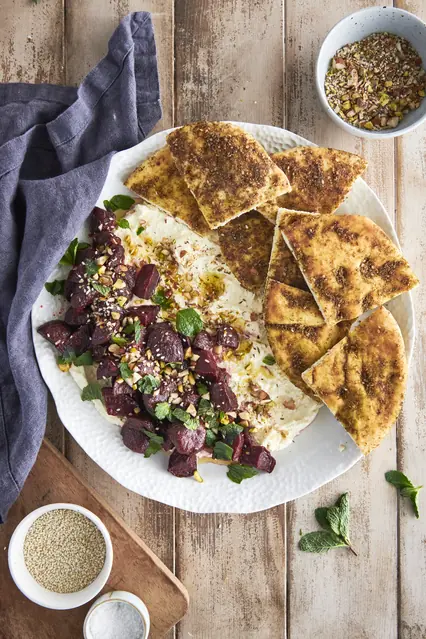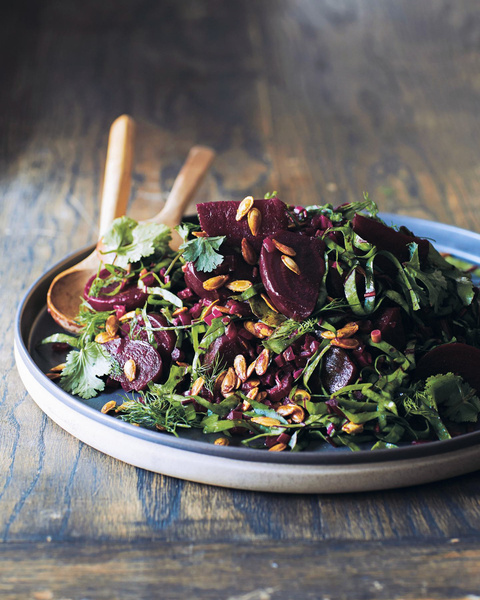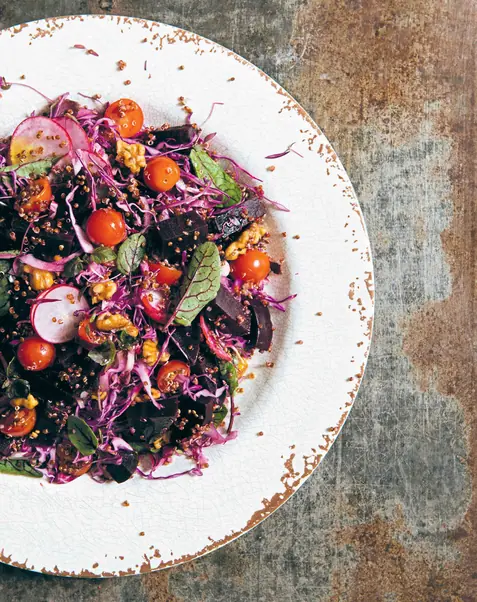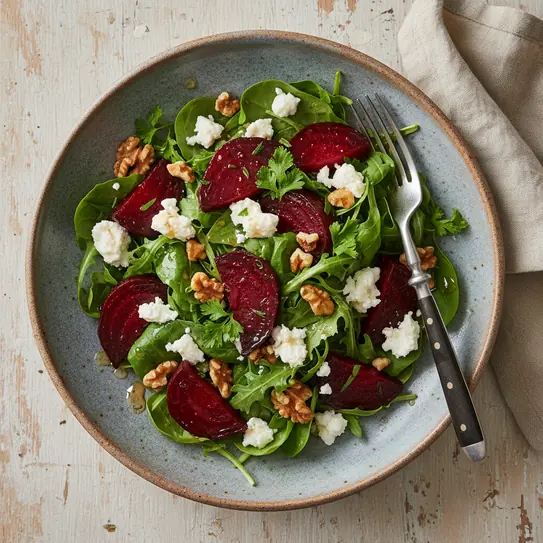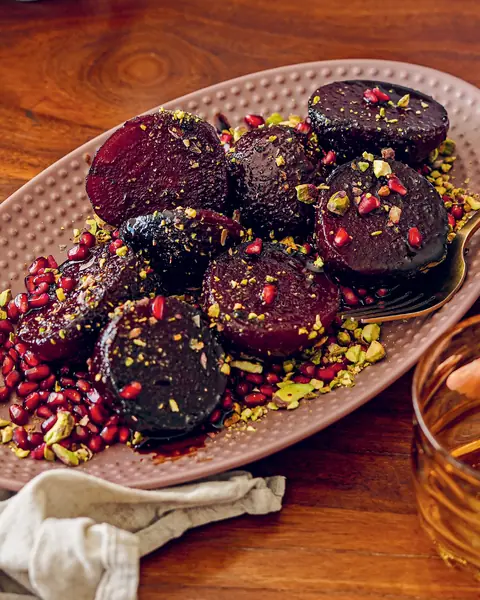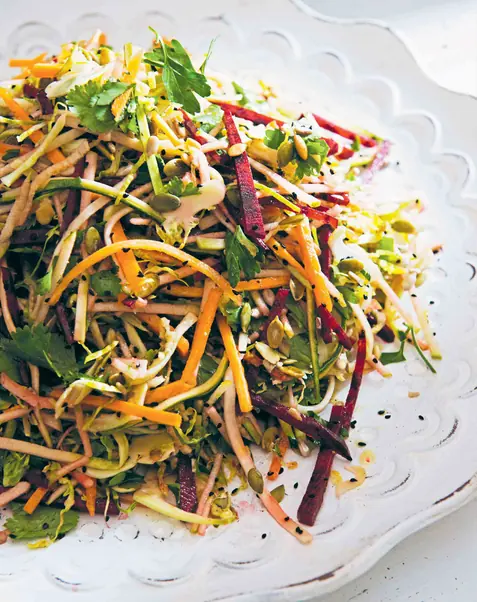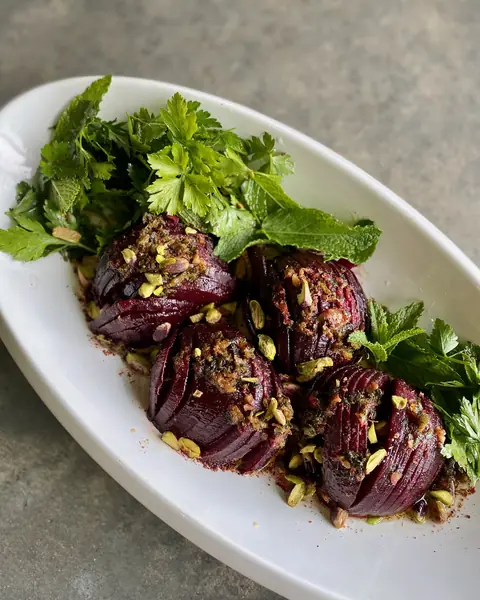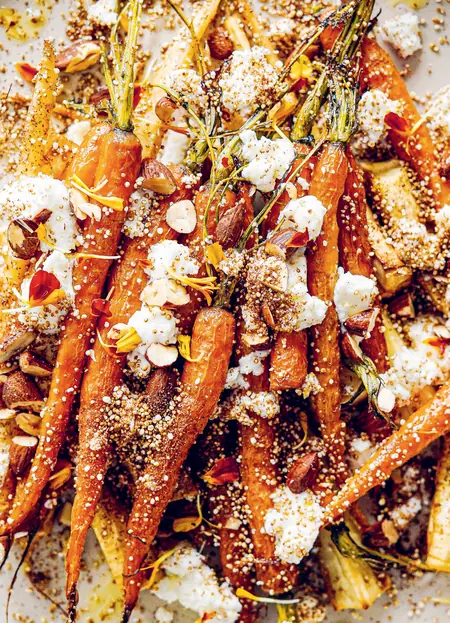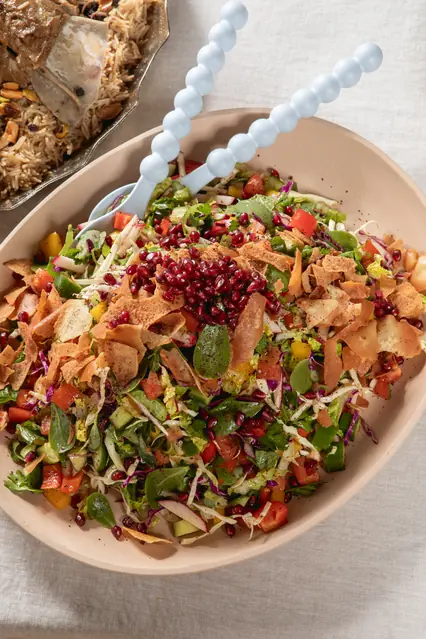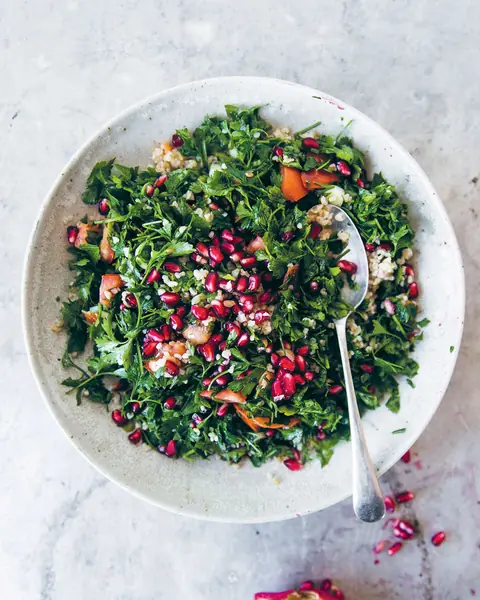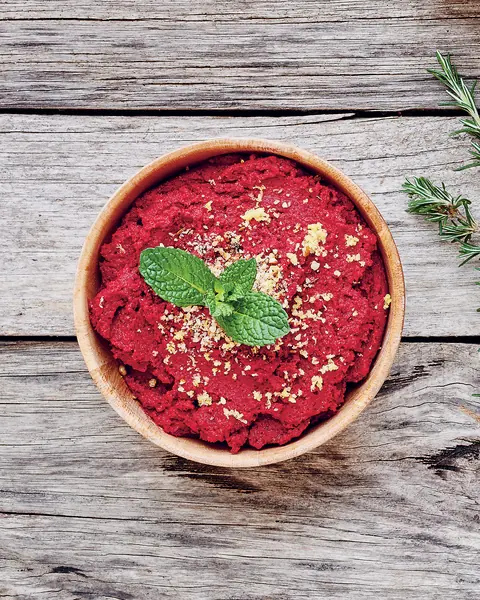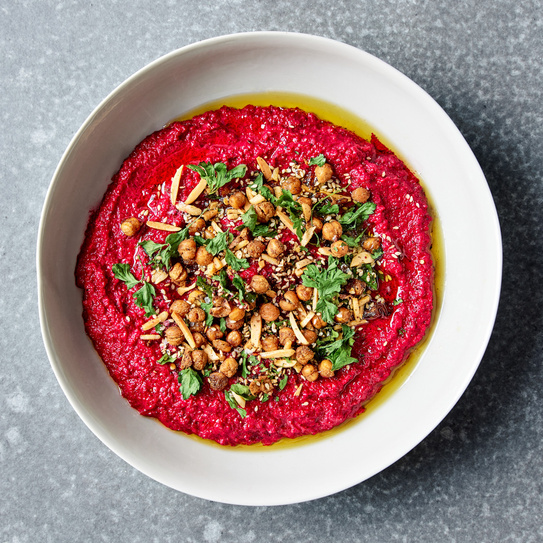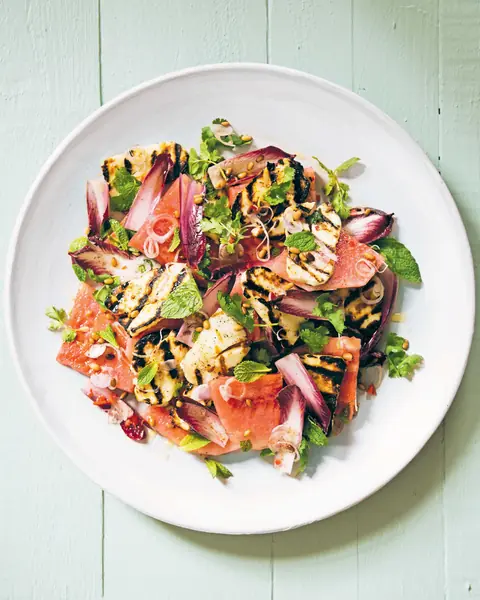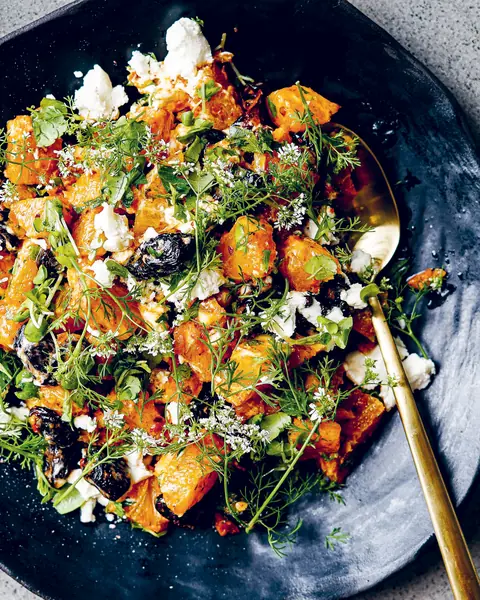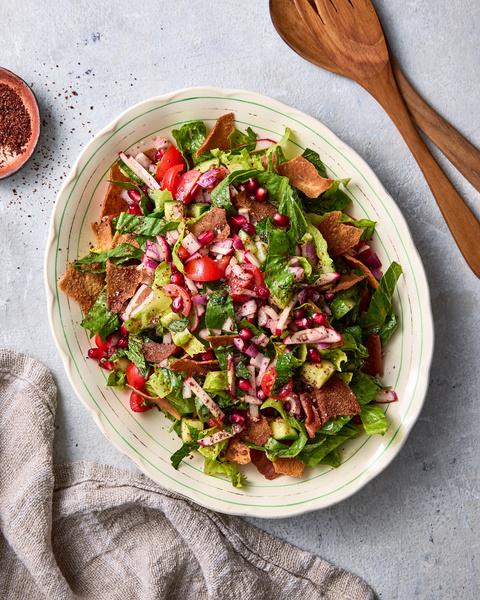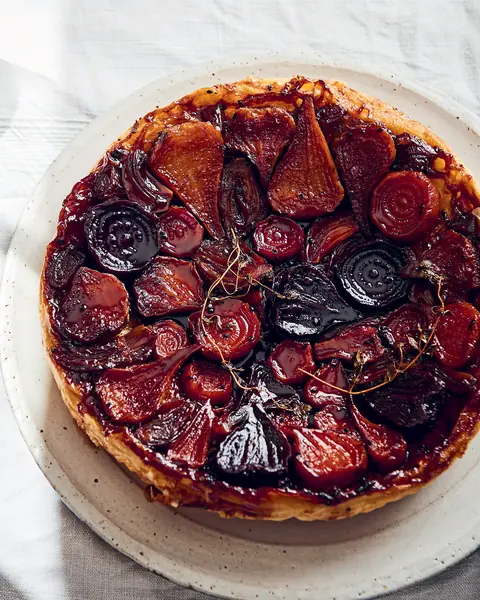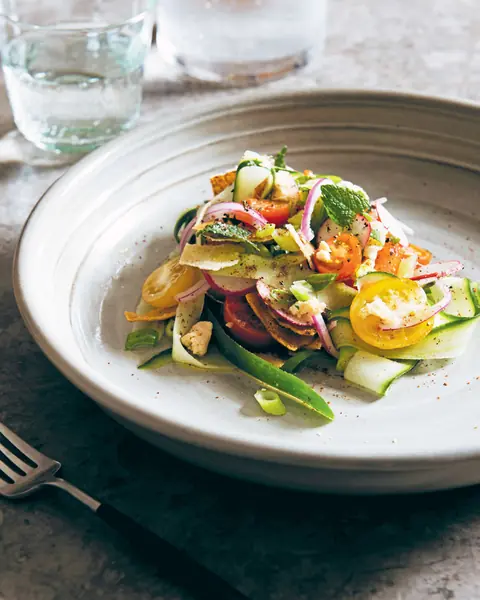
This is such a pretty salad. I would never sacrifice substance for looks but in this case, you get both. Aleppo is a perfect sprinkle chilli. Originally from Aleppo in Syria, but now most likely coming from Turkey, it has a good amount of heat but is not powdery when ground, so you can use less and still see the pretty red flecks.
And use sweet fuyu persimmons: the variety you slice thinly and eat before they have fully ripened; the hachiya variety, which have to completely soften before you can eat (due to tannins), are beautiful scooped on a cheese plate or for baking.
Ingredients 14
Beetroot
Salad
Your new home
for cooking
Turn your recipe chaos into a plan for the week.
Browse 1000+ inspiring creator recipes
Unlimited recipe import from social media, blogs and more
Generate shopping lists and meal plans in seconds with AI
Method 7
Preheat the oven to 200°C (400°F).
Remove the beetroot greens and save for another dish. Place the in a baking dish and drizzle with the , and .
Cover tightly with aluminium foil and bake for at least 20 minutes before you check their doneness. Medium-sized beetroot will probably take closer to 40 minutes to cook.
Once cooked, remove the foil and allow them to cool. When cooled, peel the skins – they should slip right off. Set aside.
Soak your in the with a pinch of and set aside.
To assemble, spread the on the bottom of a serving plate or platter. Thinly slice the and using a mandoline and arrange the slices in a pretty pattern over the feta.
Sprinkle over the vinegar-soaked , a pinch of and the , and drizzle with the . Toss the , and on top, then finally sprinkle the over the whole thing. Serve immediately.

Danielle Alvarez's tips
The trickiest part of this salad is cooking the beetroot. I recommend this method as it intensifies their flavour in the best way, but the trick is in maintaining the texture. Almost all beetroot will cook at different times depending on type and size, so it’s important to know what you’re looking for.
You want the beetroot skin to slip off quite easily, but when you stick a knife in there should be a slight resistance, as if you are piercing into wet sand – otherwise it’s overcooked and mushy. It’s not the end of the world, and you almost have to overcook some before you can understand the difference, but in my opinion a beetroot with some texture is far superior.