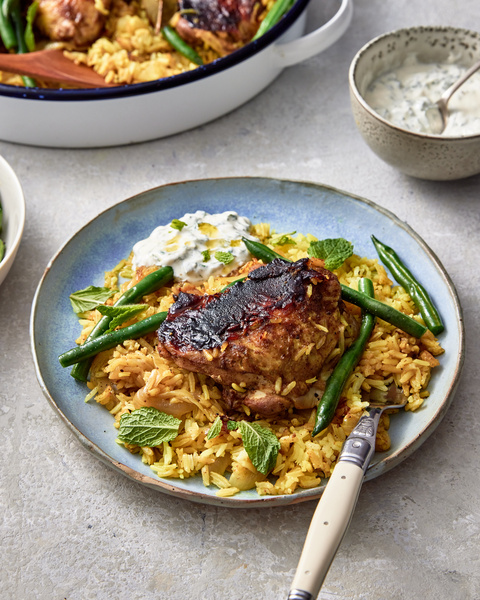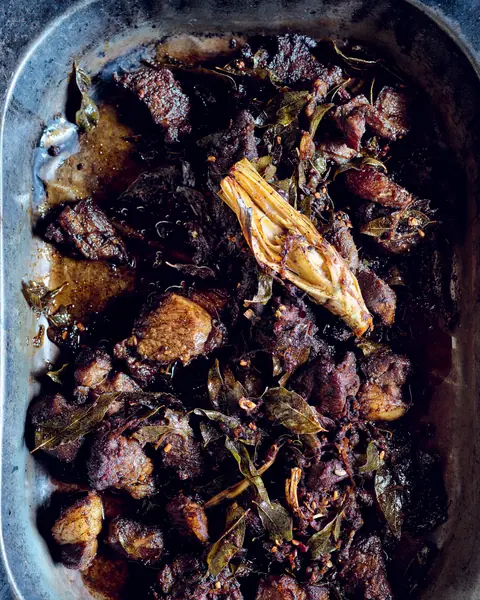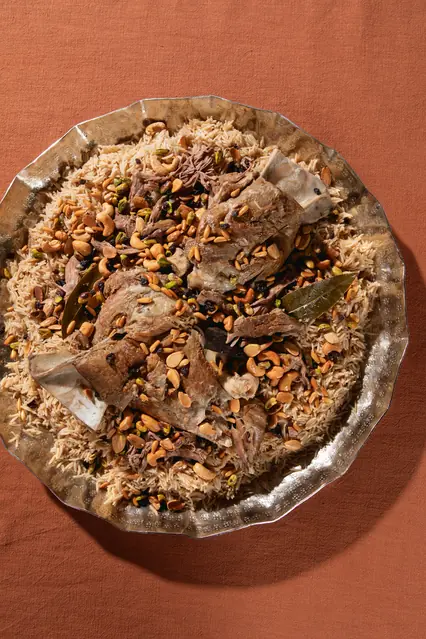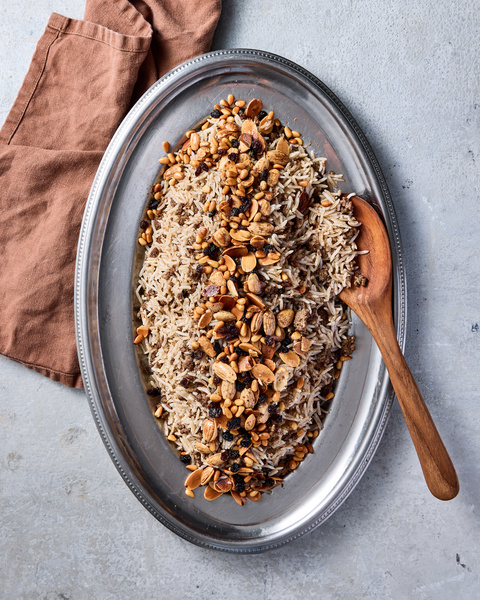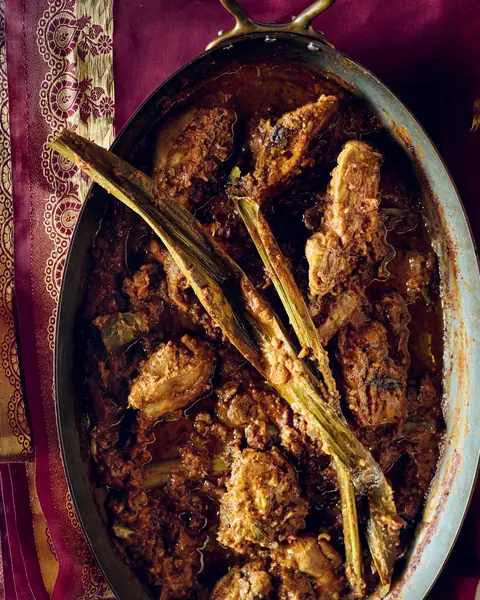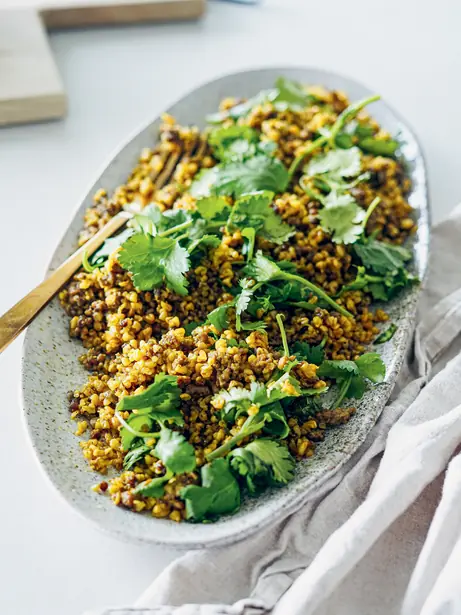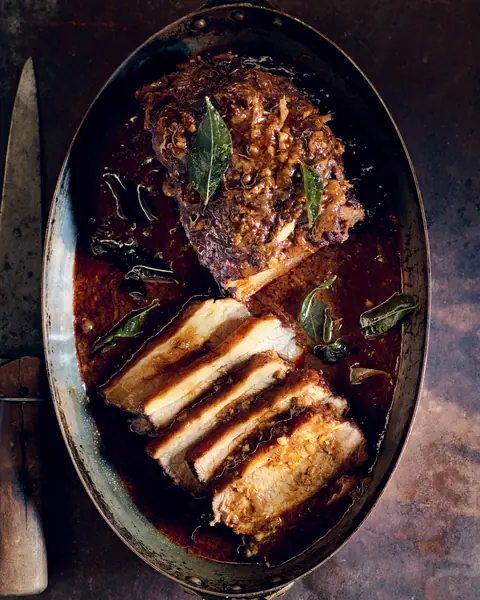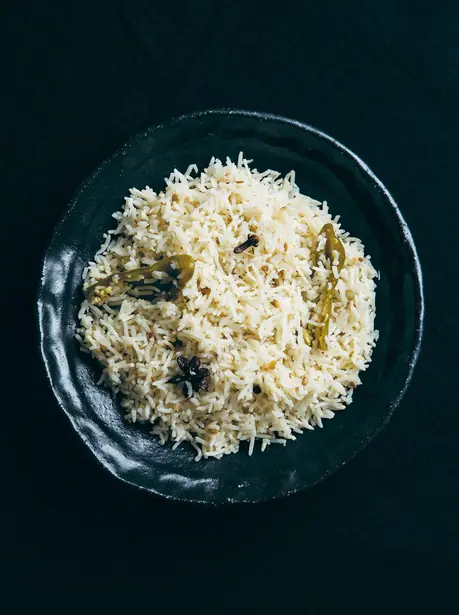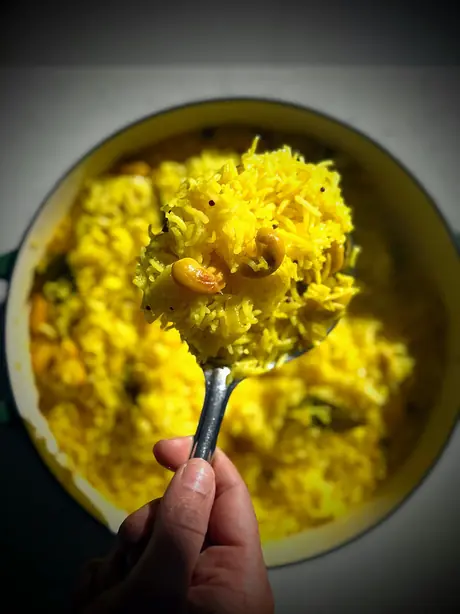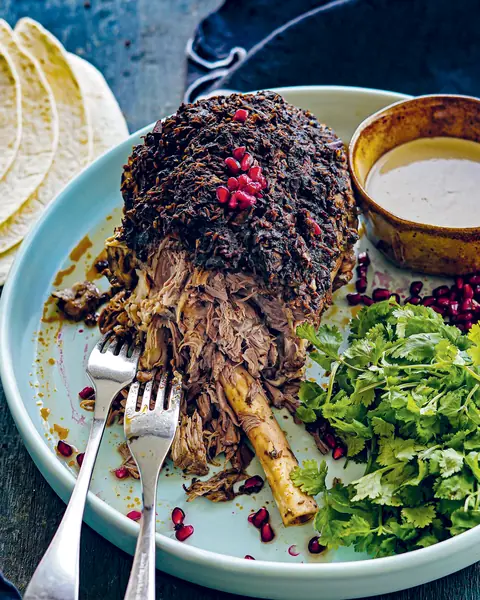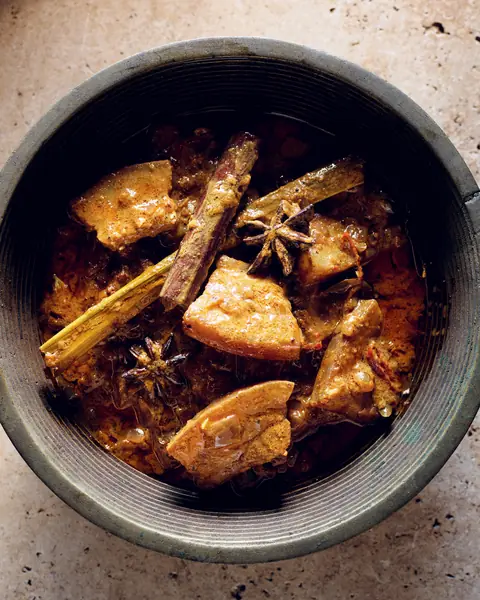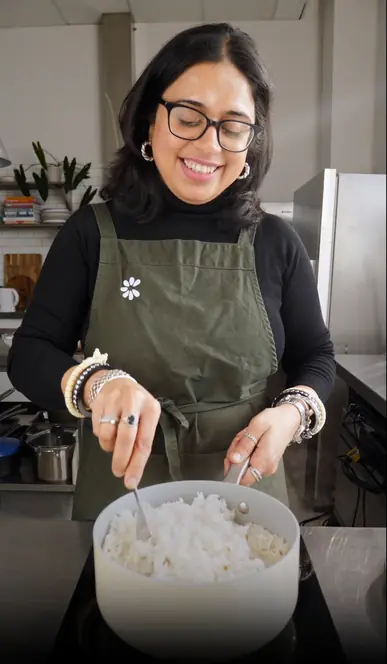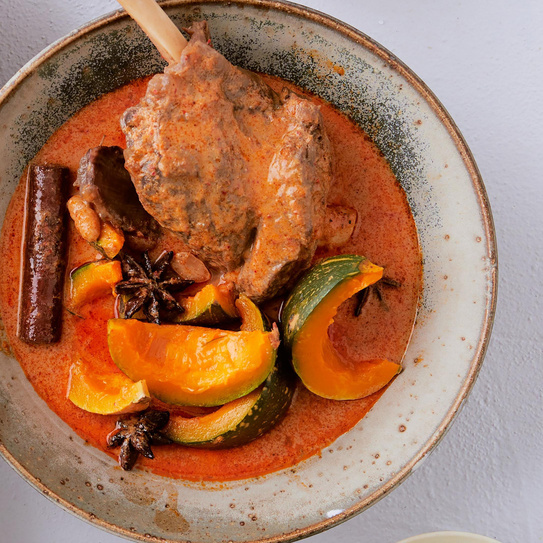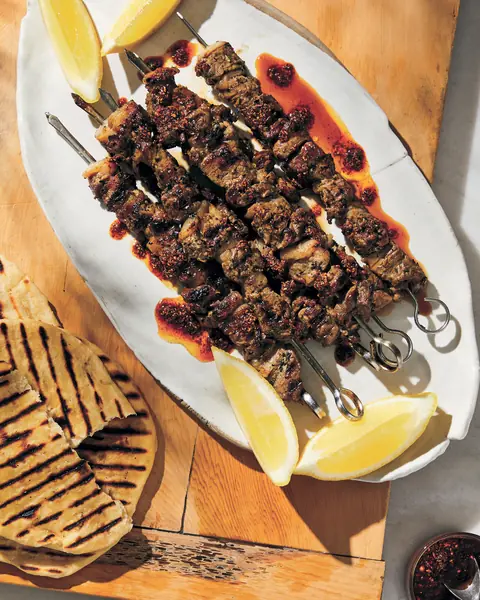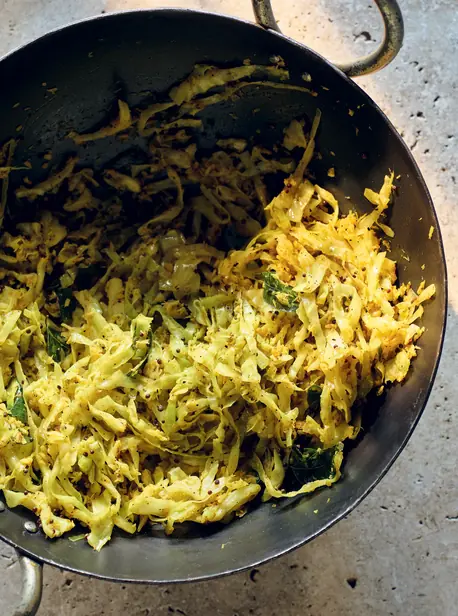
Versions of biryani abound, from country to country and within Sri Lanka itself, but at its heart it’s baked and layered rice cooked with spices and usually some sort of meat. In Sri Lanka it is served on special occasions and generally made with chicken. Here, for my not particularly traditional take, I’ve used lamb; you could also substitute goat.
The ingredients list is reasonably long and there are quite a few steps, which might seem daunting, but the aromatic flavours and joy this special dish brings are well worth it. Just make sure you read the whole recipe before you begin, to get a sense of all the steps, ingredients and timings.
Essentially you will be marinating and cooking the meat, cooking the rice, making a temper, constructing the dish and then baking.
Ingredients 25
To Marinate The Lamb
To Cook The Lamb
Fragrant Rice
To Assemble
Temper
Your new home
for cooking
Turn your recipe chaos into a plan for the week.
Browse 1000+ inspiring creator recipes
Unlimited recipe import from social media, blogs and more
Generate shopping lists and meal plans in seconds with AI
Method 18
To Marinate The Lamb
Using a mortar and pestle, pound together the , , and to form a smooth paste.
Place the pieces in a bowl. Add in the cashew paste, and and massage into the meat, then stir through the .
Cover and marinate in the fridge for 2–3 hours, taking it out about 20 minutes before you start the next stage so it comes to room temperature.
To Cook The Lamb
To cook the lamb, first place a large flameproof casserole dish with a lid over a medium heat. Add in half the to melt and then the to fry for a minute or so. Add the whole spices and cook for 2 minutes, then add the , and and cook, stirring occasionally, for 6–7 minutes or until the onion has softened. Season lightly with salt flakes and black pepper, then use a spoon to remove this base into a bowl and set aside.
Increase the heat to high, add in the remaining and cook off your . Give them a good 10 minutes or so in the pan, stirring regularly, and season well. The will start to stick but just keep stirring and scraping.
Add the base back in with the , along with the , plus a splash of to rinse out the tomato tin. Reduce the heat so the mix is at a gentle simmer, cover with a lid, and cook the lamb, stirring occasionally, until it’s well braised and just starting to fall apart, between 1 1/2 and 2 hours.
Once cooked, stir through the and set aside to cool, then remove from the casserole dish and clean.
To Cook The Rice
While your lamb is cooking, prepare the rice and the temper. Wash the until the water runs clear, then leave to drain in a colander.
Melt the in a saucepan over a medium heat, add the , and and cook, stirring, for 2–3 minutes until the spices become very aromatic.
Add the and cook, stirring, for a minute or so, then add the and . Cook, stirring occasionally, for 3–4 minutes until the onion has softened, then pour in the and give it a good mix to coat.
Add the , , and the saffron liquid, stir well. Allow the to come to the boil – this will take 4–5 minutes. Put the lid on, reduce the heat to very low and cook undisturbed for 10 minutes. Remove the pan from the heat and leave to steam, still covered, for another 10 minutes.
Remove the lid and fluff up the . It should be dry, fluffy, and still ever so slightly undercooked.
Make The Temper
For the temper, melt the in a medium frying pan over a medium–high heat, add the and and cook, stirring, for a minute until the seeds start to pop and the leaves are fried.
Add the and cook, stirring occasionally, for 4 minutes or until it starts to catch on the bottom of the pan. Add the and cook for another 2–4 minutes until the onion is nice and caramelised. Set aside.
To Assemble And Bake The Biryani
Preheat the oven to 220°C (430°F).
Place the clean casserole dish over high heat, add and wait until it just smokes. Add in half the on an even layer at the base and turn off the heat. Spoon in the lamb and sauce over the rice, then finish with the remaining rice in another even layer. Cover with the lid and bake for 30 minutes.
Remove the biryani from the oven and take off the lid. Spread over the temper and return to the oven for an extra 5 minutes to dry out and heat the temper.
Remove from the oven, use a fork to fluff up the top layer of so you can see the meat poking through. Garnish generously with coriander leaves and serve immediately. The biryani should be heavily fragrant with spice, the meat tender, the rice soft but not gluggy, and there should be a nice crunchy layer of rice at the bottom.

O Tama Carey's tips
Biryani is traditionally served with a version of raita.
To toast cashews, preheat oven to 150°C (300°F), spread cashews on a baking tray and toast for 15 minutes until uniformly pale golden, giving them a jiggle every 5 minutes to ensure even cooking.