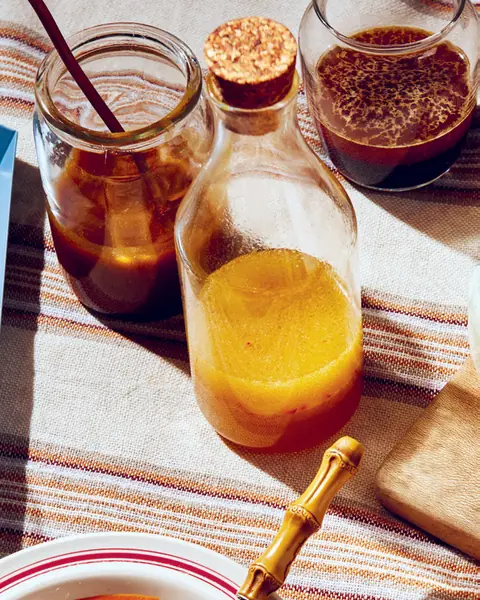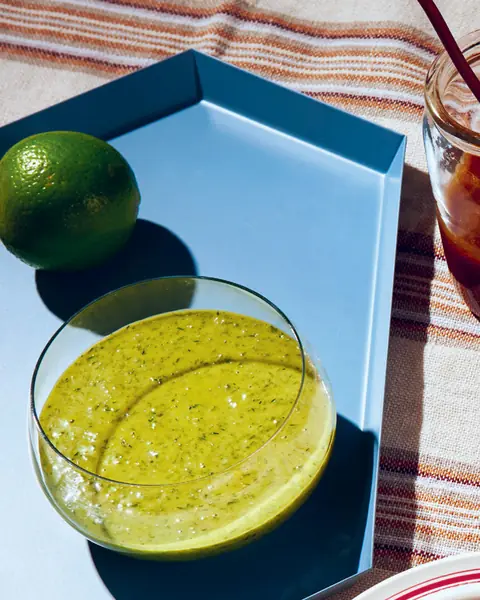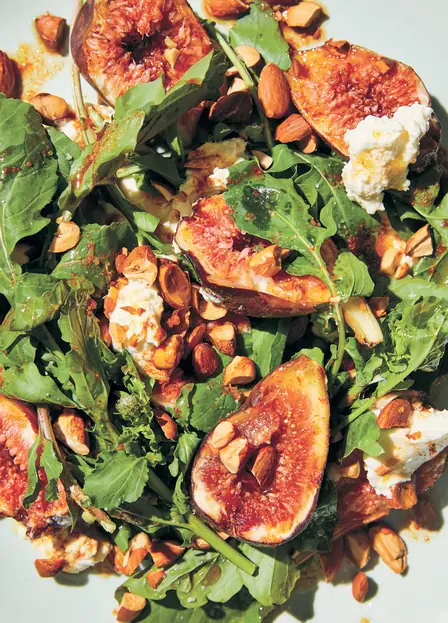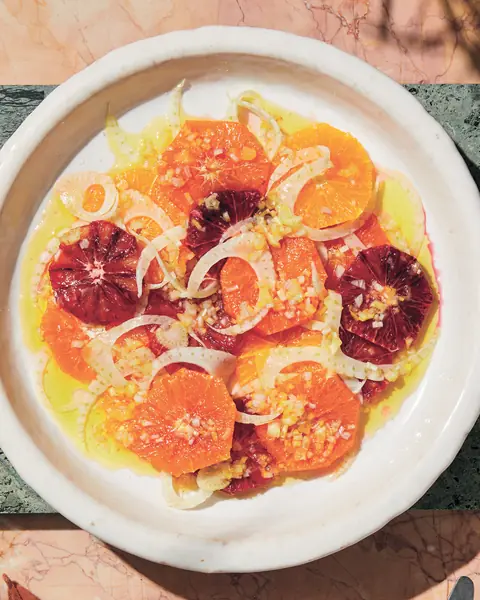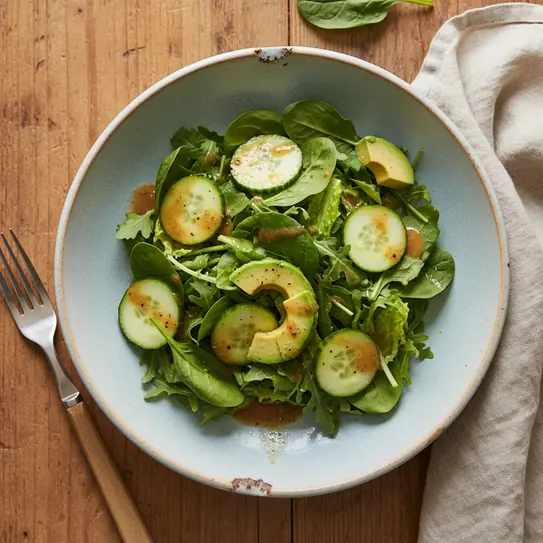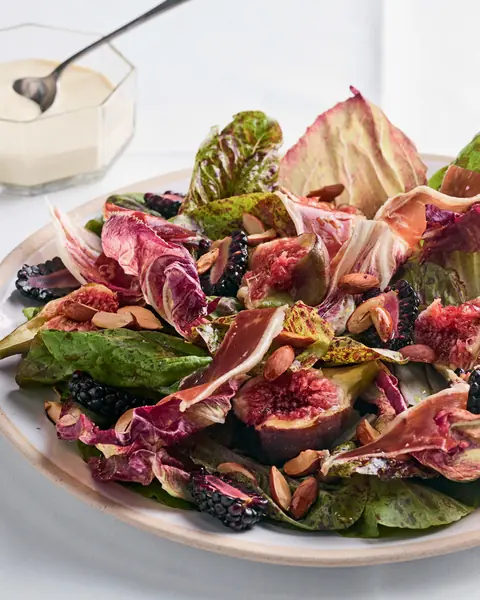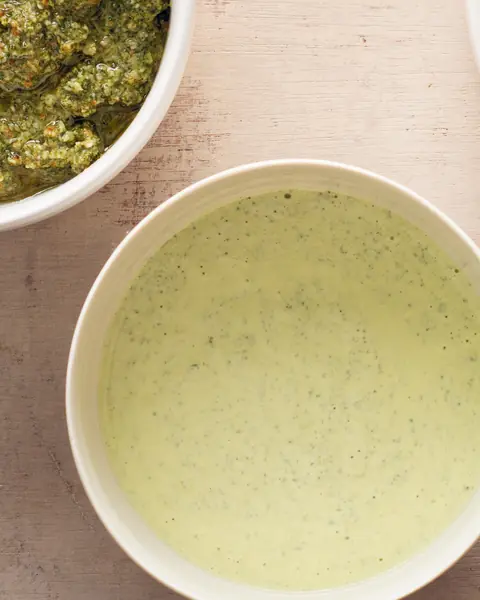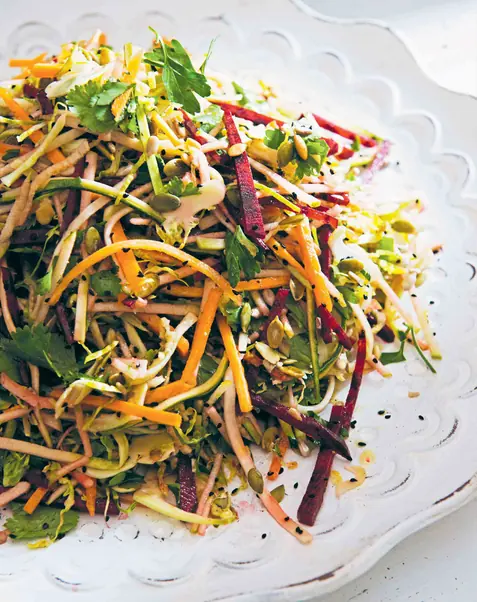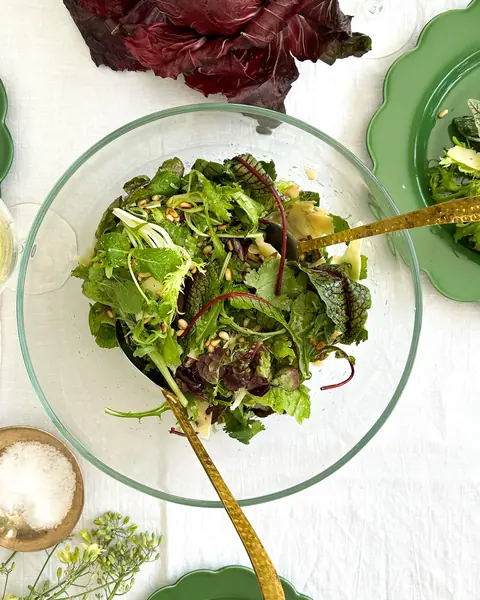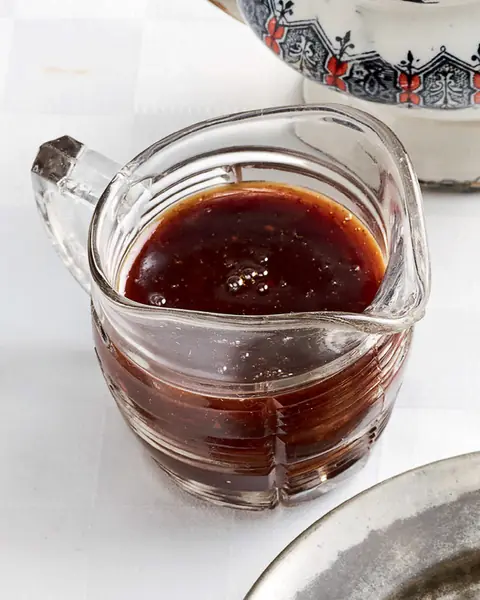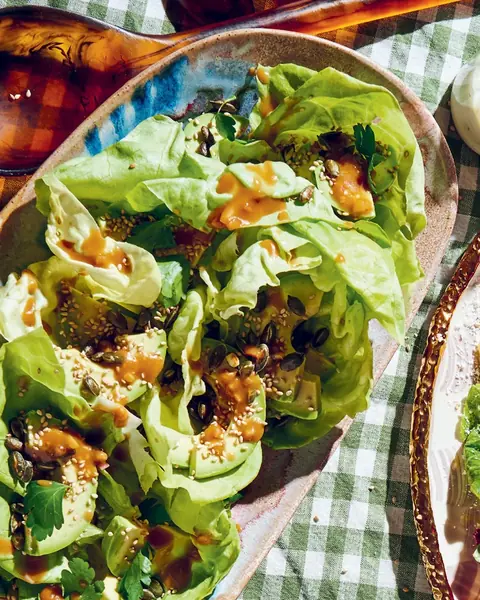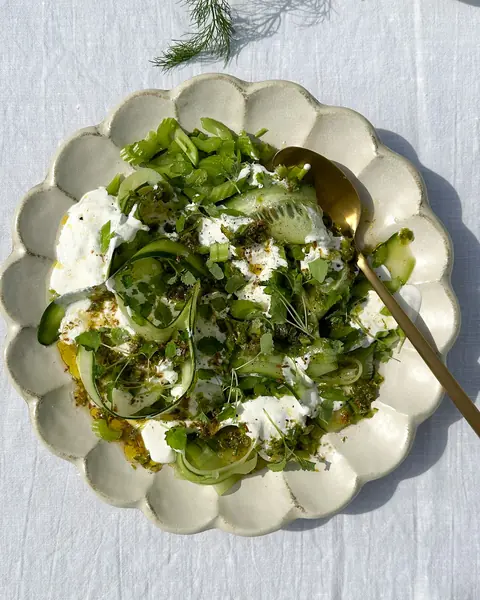
This is probably the recipe that I get asked about the most at the restaurant and I am proud of that. Made well, it is a lesson in balance. It is so simple and yet so difficult to get right. There are so many variables: choice of different vinegars, oils, emulsified or not? And even if you get the vinaigrette right, you still need to dress the leaves properly.
Do not despair though, a perfectly dressed salad is not out of reach. Maybe only true salad connoisseurs like my former boss Alice Waters could pick up on the subtleties, but I think we’ve all had salads that weren’t quite right; perhaps heavy or oily, or not enough acidity. Whatever the case, the vinaigrette often gets forgotten or we rely too heavily on ratios like 3:1 or 4:1 and assume that’s good enough. Well, it’s not. Not if you want the deep satisfaction of a delicious salad.
Ingredients 6
Your new home
for cooking
Turn your recipe chaos into a plan for the week.
Browse 1000+ inspiring creator recipes
Unlimited recipe import from social media, blogs and more
Generate shopping lists and meal plans in seconds with AI
Method 4
To Make The Vinaigrette
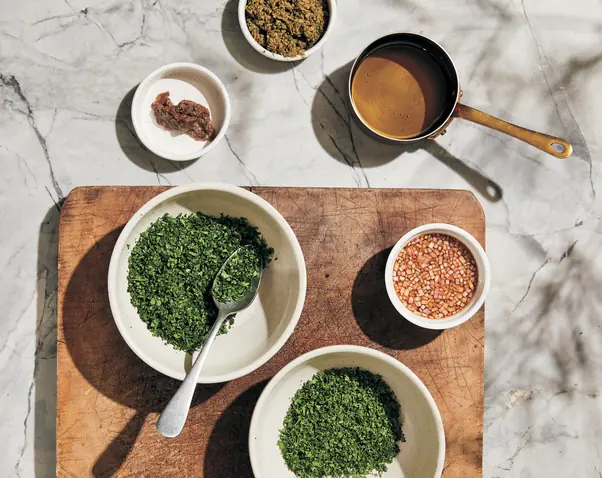
In a bowl, combine the , , and . Mix well and allow to marinate for at least 15 minutes. It’s important to add the salt at this stage to draw out the flavour from the shallot.
Next, add the and, using a whisk, slowly drizzle in the . You are not trying to emulsify here, because the vinegar and oil will split, but if you don’t take the time to do this part slowly, for some reason I can’t explain, the dressing ends up feeling disjointed, like there is oil and there is vinegar but they aren’t holding hands. This gentle, slow mixing helps them become acquainted, so that even after they separate, when you mix them together again to finally dress your salad, their bond feels that little bit stronger.
To Dress The Salad
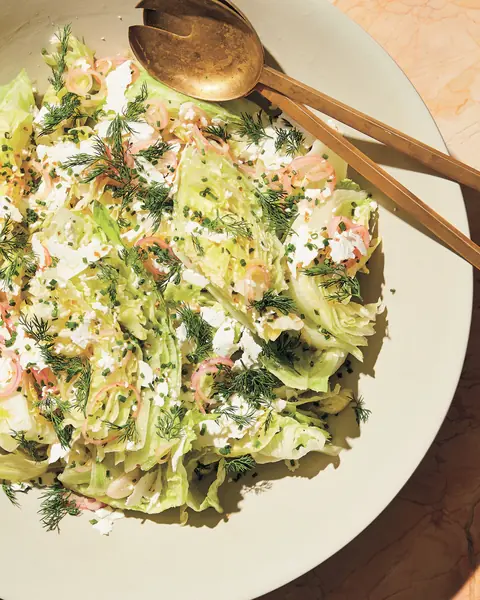
Add your leaves to a large bowl — much larger than you think you need. You absolutely must use your (just-washed) hands for this. Do not even think about using tongs or putting on gloves; you need to be able to feel the dressing coating the leaves.
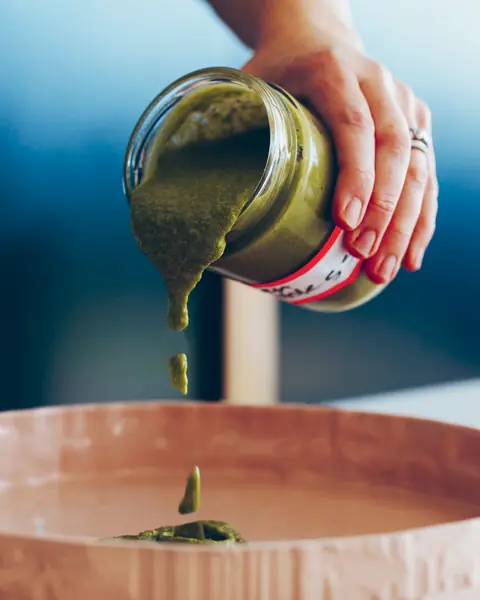
Shake the jar really well to vigorously mix the dressing from bottom to top, then ladle in the dressing a little at a time. Sprinkle in some sea salt and mix gently. Taste. Does it need more dressing? Can you taste the leaves? Maybe a pinch more salt? Don’t add too much dressing early on; as you’ve heard before, you can always add more but you can’t take it away.

Danielle Alvarez's tips
Because of the shallot, this dressing is only good for one day. You can strain out the shallot and reserve the leftover vinaigrette, but it’s really never as good as when it’s fresh.
Important to note is that different leaves require different amounts of the dressing and different sharpness. Romaine (cos) or gem leaves, which can often be a bit bitter, will require extra dressing to balance them – maybe a bit more honey or a bit more vinegar. If I realise this after I’ve made the dressing, I just splash the vinegar or drizzle the honey directly on the leaves.
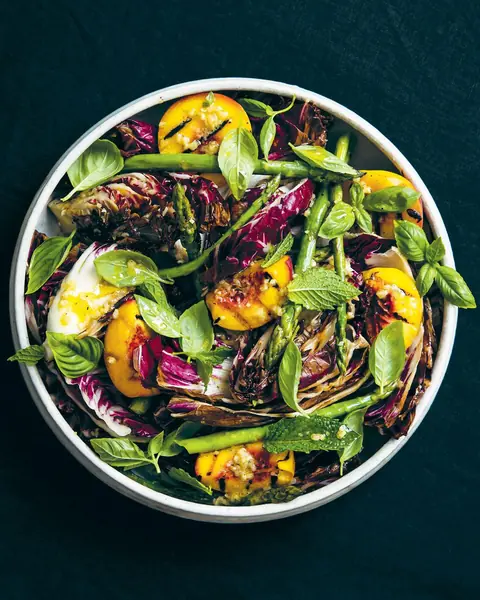
Leaves like this also want you to gently rub the dressing onto them. Don’t be afraid; they like it. True bitter leaves like radicchio or treviso require even more dressing, more salt, more acidity to balance them, and they also have enough backbone to hold up to it. A delicate spring mix or herb salad wants the smallest amount of dressing and a gentle touch to just coat it.