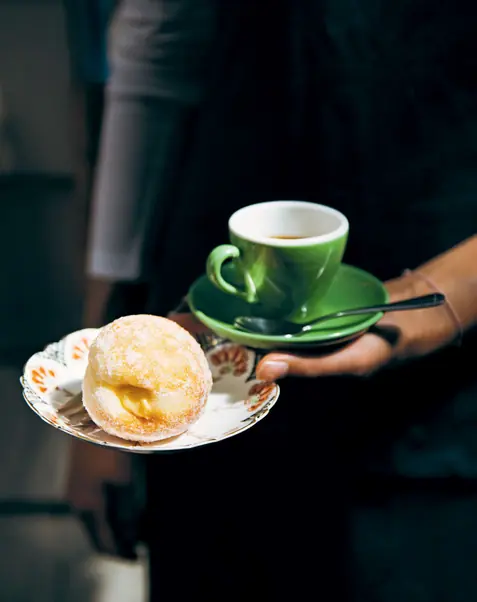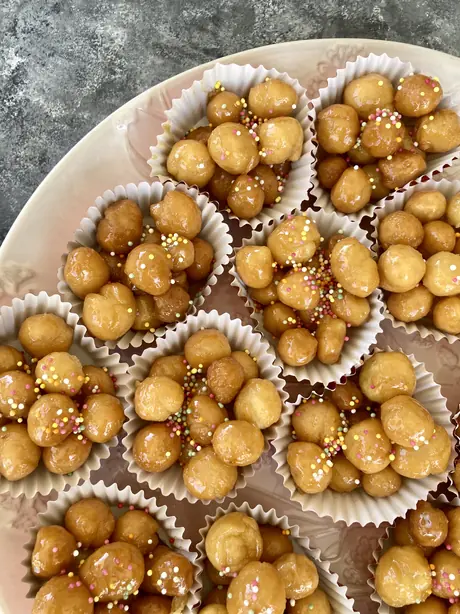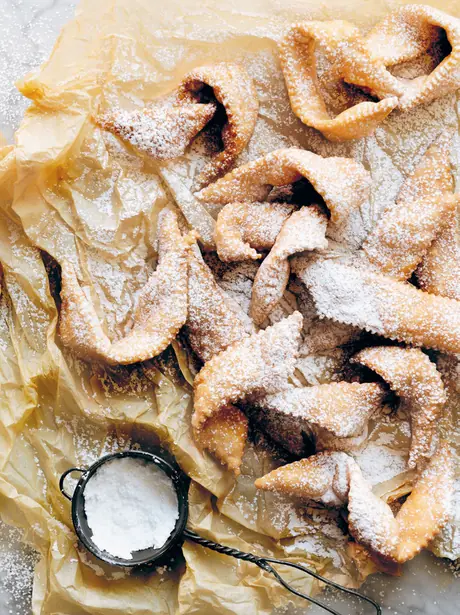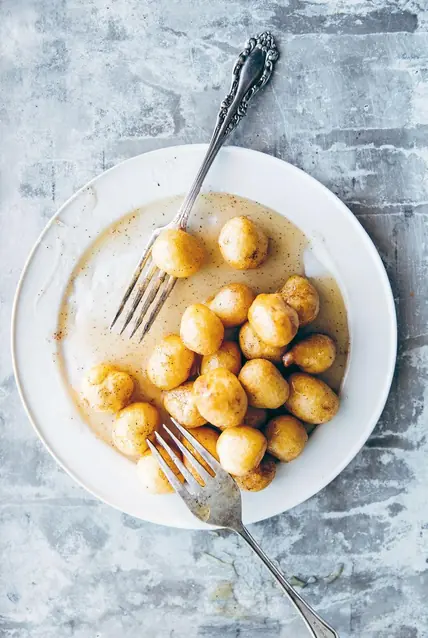
The local bar near my mother-in-law’s house is much like many typical Italian bars. People gather there to chat, usually taking an espresso at the counter (standing, of course) or ordering trays of pastries to take home. The coffee’s not great, but we don’t really go there for the coffee. We go there for the bomboloncini. These innocently small, round balls of light, sweet, fluffy dough injected with pastry cream are the perfect mouthful. Somehow, even with an imperfect cup of coffee, that bomboloncini makes the morning.
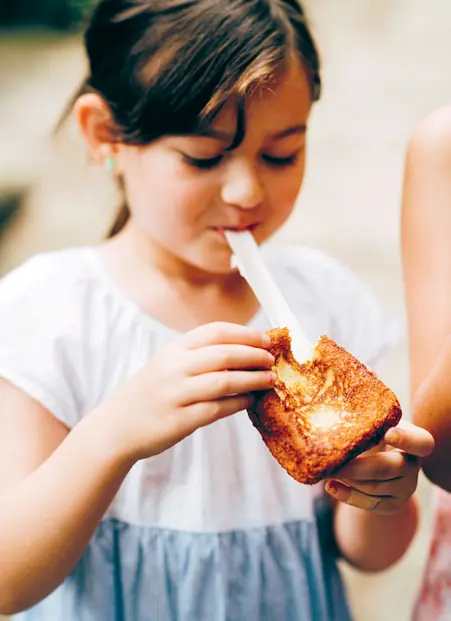
A bomboloncini is a golf-ball-sized version of the bombolone, the sort of pastry you’d find at every festival or market, freshly deep-fried from the back of a van. Many Tuscans have fond memories of eating bomboloni on the beach as a snack but you would never, ever eat these as a dessert after dinner.
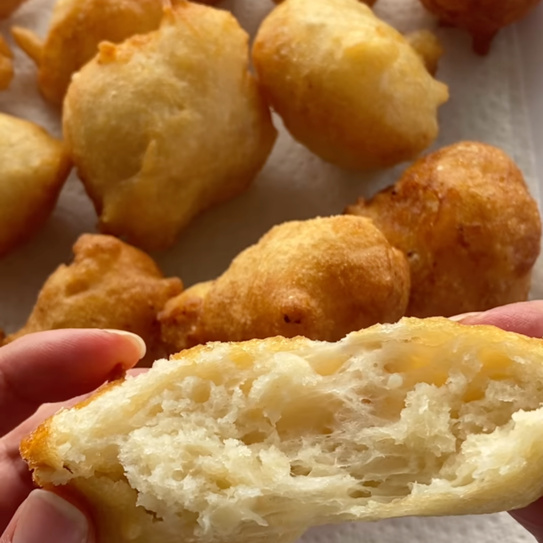
Unlike many modern bomboloni recipes, which are similar to krapfen (northern Italian-style doughnuts), this version is its poorer cousin. It’s a very traditional Tuscan recipe that is more like a very soft bread dough deep-fried in vegetable oil. They are pillowy and somewhat lighter than krapfen-style doughnuts, which contain eggs.
Makes about 16-18 small bomboloncini.
Ingredients 7
Your new home
for cooking
Turn your recipe chaos into a plan for the week.
Browse 1000+ inspiring creator recipes
Unlimited recipe import from social media, blogs and more
Generate shopping lists and meal plans in seconds with AI
Method 9
Dissolve the in the and let it sit for about 10 minutes.
Combine the flour, 50 g (1¾ oz) of the sugar, and the butter and salt in a bowl, and pour over most of the yeast and water mixture. Mix until it comes together. You may not need all the water, but you may need a dash more – this will depend on your flour and environment.
Knead the dough on a floured work surface for about 8 minutes, until it’s no longer sticky and you have a soft and elastic ball.
Put the dough in a bowl and cover with a dish towel. Let it rise in a warm spot away from draughts for 2 hours.
Roll the dough onto a lightly floured work surface until it’s about 1 cm (½ in) thick. Cut out circles with a little drinking glass or a small round cookie cutter – I use one about 5 cm (2 in) in diameter. Cut out rounds until you have used all the dough.
Heat the vegetable oil to 160°C (320°F) in a saucepan large enough for the bomboloncini to float (they shouldn’t touch the bottom of the pan).
Deep-fry in batches of three or four for 2 minutes on each side or until deep golden and puffed. You can sacrifice your first one as a test to check that the inside is fully cooked. If not, you may need to turn down the heat ever so slightly and fry for a bit longer.
Drain on paper towel for a moment, then immediately roll in the rest of the and enjoy while still warm.
If you want to fill your bomboloncini with jam or pastry cream, use a metal or plastic tipped piping (icing) bag to squirt a small amount of filling inside each bomboloncino. If you don’t have a piping bag, try doing this the way Pellegrino Artusi would have done in 1890 – simply place a teaspoon of jam on one disc of dough, moisten the edges with water, and sandwich another disc on top.

Emiko Davies's tips
Don’t be put off by frying. Frying is easy. Just make sure to use a pot of oil deep enough that the dough floats while cooking, and be very careful with these bomboloncini as they fry at a relatively low temperature – about 160°C (320°F). To get that crisp, golden-brown exterior and fluffy interior, a sugar thermometer can be very helpful for monitoring the temperature, but if you’re not sure of the temperature and don’t have a thermometer, simply throw a cube of bread in the hot oil – it should turn golden in about 15 seconds.