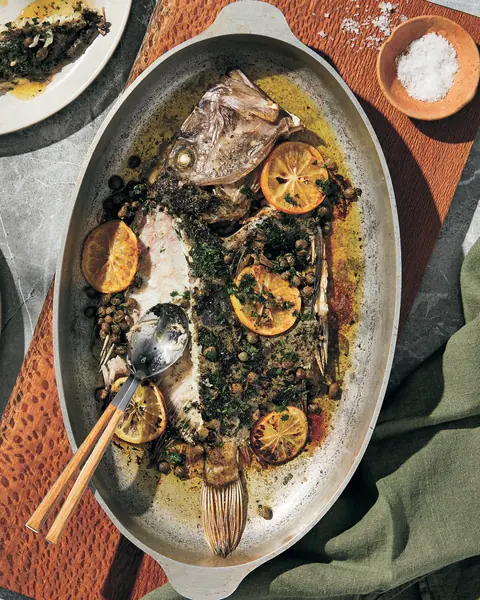
Bonito is fished out of the waters of the Tuscan archipelago between spring and summer, and again in early autumn. It’s a decent-sized, delicious oily fish, often sold whole in its armour of silver stripes. Though its flesh is rather similar to tuna, it’s significantly cheaper – in fact, it’s often known as ‘poor man’s tuna’. Preserving it in flavoured oil is the perfect way to ensure you always have some of this tasty fish on hand to whip up a quick meal.
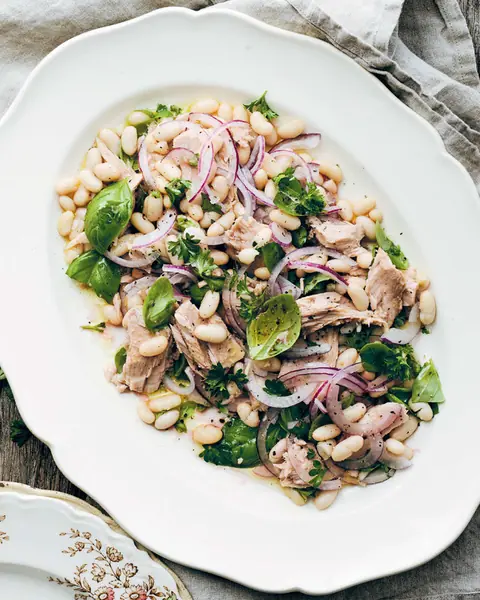
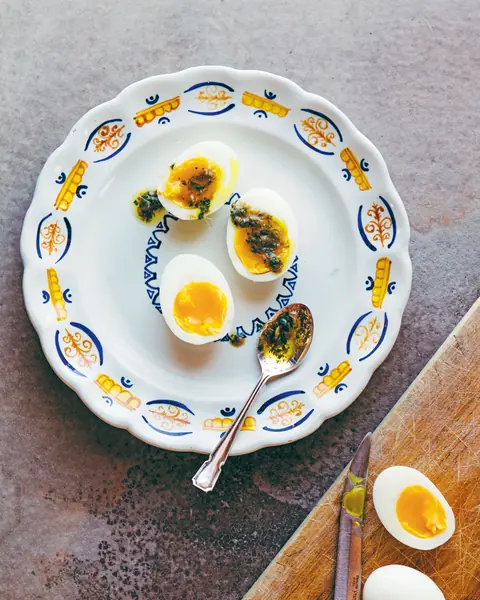
Essentially tinned tuna but better, bonito in oil is delicious just as it is, served as part of an antipasto platter. But my favourite way to have this is with an impromptu salad dressed in red wine vinegar and olive oil with white cannellini beans and thinly sliced red onion that’s had a 10-minute soak in some cold water. It’s also great crumbled into some tomato and basil pasta sauce or on a panino with sliced boiled eggs and parsley or fresh tomatoes and lemon zest.
Makes roughly 4 jars of 250ml (8 1/2 fl oz/ 1 cup).
Ingredients 7
Your new home
for cooking
Turn your recipe chaos into a plan for the week.
Browse 1000+ inspiring creator recipes
Unlimited recipe import from social media, blogs and more
Generate shopping lists and meal plans in seconds with AI
Method 6
Remove the entrails, the head and the tail of the and chop the rest into thick steaks, about 5 cm (2 in) wide, bone and skin intact. Avoid cutting pieces from the smaller or narrow sections of the fish, too close to the tail or the gut, as these smaller pieces tend to be too salty.
Put the steaks in a bowl of cold (traditional recipes call for this to be seawater, but regular tap water will suffice) and refrigerate for 2–3 hours. Change the water once or twice during this time. This is to remove any traces of blood.
Put the in a large stockpot with the and bring to a simmer over high heat. Drain the steaks, put in the pot and simmer over low heat, covered, for about 1½–2 hours. They should be firm and cooked through.
Drain and pat the steaks dry. When cool enough to handle, use your fingers to break apart the bonito into a few smaller sections, removing the central bone and skin as you go. Wrap the fish pieces in a clean tea towel (dish towel) or in layers of paper towel and place on a colander set over a plate. Chill in the fridge for several hours or overnight to drain it well.
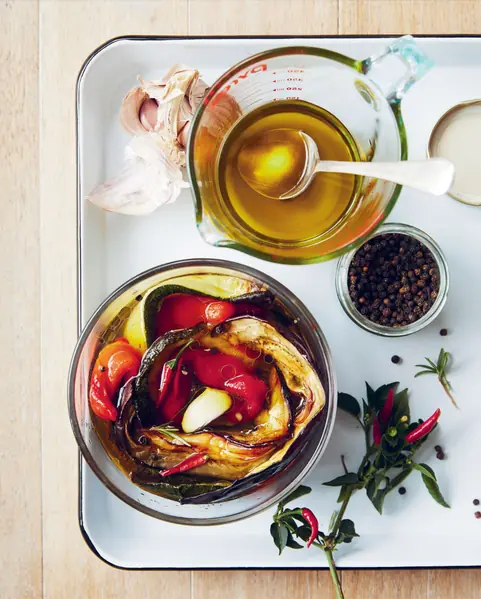
Put the drained in sterilised jars (see my sterilising jars page on my profile) and evenly distribute the and (and , if using). Pour over the , making sure the fish is entirely covered with about 1 cm (1/2 in) of oil. Tap the jar on the counter to allow any trapped air bubbles to come to the surface and, if you wish, break apart the bonito further to get it to fit nicely. Once the air bubbles are gone and the fish is well covered with oil, put the lid on. If you plan on keeping this for a while, seal as described in the Sterilising and Sealing section on my profile.
Store in a cool, dark place – I keep mine in the fridge. This is best about a month after bottling (if you can wait that long) and will keep for 3 months. Once opened, keep it in the refrigerator and make sure the remaining fish is covered in . The fish will keep for 7–10 days.

Emiko Davies's tips
I recommend using smaller jars – as opposed to 2 jars of 500 ml (17 fl oz/2 cups) capacity each – so that you can quickly consume the opened jars.