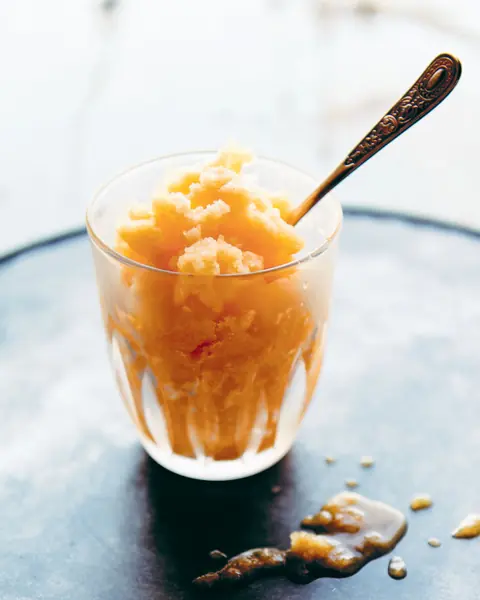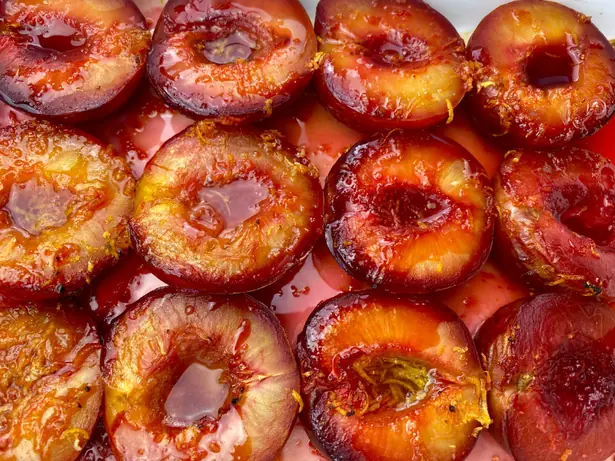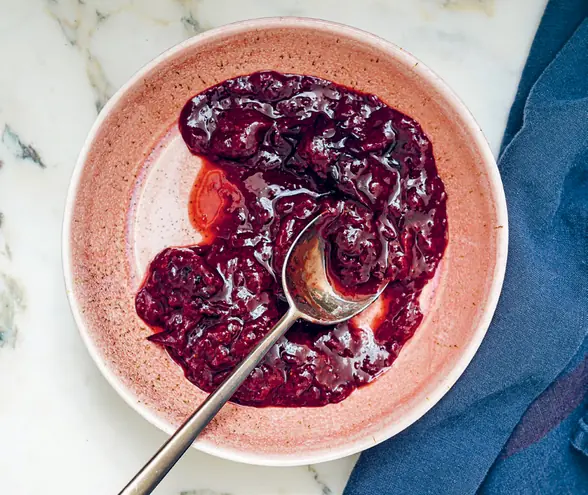
In the summer, when stone fruit is abundant, mountains of plums, peaches, nectarines and apricots fill the markets and you can buy them by the bucketload for next to nothing. It’s an age old tradition to make jam from the overflow of too much ripe fruit, especially if you happen to have fruit trees (every summer my brother-in-law’s mother, Ariana, is busy making enough plum jam to keep the pantry stocked for a year), but sorbetto or sorbet is another wonderful way to preserve ripe, seasonal fruit.
I have always loved Artusi’s recipes for gelato and although he does not have one for plums, he does have simple recipes for other stone fruit sorbetti, such as apricot or buttery white Florentine peaches known as pesche burrone, an heirloom variety that’s hard to find today. But it’s the bright colour of damson or blood plums that I really love about this sorbetto, and the beauty of this recipe is that is it so low maintenance – throw the plums in the pot, skins, pits and all. Strain them later.
Makes about 500 ml (17 fl oz / 2 cups), about 4 serves.
Ingredients 4
Your new home
for cooking
Turn your recipe chaos into a plan for the week.
Browse 1000+ inspiring creator recipes
Unlimited recipe import from social media, blogs and more
Generate shopping lists and meal plans in seconds with AI
Method 7
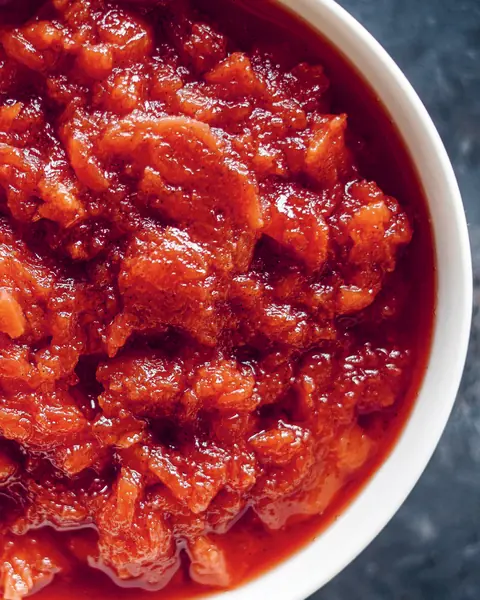
Rinse the and, without drying them, place them whole in a saucepan over low–medium heat with 60ml (2 fl oz/¼ cup) water, covered, and bring to a simmer. As they heat, the plums will release their own juices. Check regularly and stir occasionally to make sure they do not stick to the bottom and burn. As they get soft, break them up a little with your wooden spoon.
Once simmering, uncover, lower the heat and cook until the have released all their juices and have essentially ‘melted’ down, softening completely, about 10–15 minutes, depending on their size.
Remove from the heat and strain the mixture over a bowl (discard the pits) with a food mill or simply with the use of a spatula and a fine meshed strainer. Set aside to cool.
Place the in a small saucepan with 125 ml (4 fl oz/½ cup) water. Bring to the boil to dissolve the sugar. As soon as it begins to boil, remove from the heat. Let cool slightly then add to the strained along with the .
Let the mixture chill completely before churning in an ice cream machine according to the manufacturer’s instructions. Serve immediately for a soft sorbet or place the mixture in an airtight container in the freezer for about an hour longer to serve in scoops.
Without An Icecream Machine
Without an ice cream machine, pour the mixture into a sturdy, shallow container with an airtight lid and place in the freezer for about 5 hours. When frozen, use a fork or spoon to loosen and ‘fluff’ the sorbet. As it loosens, you can begin to beat it with the fork or spoon until the mixture is smooth and rather creamy.
Place back in the freezer and freeze for a further hour. If frozen overnight or longer, it will have hardened and will need to be left at room temperature for about 15–20 minutes to soften slightly before ‘fluffing’, then beating to soften and serving in soft scoops.

Emiko Davies's tips
While this is achievable without an ice cream machine, the results will be somewhat less creamy on the palate.