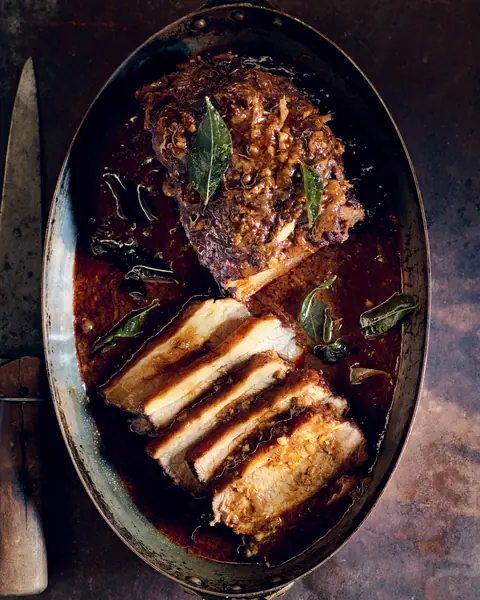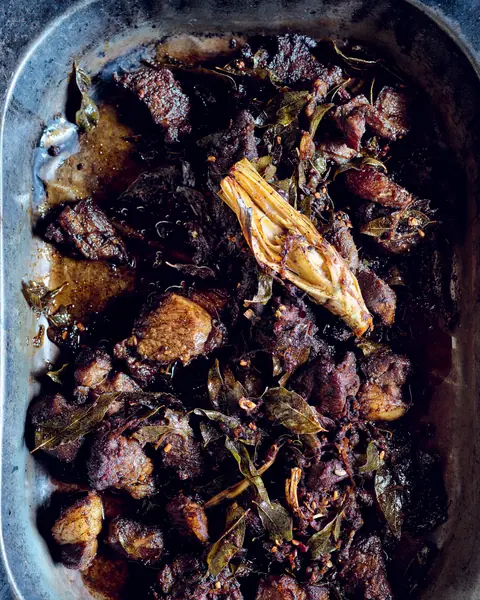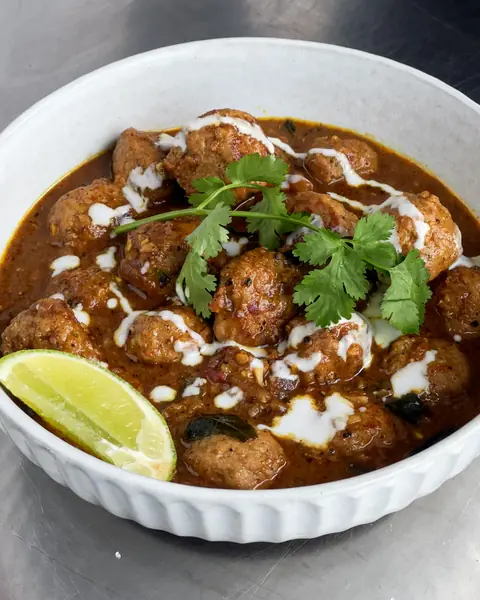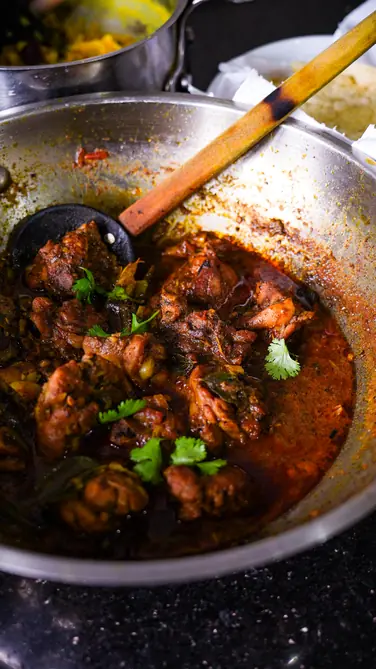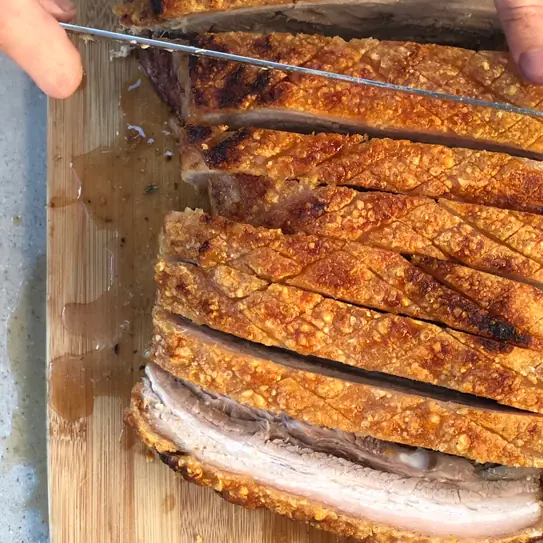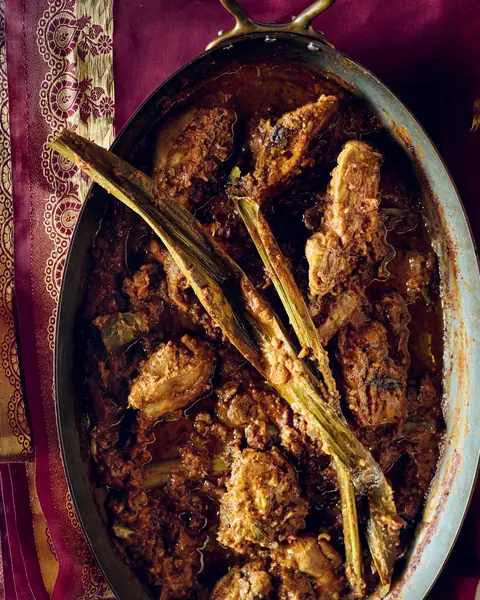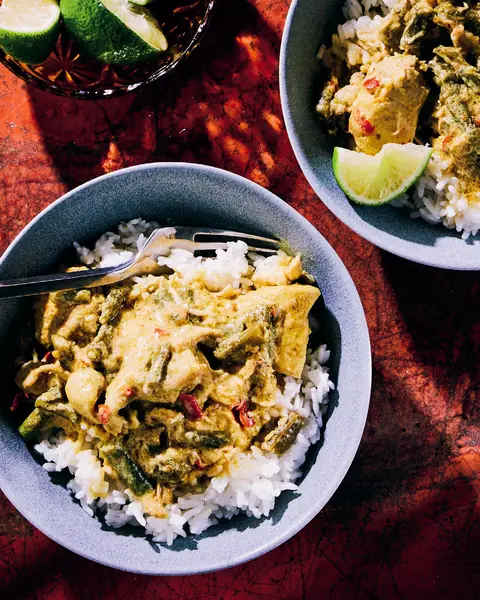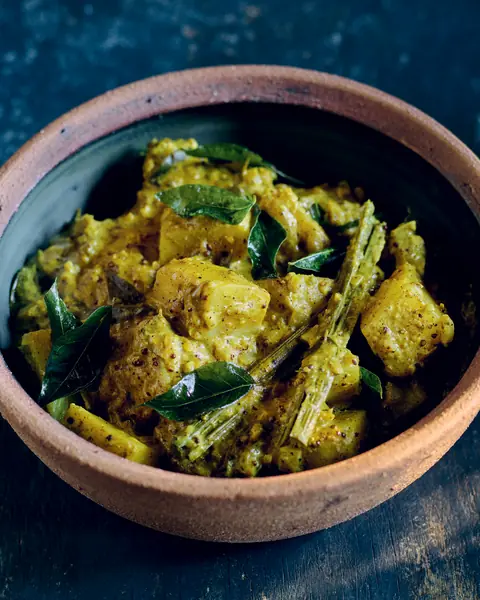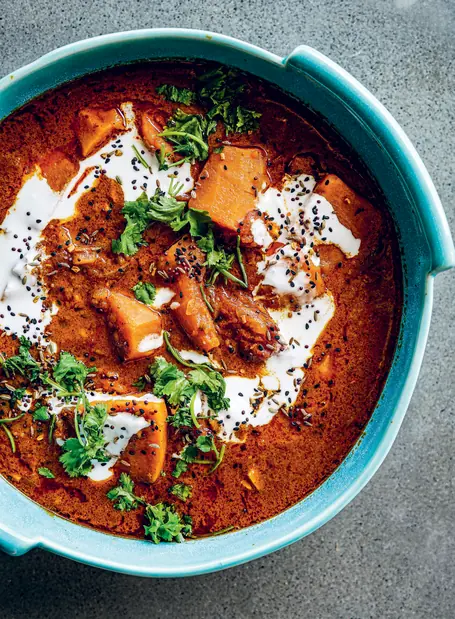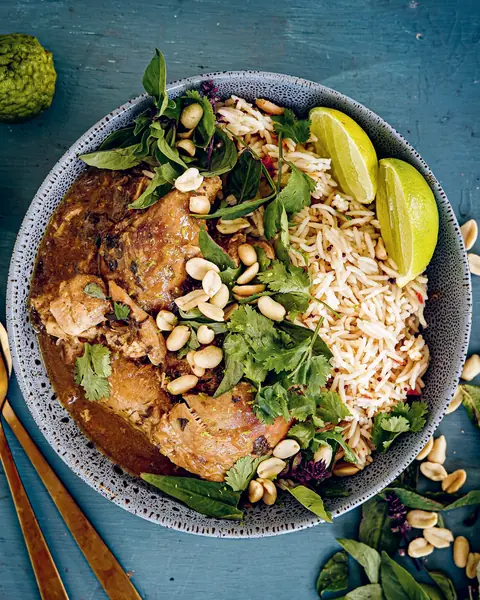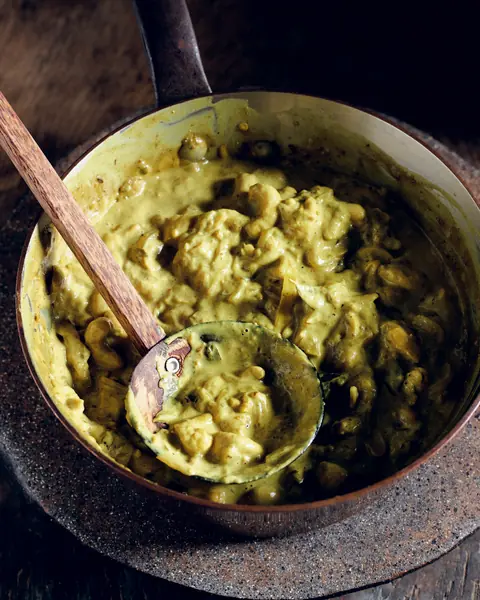
This dish is straight thievery from my mother; the recipe is almost exactly as she showed me. It all came about because of a cazuela that she bought in Spain and made me carry around the world for months. Back home it became her favourite dish to cook in, and was the reason this slightly dry pork belly curry came to be cooked in the oven. This is a rich, very slow-cooked fatty curry; the pork belly is unctuous and meltingly tender with a little sauce that is hot and a touch sweet.
Ingredients 17
Your new home
for cooking
Turn your recipe chaos into a plan for the week.
Browse 1000+ inspiring creator recipes
Unlimited recipe import from social media, blogs and more
Generate shopping lists and meal plans in seconds with AI
Method 7
Preheat the oven to 150°C (300°F).
Cut the into 5 x 1.5 cm (2 x 1/2 in) slices and set aside. It is easier to do this when the meat is cold.
Melt the in a large flameproof casserole dish or baking dish over a medium heat. Add the and cook for about 5 minutes, stirring occasionally. Add the , and and continue cooking and stirring for another minute or so.
Stir in the and , then turn up the heat before adding the , , , and . Keep cooking until the spices darken and start to stick to the pan, about 3–4 minutes.
Add the and stir to coat and brown the meat for about 6–8 minutes. Season with salt flakes and black pepper.
Mix the and , then pour this into the dish with the and use a spoon to scrape the edges and the bottom of the pan. Add the and bring to a simmer for about 5 minutes, then remove from heat, cover with lid or foil and place it in the oven to cook for 3 hours, removing it to stir a few times.
After 3 hours, turn the oven down to 110°C (230°F) and remove the lid or foil. By this stage, the gravy should be mostly dried out. Let the cook for a further 50–60 minutes uncovered, stirring once or twice. Once it’s cooked the pork pieces will be looking nicely roasted, there will be little gravy left in the pan and the whole dish will have a lovely oiliness to it.

O Tama Carey's tips
The tamarind concentrate used in these recipes is an Indian brand called Tamicon, which is thick, sticky, almost black and super concentrated, but it may be hard to source. Thai versions are easier to find but they are more watery and less concentrated so you may need to add a little more, but be aware that this might affect the texture of some recipes. Again, adapt and use your personal taste as a guide.