It’s easy to make crappy ricotta. You warm milk to just under boiling point, throw in a good splash of vinegar and, voilà, it splits into curds and whey. It’s magic. Except the resulting ricotta is not delicious. It’s a seized curd – if you use it immediately it’s okay, but as soon as it cools it’s pretty rubbery.
Proper ricotta is made from the whey left over from cheesemaking – not lactic or fresh cheesemaking, but rennet-set hard cheeses, ideally an Alpine or Tomme. Traditionally, the whey would be left at room temperature and all the lovely bacteria still in the whey would get to work acidifying it, and then if you heat it just a bit, you’ll get gorgeous soft clouds of ricotta billowing to the top of your pot.
Alternatively, you can gently acidify whole milk and then heat it, in the closest resemblance of this process.
Makes approx. 250g (9 oz/ 1 cup).
Ingredients 4
Your new home
for cooking
Turn your recipe chaos into a plan for the week.
Browse 1000+ inspiring creator recipes
Unlimited recipe import from social media, blogs and more
Generate shopping lists and meal plans in seconds with AI
Method 4
Combine the and in a heavy-based pot and heat until it reaches 90°C (194°F). Remove from the heat and let it sit for up to 10 minutes to allow the curds to form. Don’t stir, or the ricotta will be grainy.
If it hasn’t split, you can add 1 tablespoon white vinegar to help it along. You can also add vinegar to ‘firm up’ the curds if you’d like to.
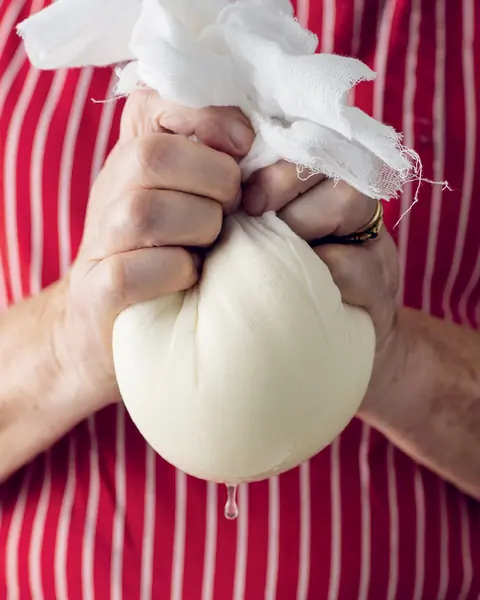
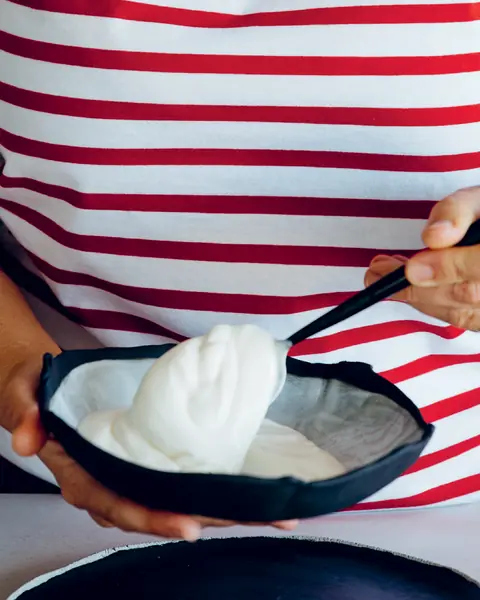
Ladle the curds into a colander and let them drain for up to an hour, depending how dry you want your ricotta.
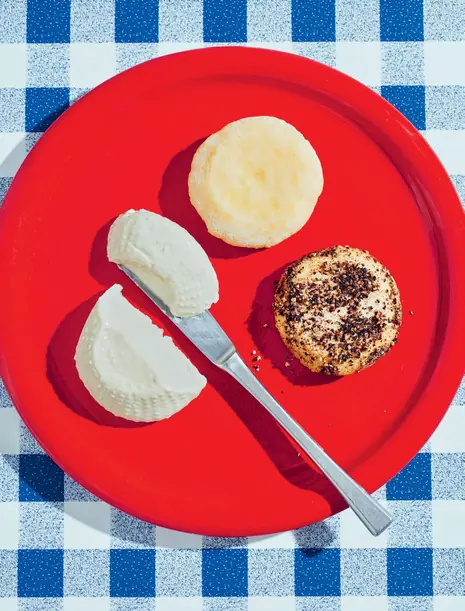
When it has drained, transfer it to a bowl, break it up and stir. Add to taste (see my tips). Use immediately or refrigerate for up to a week.

Buena Vista Farm's tips
A note about milk: while it is the very best for cheesemaking, you cannot buy unpasteurised milk in Australia, it’s illegal. Use non-homogenised milk if you can get it. This will work with homogenised milk if that’s all you can find. If you are using lovely fresh milk, particularly if it’s non-homogenised milk, and it starts to split before 90°C (194°F), sometimes as early as 70°C (158°F), just take it off the heat and leave it alone for 5 minutes to form the curd.
A note about buttermilk: you can buy cultured buttermilk in most supermarkets, and it will work perfectly. Alternatively, you can use homemade buttermilk.
A note about salt: the salt ratio is approximately 1/2 teaspoon to 1 litre (34 fl oz/4 cups) milk.