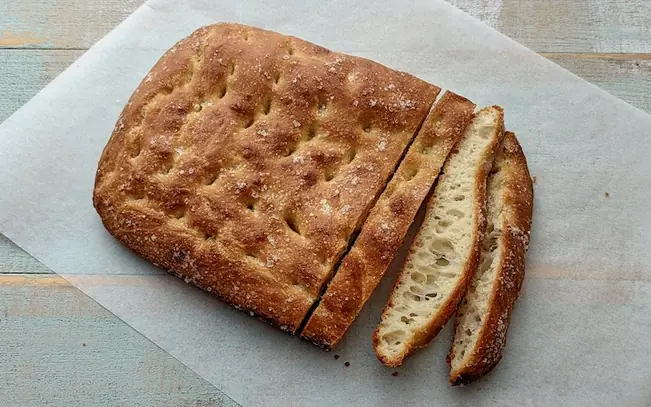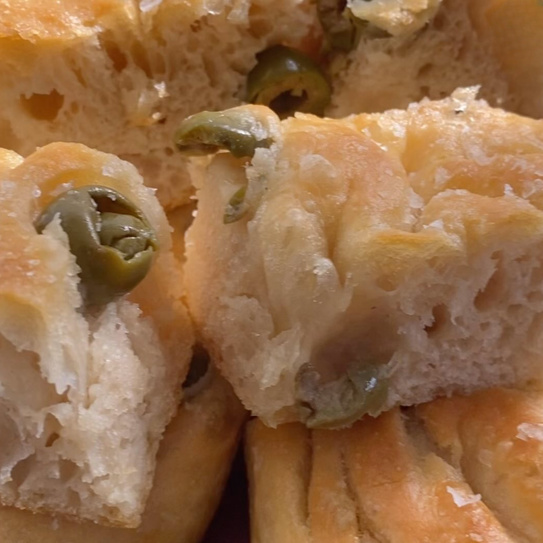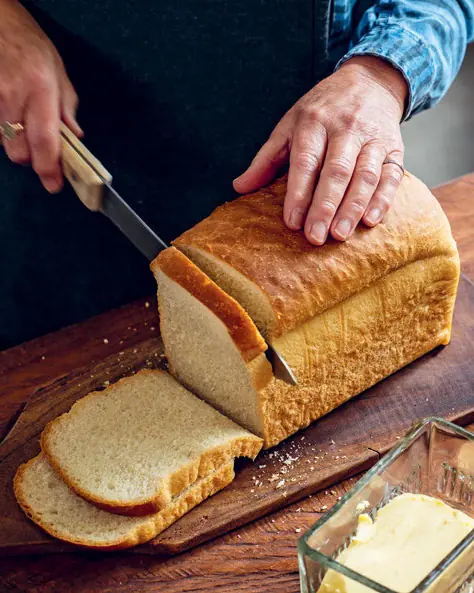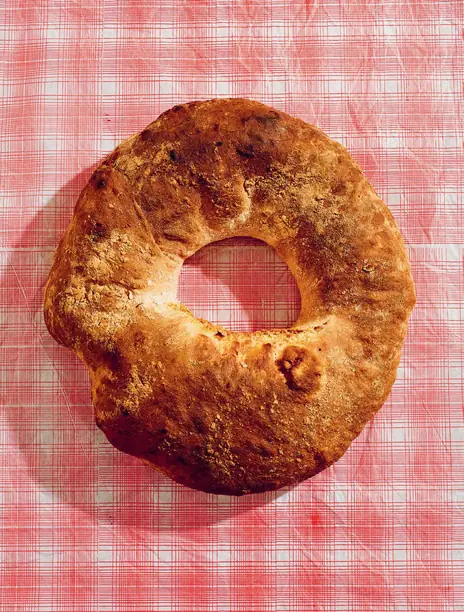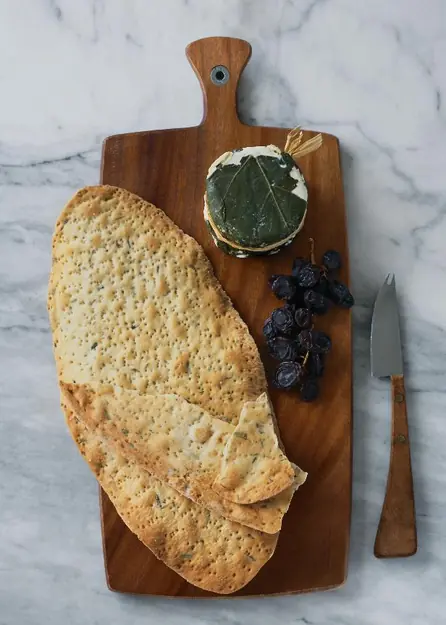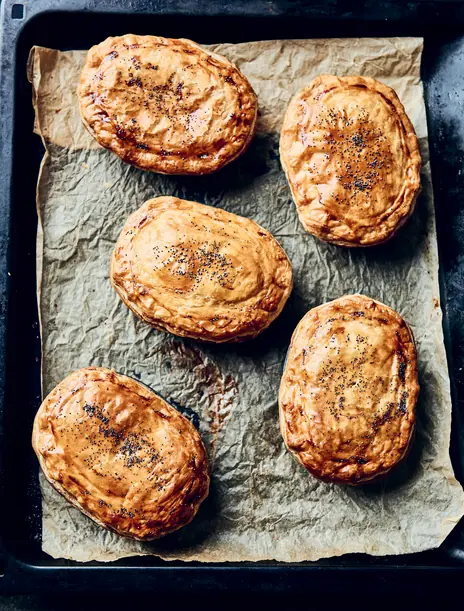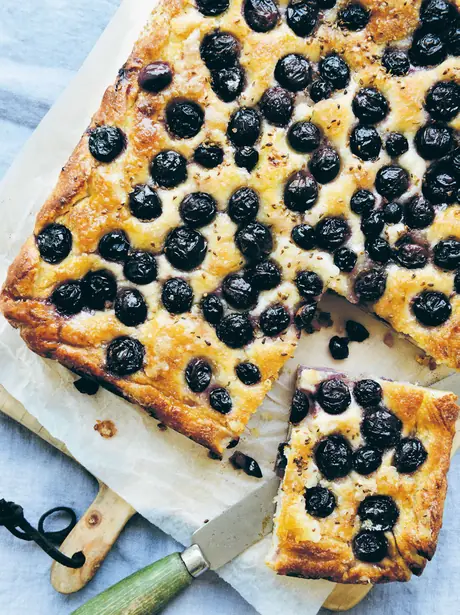
Fougasse is a French bread from Provence. It is essentially a large slab of bread with a series of cuts that, when baked, fan out to look like a leaf. It is strikingly beautiful, and all those cuts mean you get the textures of soft and chewy with lots of crispy, crusty edges as well. During my research, I discovered the name originates from the Latin word for focus, which meant hearth or oven. It was too poetic to ignore.
I developed the recipe to be very similar to a baguette, lean style of dough, which gives excellent chew. Baguettes are usually started by making what’s called a poolish. Poolish is a French term for a pre-fermented bit of dough that then gets mixed with the full recipe of dough. It contributes aroma, flavour and texture to the finished bread. It takes longer to make bread using a starter like this, but you simply cannot get the same flavour without it.
Makes 1 fougasse.
Ingredients 10
Poolish
Dough
For Brushing
Your new home
for cooking
Turn your recipe chaos into a plan for the week.
Browse 1000+ inspiring creator recipes
Unlimited recipe import from social media, blogs and more
Generate shopping lists and meal plans in seconds with AI
Method 10
Mix your poolish ingredients (, , and ) with 100 ml (3 1/2 fl oz) water in a small bowl with a spatula, then let it sit, covered with a tea towel (dish towel), for 2–3 hours, or until small bubbles start to appear on the surface.
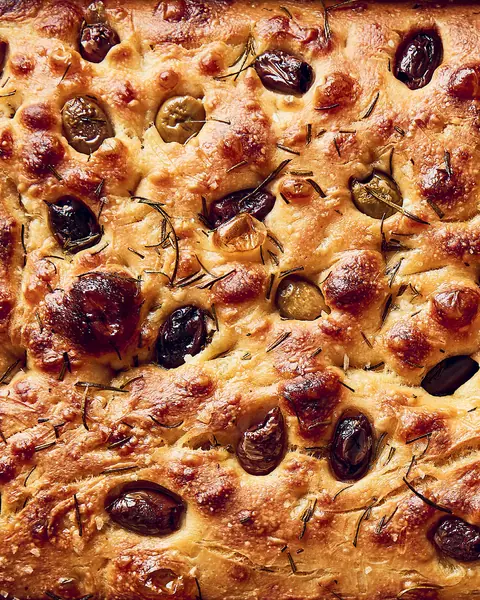
Combine all the dough ingredients, except the and (the , , , and ) with 300 ml (10 fl oz) water in the bowl of a freestanding electric mixer fitted with the dough hook attachment and add the poolish. Mix on low speed for 4 minutes, then mix on medium speed for 4 minutes. Add the olives and rosemary (or other desired flavourings) and mix for another minute.
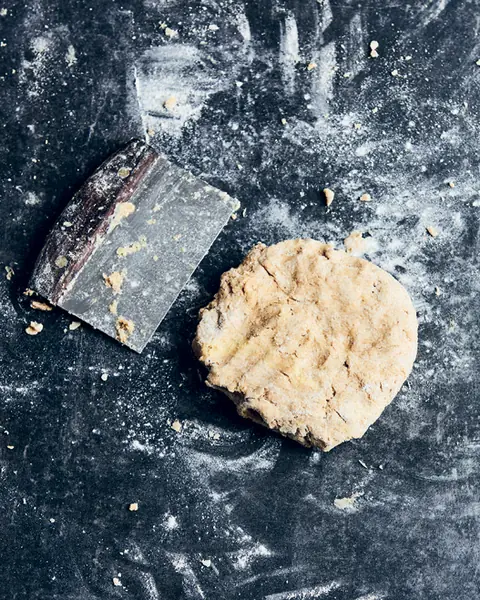
Turn the dough out onto a well-dusted benchtop and knead 10–20 times until the dough no longer sticks to your hands. Use a bit of as needed to prevent sticking. Shape into a ball and place in a clean bowl. Cover with a damp tea towel and leave to ferment for 1 hour.
Dump the dough onto a dusted benchtop and shape it into a rough rectangle. Pull the left side up and place it in the centre of the dough, then repeat on the right side, then pull the top piece up and towards the centre. Stretch the bottom piece up and pull it all the way over the whole thing so you are left with a tight little package. If the dough looks slack and still feels loose instead of taut, repeat this stretching and shaping process a couple of times until it holds.
Leave it covered with a damp tea towel on the bench. If your room is particularly cold, place an overturned bowl over the dough to keep its temperature warm. Allow this to prove for 1 hour.
Place the dough on a baking tray lined with baking paper and stretch and pull it into a rectangular, or, if you can manage it, a leaf shape. Then, using a bench scraper, make two long cuts all the way through the length of the dough, but leaving the edges intact. Then make three 30° angled cuts on each side. Pull on the dough to separate the cuts and reveal something that looks like a leaf.
Place this tray into a cold oven on the middle rack and place a small saucepan of boiling water on the tray below. This will create a perfect warm, moist proving chamber for your dough to rise one last time. Allow 45 minutes to 1 hour this time, then remove the tray from the oven.
Preheat the oven to 240°C (465°F).
Brush the dough with , sprinkle with sea salt and place the tray in the oven with another small saucepan of boiling water underneath it. Bake for 10 minutes, then remove the saucepan of water and continue baking for another 20 minutes, rotating the tray once halfway through. This may take slightly more or less time depending on your oven, but you want the bread to be nice and dark golden brown.
Pull it out of the oven and immediately brush it with the . Allow it to cool slightly before serving.

Danielle Alvarez's tips
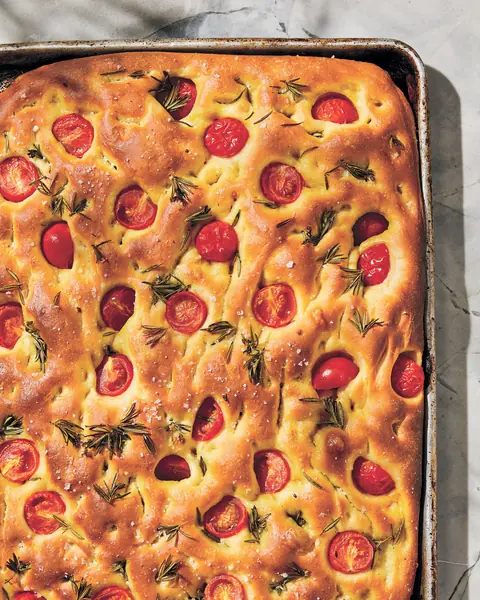
You can also add ingredients to flavour the dough, such as chopped fresh rosemary leaves, pitted black olives or chopped sun-dried tomatoes as I have done here.