Makes 2 loaves.
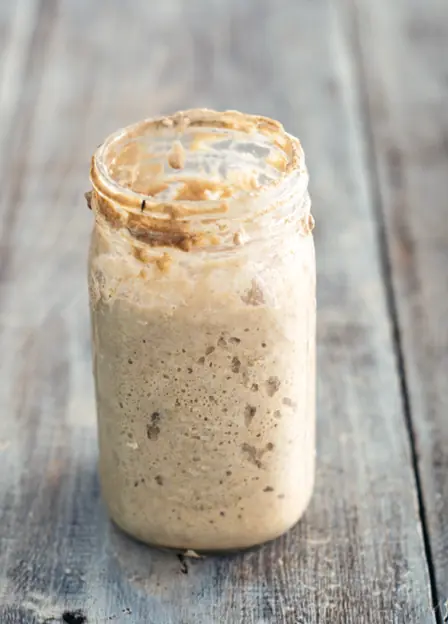
This is our ‘teaching’ recipe, which we’ve used for many years in the cooking school. It’s technically a low-hydration sourdough recipe, meaning it has less water to flour in ratio than other recipes, such as Chad Robertson’s well-known Country Loaf from his book Tartine. Why we worked with this low-hydration recipe, and why I give this one to you now, is because it was by far the most reliable in different environments. High-hydration sourdough requires you to have a very active and bubbly starter (i.e. frequently used) and, because of the higher water content, high-hydration bread is more susceptible to temperature changes in your kitchen. This recipe just seems to work in most homes. If your bread is not rising beautifully with good aeration, the fault is less likely to be the recipe or process or oven and almost certainly your starter. The best bread is made with a starter that’s used often, and not sleepy from being in the fridge.
Ingredients 7
Your new home
for cooking
Turn your recipe chaos into a plan for the week.
Browse 1000+ inspiring creator recipes
Unlimited recipe import from social media, blogs and more
Generate shopping lists and meal plans in seconds with AI
Method 11
Weigh your active into a bowl and stir the into it. Then weigh in the , add the and mix well.
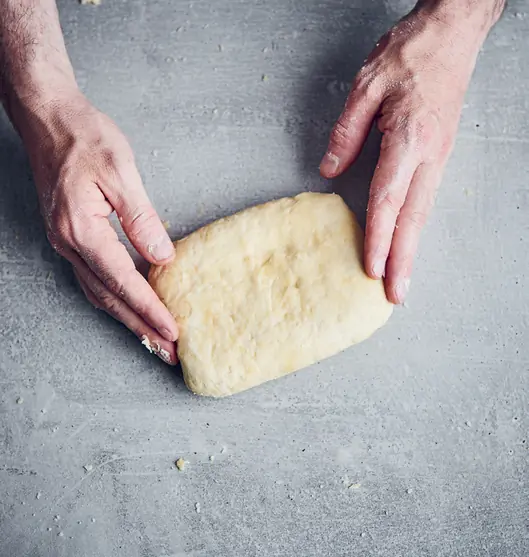
Bring it together and shape into a rough ball. Cover and leave for 30 minutes.
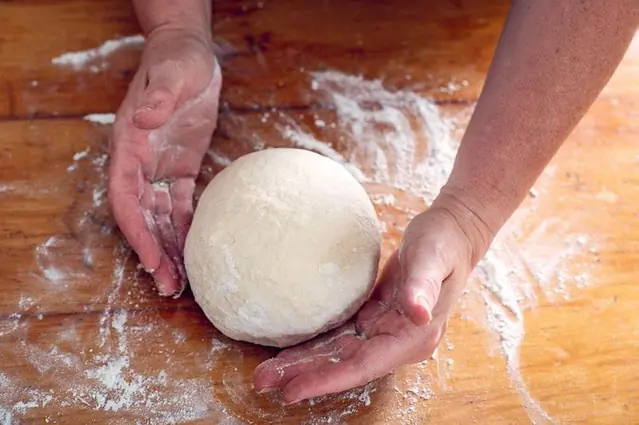
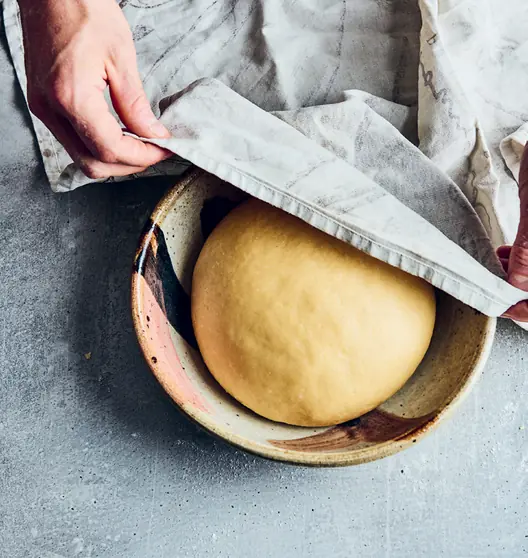
With a wet hand, pull the sides of the dough over the top of itself, forming as tight a ball as possible. Turn the bowl as you go, pulling the bottom of the dough up and over itself. Cover and leave for 1 hour.
After an hour, either in the bowl or on a floured surface, pull or fold the dough into a new, tighter ball from the outside into the centre (like an envelope). Return to the bowl for another hour, covered.
After another hour, take it out again. On a floured surface, pull or fold the dough again into a ball shape from the outside inwards. It should be starting to feel puffier and more aerated.
At this stage, you can add any extras, such as olives, raisins, nuts, seeds, sprouted grains, etc. Stretch out your dough, sprinkle them on, work them in, shape and fold. Place back into the bowl. Cover and leave for 1 hour.
After the hour, take out the dough, divide it into two and shape into loaves.
Place the shaped dough into two bannetons or bowls lined with a floured cloth. Leave, covered, to rise for 2–3 hours.
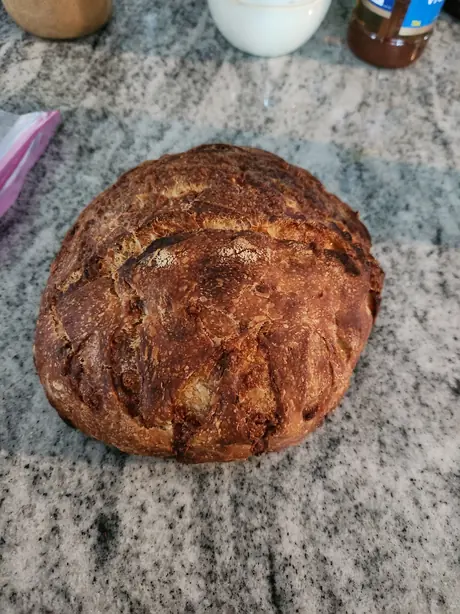
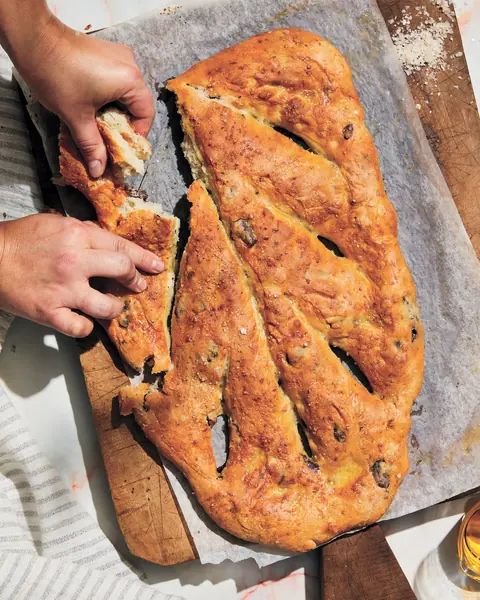
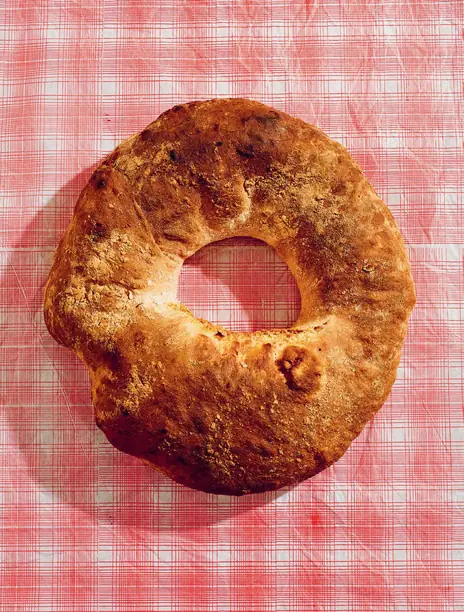
Preheat your oven to 235°C (455°F), oil a baking tray with a little olive oil and sprinkle with some polenta. Tip the dough out of the banneton or bowl directly onto the baking tray. Score the top of the loaves with a sharp serrated knife or a razor blade, and bake for 30 minutes or until darkly golden with a crispy crust.
Alternatively, tip out the dough onto a piece of baking paper, score the top of the loaf, then use the paper as a sling and place the dough carefully into a pre-heated cast-iron Dutch oven casserole dish with a lid.
Bake your loaves, one at a time, with the lid on for 30 minutes, then remove the lid and bake for another 15 minutes, until the loaf is crusty and golden and sounds hollow when tapped on the bottom.

Buena Vista Farm's tips
If you use wholegrain (whole-wheat) flour, increase the water to 800 g (1 lb 12 oz).
Getting steam into your oven: If you don’t have a Dutch oven casserole dish to bake in, it’s a good idea to create steam in your oven by preheating it with a baking tray in the bottom. When you are ready to bake, pour boiling water into this hot tray and also spritz the walls and ceiling of the oven with a water spray bottle to increase steam. Steam softens the outside of the loaf and allows it to rise well, otherwise it may form a hard crust too early on and not rise as it should.