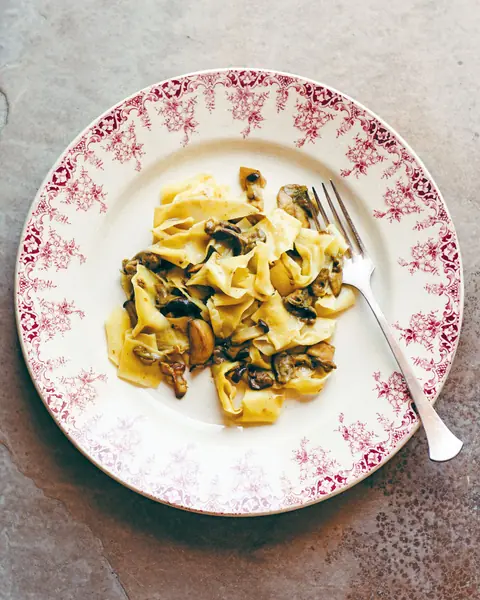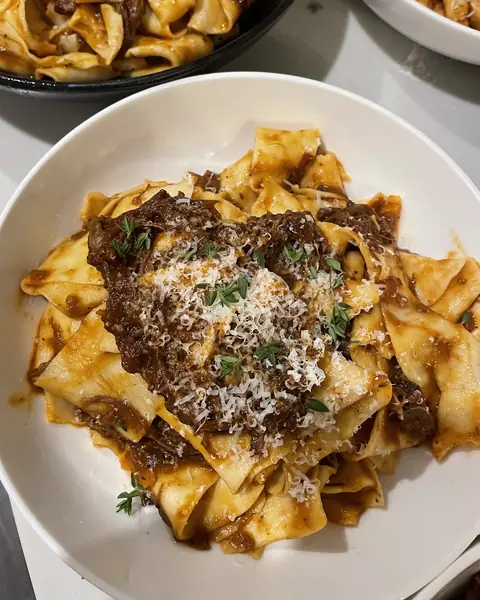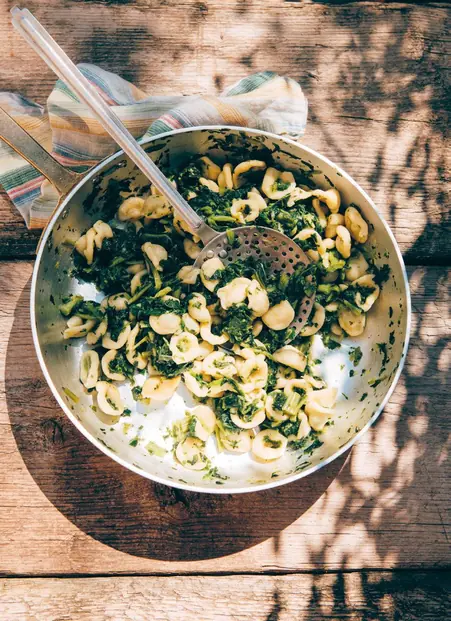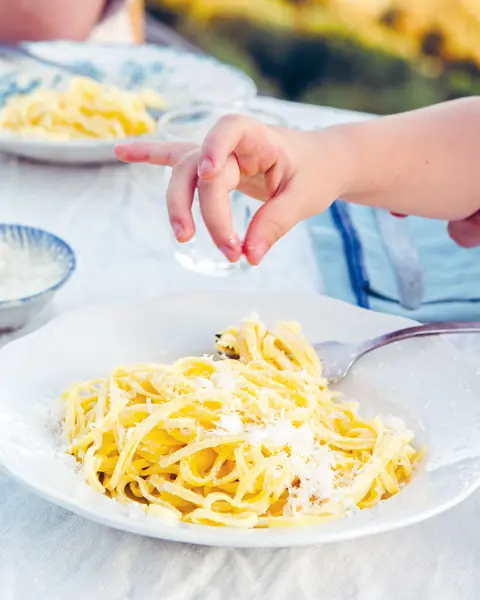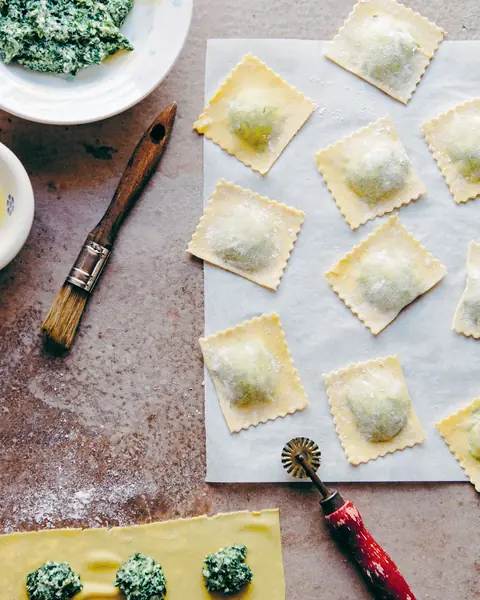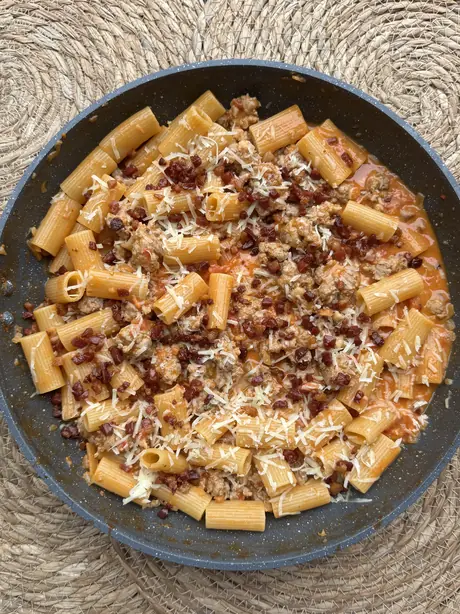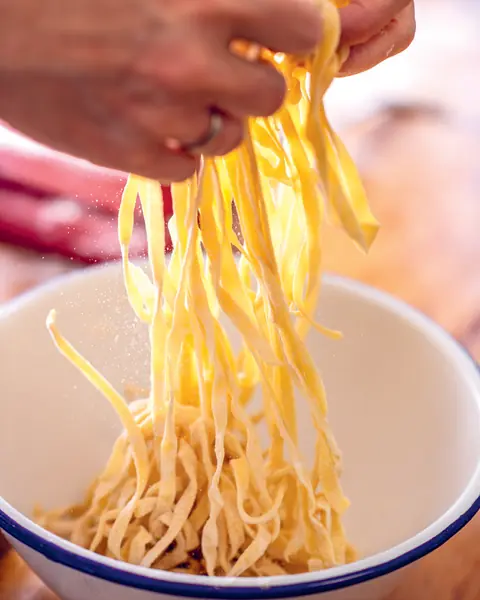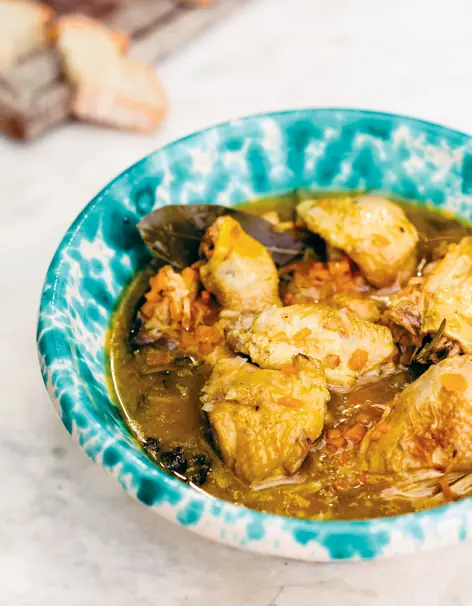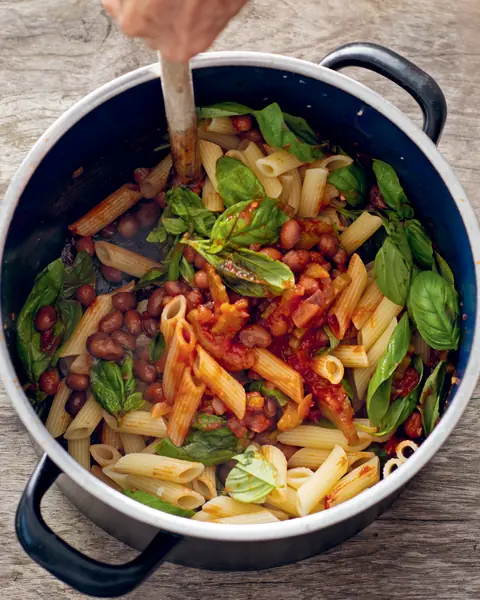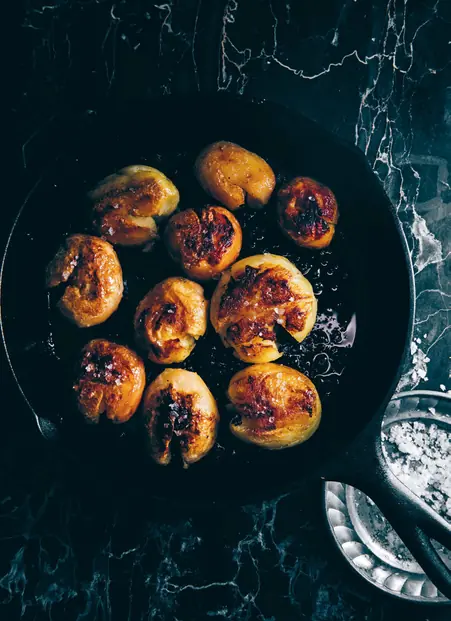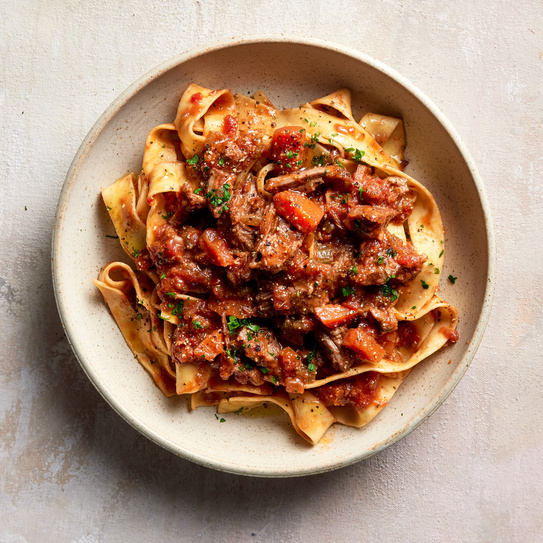
Florentines love fresh pasta and, in particular, pappardelle – wide, flat noodles often made with a ruffled edge that cleverly holds sauce. It is the ideal accompaniment to rich, gamey Tuscan sauces of wild boar, venison, duck or hare. The word pappardelle comes from ‘pappare’ (where the word ‘pappa’ also stems from), which roughly translates as ‘to devour’, an apt description for how best to enjoy this pasta.
Traditionally made with a whole duck, carcass and all, this dish is quite extraordinary and incredibly flavourful. You can imagine that in times past, a whole duck was probably easier to get than four duck legs, which might seem quite wasteful. There are many Tuscans (such as my husband’s relatives) who are lucky enough to have a bit of land and who still rear their own ducks for food. Using the whole bird in a recipe like this is a way to make the most out of what you have and not waste a thing, while creating the best possible flavour.
I like this dish the traditional way, using a whole duck; but buying a whole duck for this purpose may be a bit expensive. Another option is to just use the duck legs, as I have done here. You’ll have a bit more meat this way and the bones still lend good flavour to the sauce.
Ingredients 17
Pappardelle
Duck Sauce
Your new home
for cooking
Turn your recipe chaos into a plan for the week.
Browse 1000+ inspiring creator recipes
Unlimited recipe import from social media, blogs and more
Generate shopping lists and meal plans in seconds with AI
Method 14
Pappardelle
Sift the and onto a flat work surface and create a well in the middle with your hands.
Crack the into the well. Gently beat the eggs with a fork in a circular motion until they become creamy. Begin incorporating the and little by little until it becomes too difficult to use the fork and then gather the dough with your hands.
Knead for about 10 minutes or until it becomes elastic. Let the dough rest, covered so it does not dry out, for at least 30 minutes.
Divide the dough into two or three portions. With a pasta rolling machine or a rolling pin on a floured surface, roll out the dough until about 1 mm (1/16 in) thick or until you can see your fingers through the other side. If rolling by hand, roll from the centre outwards.
The noodles should be cut to about 2–2.5 cm (3/4-1 in) wide. Fold the dough lengthways over itself three or four times (dust with between each fold so they do not stick) and then cut across the short side of the folded pasta. Use a sharp knife for a straight edge or a fluted pastry wheel cutter for a ruffled effect (good for catching sauce).
Unroll the pasta, shaking it out, dust generously with and shape into little ‘nests’ of equal portions – 100 g (3 1/2 oz) is equal to one serving.
Cover under a dish towel or plastic wrap until ready to use.
Duck Sauce
Brown the in a large casserole pot with the over a medium heat. This should take about 5 minutes on each side. Remove from the pot and set aside.
Drain any excess fat and add the , , , , , , and . Season with salt and pepper. Let the mixture sweat over a gentle heat, stirring occasionally.
When the vegetables are soft but not browned, add the and return the to the pan. Simmer, covered, for 1½–2 hours or until the meat is very tender.
Remove the from the pot and strip the meat off the bone. Discard the bones and chop or shred the meat. Return to the pot.
Add the along with the . Bring to a simmer over low–medium heat and let the sauce reduce, uncovered, until thick. This should take about 20–30 minutes.
Cook the pasta in boiling, salted for about 3–5 minutes, or until silky and cooked al dente.
Drain and add to the warm sauce. Toss until well coated and serve, if desired, with some .

Emiko Davies's tips
If you are not planning on using the pasta immediately, freeze for later use or keep it in the refrigerator in an airtight container for 2–3 days. Try not to squash the nest shapes, they should help keep the noodles from sticking to each other.