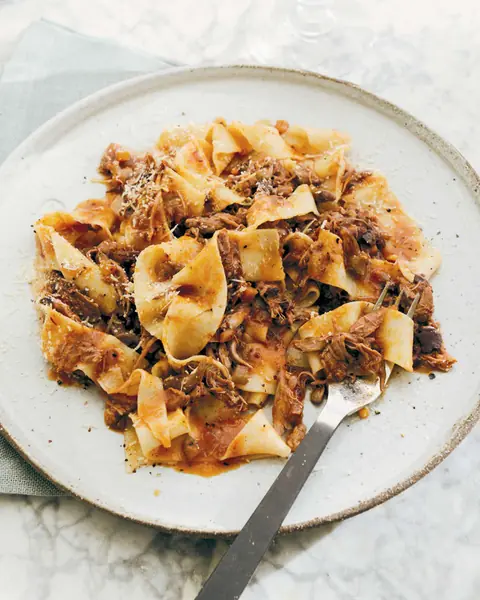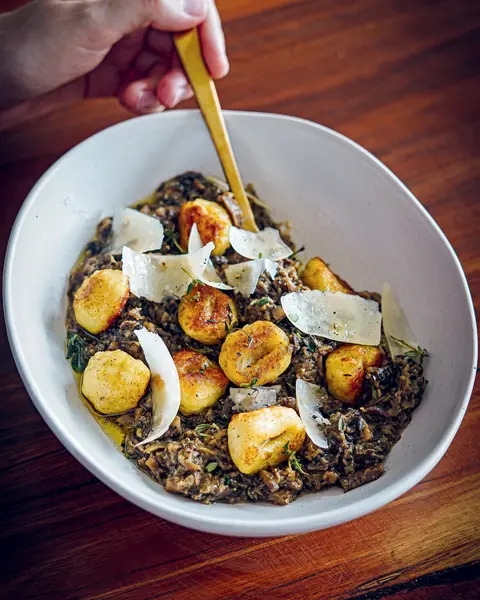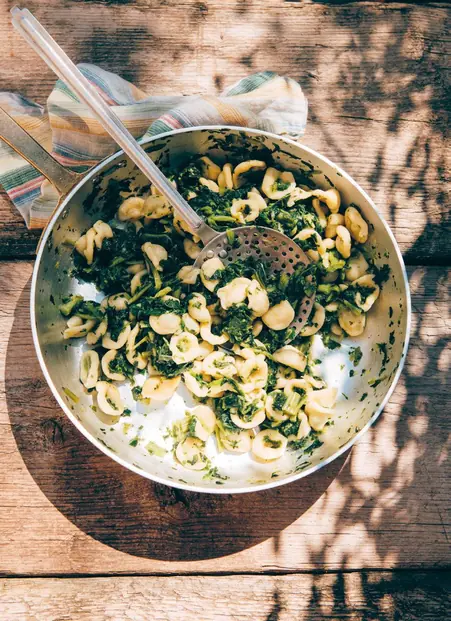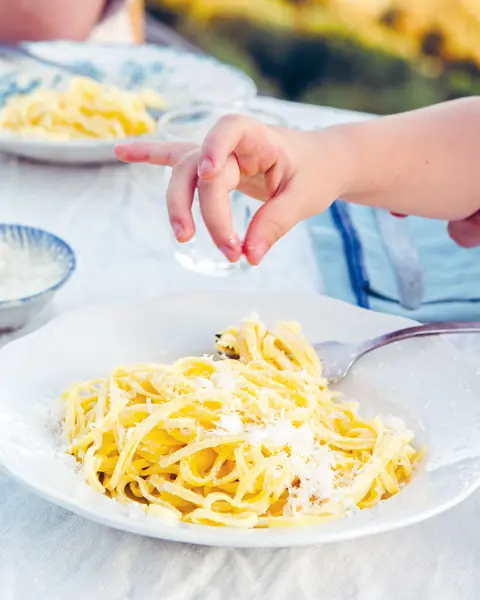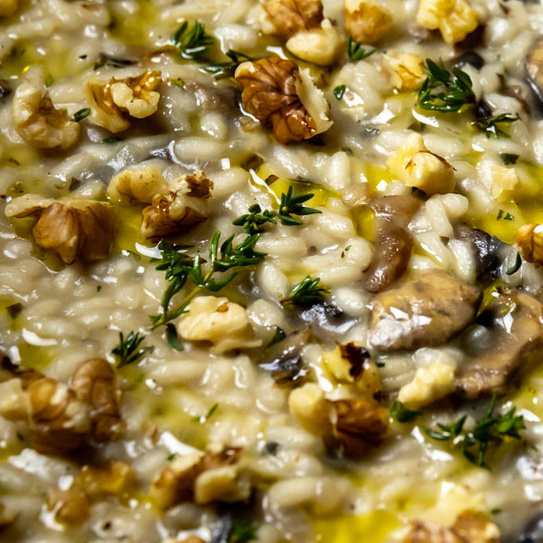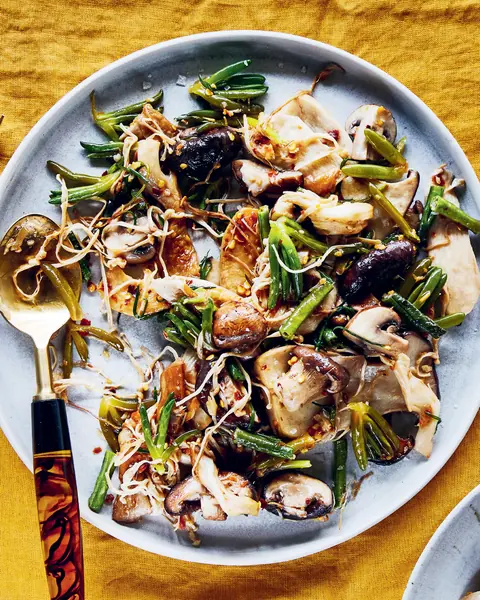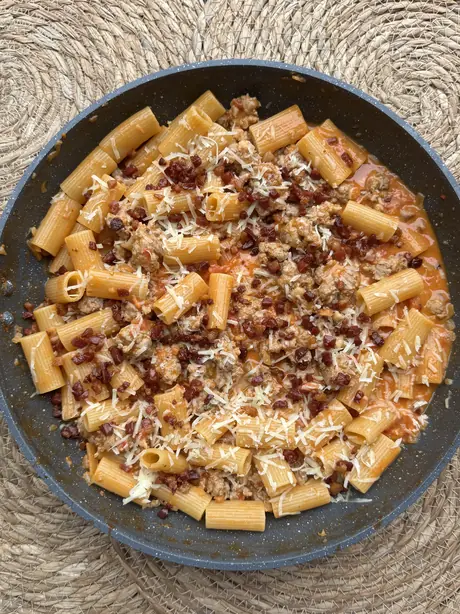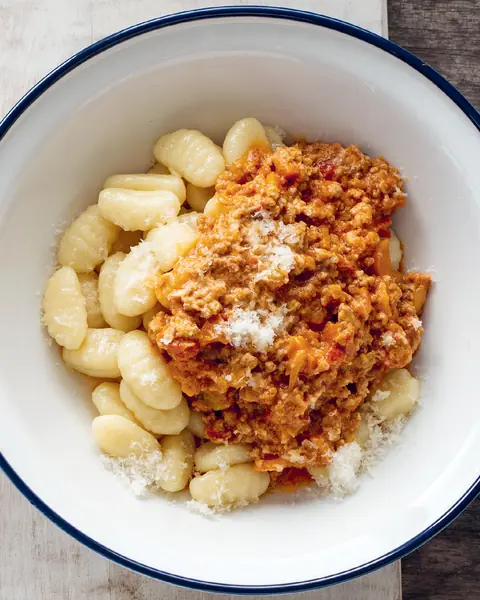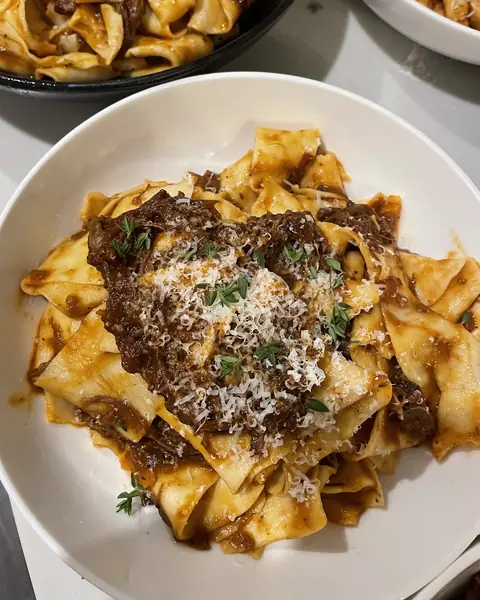
This is my favourite way to prepare any wild mushroom – that is, extremely simply, letting the mushrooms speak for themselves. I like to use a mixture of mushrooms whenever possible. I find porcini on their own incredibly strong, so I like to add a handful of sunny chanterelles or Caesar’s mushrooms, which not only add depth of flavour but they brighten up the plate, too. Once you’ve taken the time to clean the mushrooms of their forest floor dirt, this sauce is very quick to prepare. It goes best with fresh pasta, but in a pinch, dried pasta makes this a very quick meal indeed. Don’t go overboard with the cheese (in fact, you could easily leave it off entirely) as you don’t want to mask the flavour of the mushrooms.
Ingredients 10
Pappardelle Pasta
Sauce
Your new home
for cooking
Turn your recipe chaos into a plan for the week.
Browse 1000+ inspiring creator recipes
Unlimited recipe import from social media, blogs and more
Generate shopping lists and meal plans in seconds with AI
Method 11
To make the pasta, combine the together in a bowl. Make a well in the centre of the flours and crack the into it. Begin mixing with a fork, from the centre outwards, slowly incorporating the flour. Eventually you will need to use your hands instead of the fork; keep combining the flour until you have a nice, soft dough.
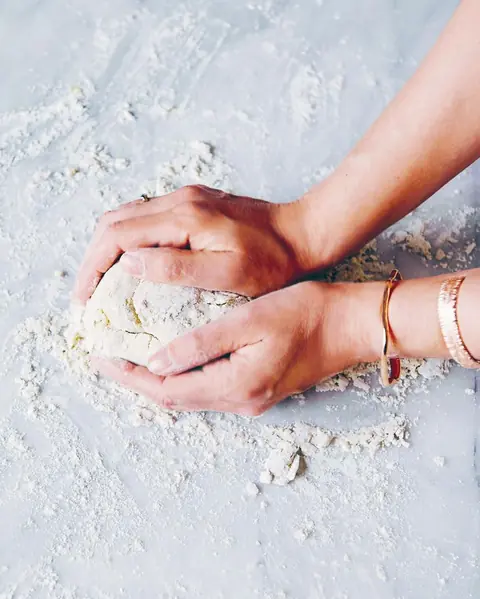
On a clean surface, well dusted with or , knead the dough for about 10 minutes or until it is elastic and no longer sticky. Let the dough rest for at least 30 minutes, covered.
Divide the dough into 2–3 portions. With a pasta machine or on a work surface dusted with , roll out each portion into a thin sheet about 1 mm thick. I highly recommend a pasta machine for this job (though by hand it’s not impossible); if using one, start with the widest setting and roll the dough through. Dust with . Change the setting to the next consecutive number and roll the dough through again.
Dust with . Continue this way until you have a thin sheet about 1 mm thick – this is usually the second last setting on the pasta machine. You may find the sheet gets so long that it’s difficult to handle – a second pair of hands is enormously helpful. You can also cut the sheet into manageable lengths.
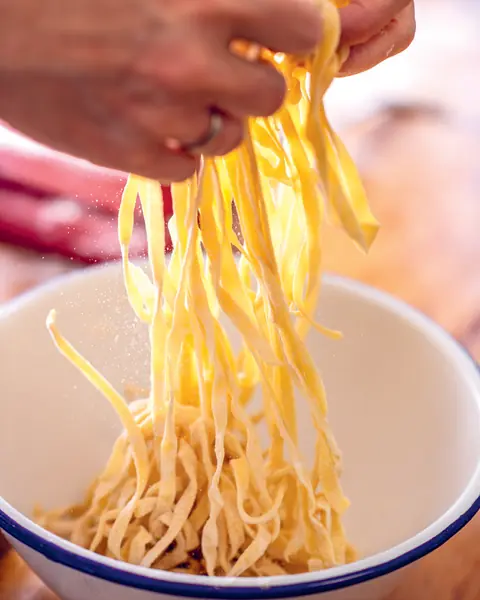
Cut the pasta sheet lengthways into strips with a pastry wheel cutter about 2–2.5 cm (¾–1 in) wide for long, flat pappardelle. Or, for a quicker method, dust the pasta sheet generously with , fold the pasta sheet several times over itself (dusting each fold with so it doesn’t stick) and cut with a sharp knife or pastry wheel cutter into strips.
Unroll the noodles, dust generously with and lay in a single layer on baking paper, or you can shape into little nestlike bundles of equal portions. If using soon, cover with a tea towel or plastic wrap until the rest of the pasta is ready. If using the next day, you can let them ‘air dry’ and, in this case, it’s better to lay them flat in a single layer.
Sauce
In the meantime, prepare the by cleaning them of any dirt gently with a damp cloth. Cut off the ends of their stems and slice the rest thinly or cut into dice.
In a wide frying pan, heat the , add the and cook over low–medium heat to ‘infuse’ the oil for 2–3 minutes, or until the garlic begins to colour
Add the , season with salt and pepper, and cook for a further 5 minutes. Add the and let the liquid cook down a little, for approximately 5 minutes. Turn off the heat, add the herbs and check for seasoning. Set aside.
Put the pasta in a large pot of boiling, well-salted water – ideally, use 1 teaspoon of salt per 1 litre (34 fl oz/4 cups) of water. Cook until silky and al dente, about 3–5 minutes. Drain, saving some of the cooking water.
Toss the pappardelle with the . If it is a bit dry, add the reserved pasta water. Serve with grated pecorino cheese, if desired.

Emiko Davies's tips
Use eggs that weigh 55–60 g (2 oz). Larger eggs will result in a stickier dough and you may need more flour to correct it. If using dried pasta, you’ll need to cook 320 g (11½ oz), or 80 g (2¾ oz) per serve.
Note that a fluted pastry wheel cutter gives a ruffled edge, which is nice for holding sauce.