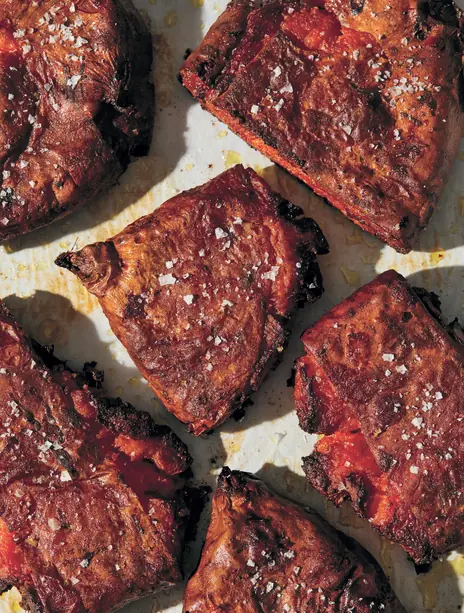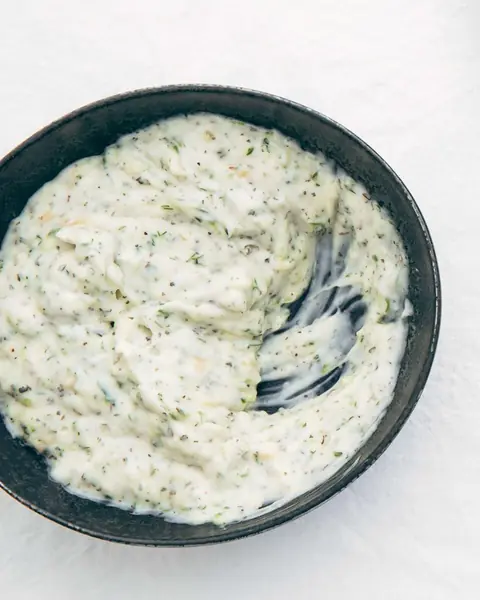
Sweet potato chips are moreish, and the lime cream in this recipe takes them to another level of deliciousness. While I try to stay mostly dairy free when on a gut cleanse, a small amount of goat’s or sheep’s yoghurt gives lots of nourishment without the tummy compromise. This is because goat’s and sheep’s milk have smaller fat globules than cow’s milk, and a higher proportion of medium-chain fatty acids, making them easier to digest. While coriander o!ers anti-fungal properties, you can swap it for rosemary if you like, to give this recipe an Italian twist and to reap some added anti-inflammatory benefits.
Ingredients 11
Lime Cream
Your new home
for cooking
Turn your recipe chaos into a plan for the week.
Browse 1000+ inspiring creator recipes
Unlimited recipe import from social media, blogs and more
Generate shopping lists and meal plans in seconds with AI
Method 4
Preheat the oven to 200°C (400°F/Gas Mark 6) and line two large baking trays with baking paper.
In a large bowl, combine the and . Add the in batches and toss to coat. Shake off any excess and arrange the chips in a single layer across the two trays. Drizzle with melted coconut oil and bake for 20–25 minutes, turning once, until tender, crisp and golden.
Meanwhile, prepare the lime cream by whisking together the , , , , and sea salt in a small bowl.
Serve the sweet potato chips scattered with lightly toasted , , and coarsely chopped , with the lime cream on the side.

The Beauty Chef's tips
LOW-FODMAP OPTION! Swap the sweet potato for carrots. Cook for an extra 10 minutes, or until tender. Reduce the sheep’s or goat’s yoghurt to 125 g (4! oz/! cup) or swap for coconut yoghurt. Carrots are a good source of the prebiotic arabinogalactan, shown to increase the production of short-chain fatty acids that help the body fight inflammation.