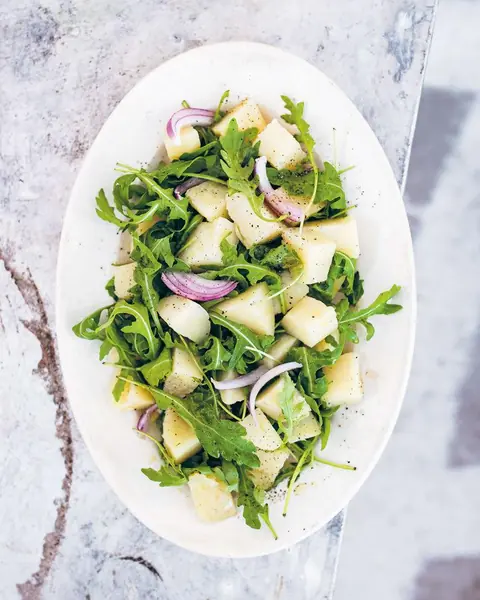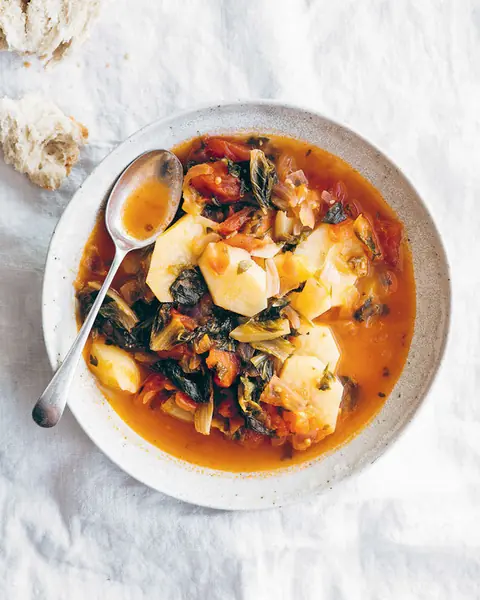
Kolokassi, or taro root, is a vegetable that is new to me. It is a root vegetable grown in ample quantities in Ikaria and Cyprus and can be found growing wild near riverbanks and streams. It is one of the main sources of starch in the Ikarian diet, especially in the cooler months. Kolokassi can be cooked in stews in tomato sauce, with beans or in a dip called Skordalia. See tip below about washing taro.
Sweet potatoes or parsnips are good alternatives if you cannot
get your hands on kolokassi.
Serve at room temperature with grilled meats or fish.
Ingredients 9
Your new home
for cooking
Turn your recipe chaos into a plan for the week.
Browse 1000+ inspiring creator recipes
Unlimited recipe import from social media, blogs and more
Generate shopping lists and meal plans in seconds with AI
Method 4
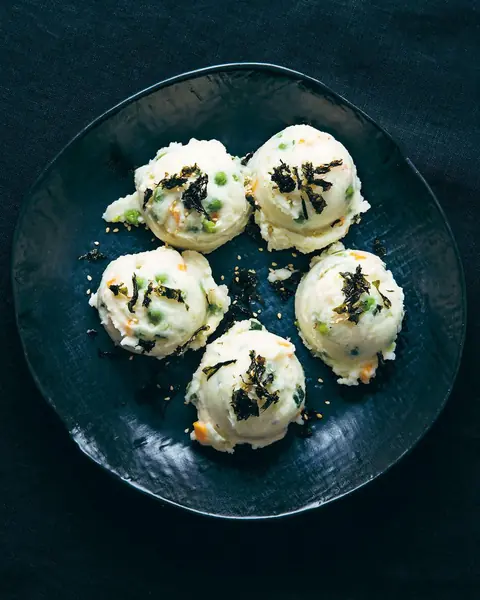
Peel the using a small sharp knife and break into small chunks. Add the taro root to a large saucepan and pour in enough cold water to cover completely. Bring to the boil over a high heat, then reduce the heat to medium and continue to simmer until the taro root is tender.
Drain well, allow to cool slightly, then transfer to a serving plate.
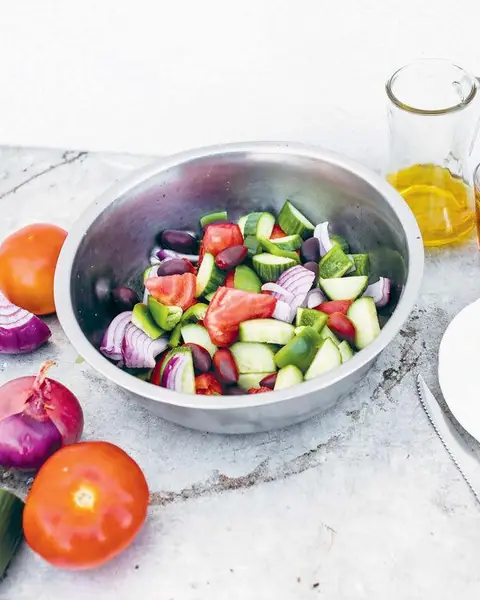
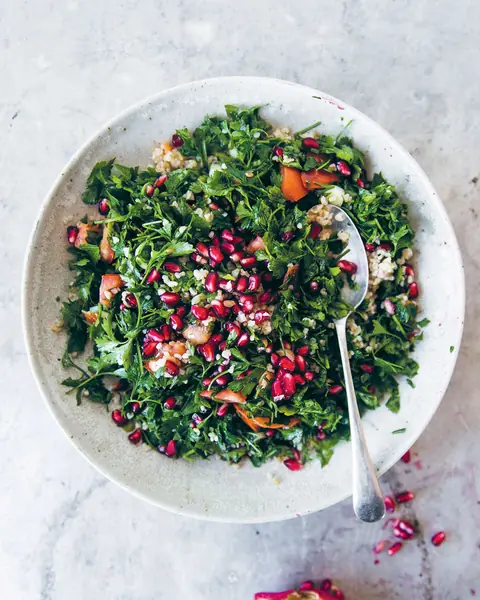
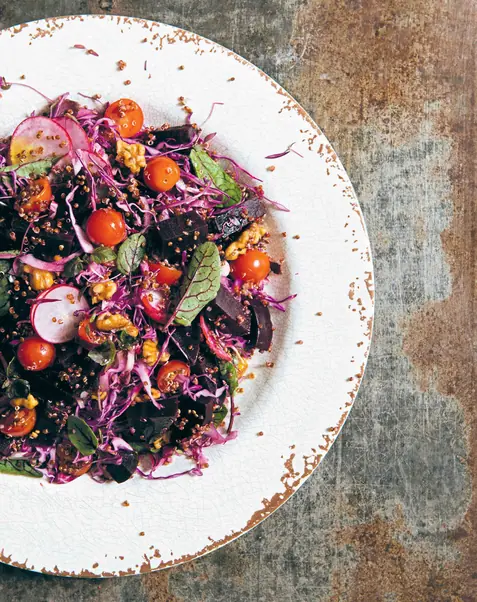
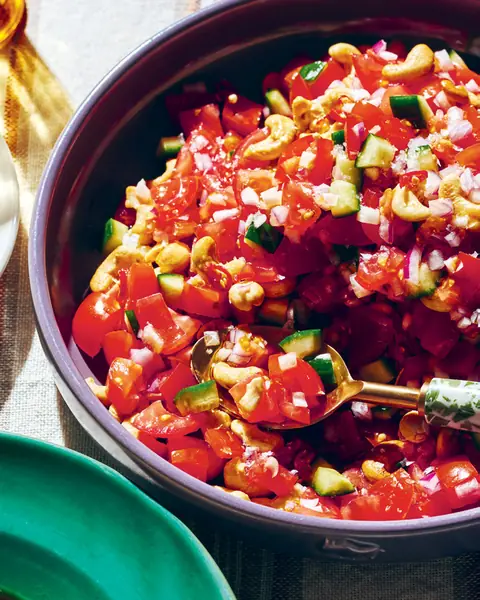
Top with the , , , and and mix gently to combine.
In a small bowl whisk the and , then season to taste with salt and pepper and drizzle over the salad.

Meni Valle's tips
It is important to remember that you never wash kolokassi with water or it will become slimy; you scrub or wipe it with paper towel and peel with a sharp knife. Kolokassi is a mucilaginous food, so to prevent it from melting while cooking it is best to break it into large pieces. You do this by inserting a knife into the kolokassi and breaking off pieces, instead of slicing it. (See method for details on preparation.)