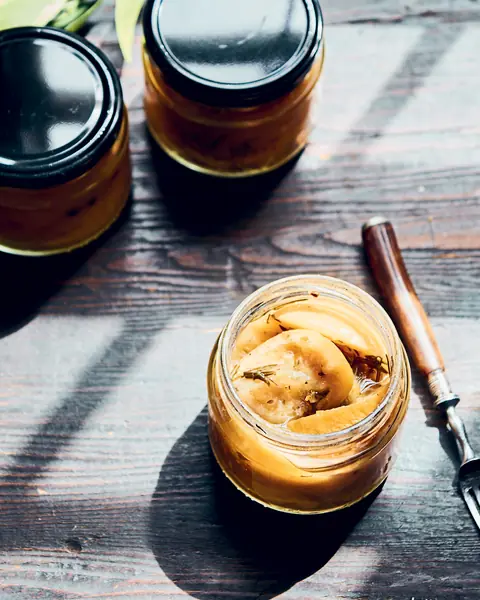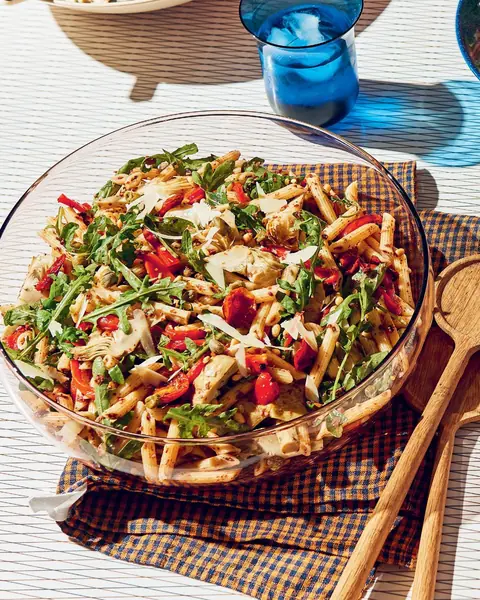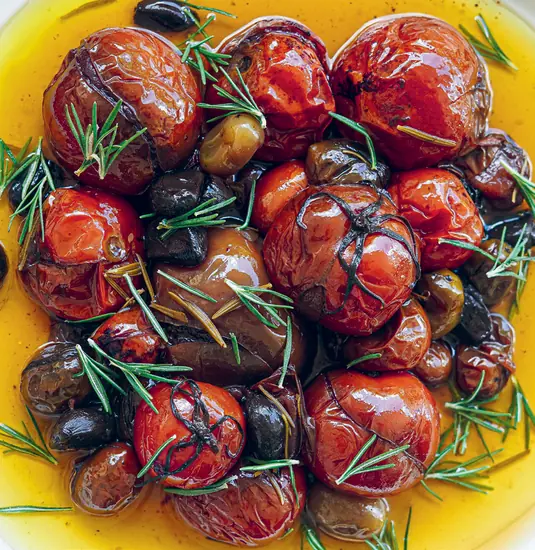
Set out on the table in little dishes, this is an excellent antipasto, one that you can keep popping into your mouth, like good olives. They can even be part of a simple lunch, accompanied by nice bread and a glass of wine, or even sliced and used as a sandwich filling (they’re delicious with tuna and a squeeze of lemon juice or prosciutto).
These are made in the Maremma with baby artichokes that are abundant in the late spring, when you’ll find them tumbling out of their huge crates at the market. Preserving – or making sott’olio (vegetables ‘under oil’) and sott’aceti (vegetables ‘under vinegar’, or pickles) – is all about making the most of cheap and plentiful produce when it is in season and keeping them for later.
Makes 2 Jars of 250 ml (8 1/2 fl oz / 1 cup) capacity.
See my profile for jar sterlising tips.
Ingredients 7
Your new home
for cooking
Turn your recipe chaos into a plan for the week.
Browse 1000+ inspiring creator recipes
Unlimited recipe import from social media, blogs and more
Generate shopping lists and meal plans in seconds with AI
Method 7
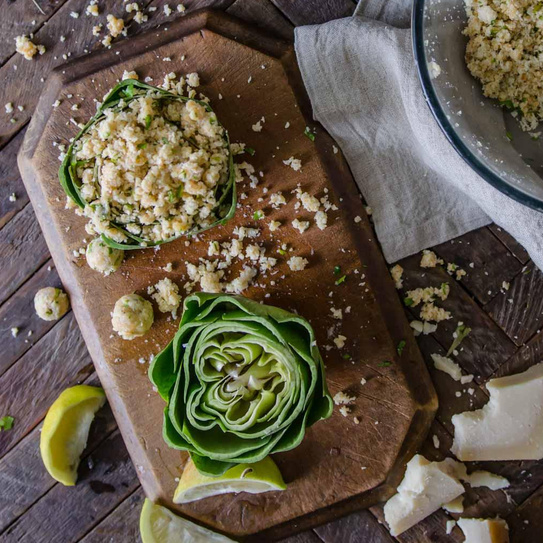
Put the into a bowl of water – this will be used to stop the from oxidising. Pull off the outer leaves of the artichokes until you reach pale and tender leaves. Trim the stalks and peel the base of the artichokes. Slice the top half of the artichokes off completely. As you go, place the artichokes in the bowl of water.
Pour the (or water) and the into a saucepan with a pinch of salt and bring to the boil. Drain the , add them to the saucepan and cook over medium heat until tender (a knife should easily slip into the base of the artichoke). This should take about 10–15 minutes. For the last 2 minutes of cooking, add the to the boiling artichokes.
Remove the and place them, cut side down, stalk side up, on a tea towel set over a wire rack. Let them drain this way for several hours or overnight.
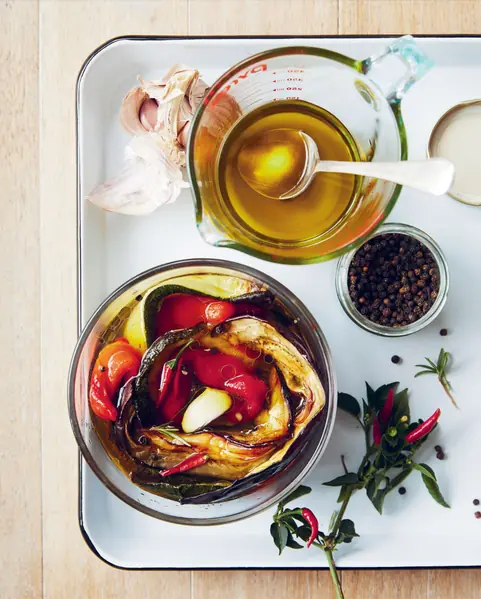
Put them in sterilised jars (see Sterlised Jars info on my profile), slide in the slices of (if using) and , and top with the mixture of oil to cover.
Give the jar a gentle tap on the counter to let out any air bubbles (you can also run a knife around the sides of the jar to move any air pockets). If needed, top up the jar so that it is full and covers the by about 5 mm (1/4 in).
Close the lid and seal (see instructions on sterilising and sealing jars on my profile). If you want to eat them right away, you can store them in the fridge without sterilising or sealing – wait at least 3 days before eating, though. They’re even better after a month, so consider sealing them for the best results.
Once sealed, keep in a cool, dark place until opened, then store in the fridge. These will keep for 3 months unopened; once opened, consume within a couple of weeks and ensure the vegetables are always covered with a layer of oil.

Emiko Davies's tips
This same recipe can be used for eggplants (aubergines) – especially those long finger-shaped eggplants that are dark, almost black, or the baby eggplants that look like shiny ceramics, painted with streaks of pale lavender. Small mushrooms are also good prepared this way, perfect for when you have gone foraging in the woods and come back with more than you know what to do with. For the eggplants, cut into 1 cm (1/2 in) slices and sprinkle generously with salt. Leave them to weep, perhaps with something heavy over them, in the fridge for a few hours before draining and rinsing with fresh water. Pat dry or, better, leave to dry out on a clean tea towel (dish towel) in the fridge overnight, then continue as for the artichokes. You can also use regular artichokes for this, though you will need to cut them in half, remove the fluffy choke with a teaspoon and then cut into quarters. Ada Boni, in Il Talismano della Felicità cookbook (1929), adds slices of lemon to the jarred artichokes.