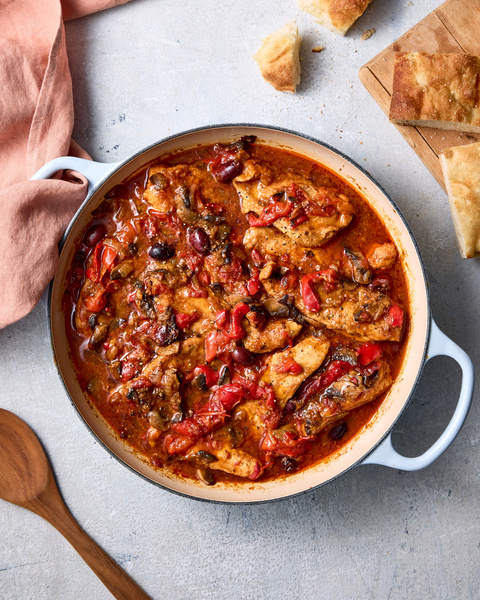
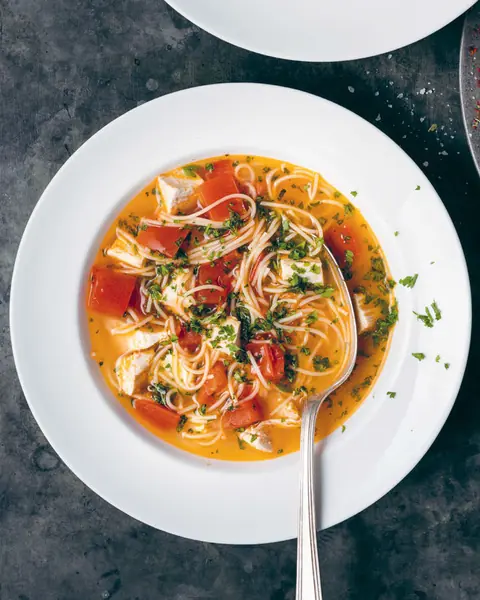
Slow Cooker Chicken Cacciatore (Low-Sodium)
This hands-off, set-and-forget Chicken Cacciatore is low sodium and perfect for those watching blood pressure. Using budget ingredients, it's ideal for family dinners, serve with mash potato, brown rice or crusty bread.
Ingredients 13
Your new home
for cooking
Turn your recipe chaos into a plan for the week.
Browse 1000+ inspiring creator recipes
Unlimited recipe import from social media, blogs and more
Generate shopping lists and meal plans in seconds with AI
Method 8
In a slow cooker, add , , , and .
Layer on top of the vegetables.
Add , , , , and .
Pour and over the chicken.
Add (if using).
Cover and cook on low for 6 hours or on high for 3 hours, until is tender and cooked through.
Before serving, gently stir and shred if desired.
Serve hot over whole grain pasta, rice, or simply on its own.
Helpful tips
For even lower sodium, rinse canned vegetables before adding or omit olives entirely.
Chicken thighs are recommended for their rich flavor and protein, but chicken breast can be substituted for less fat.
If desired, add chopped zucchini or carrots for extra vegetables.
The tomato base delivers lycopene, which is strongest when cooked; serve with a drizzle of olive oil for enhanced absorption.
Leftovers keep well and can be used for lunch—it tastes even better the next day!