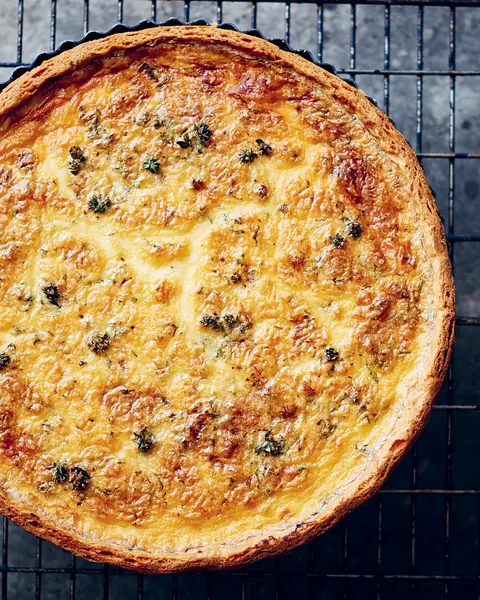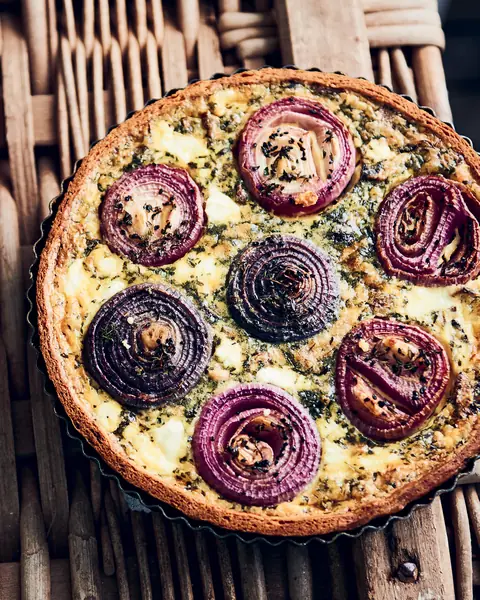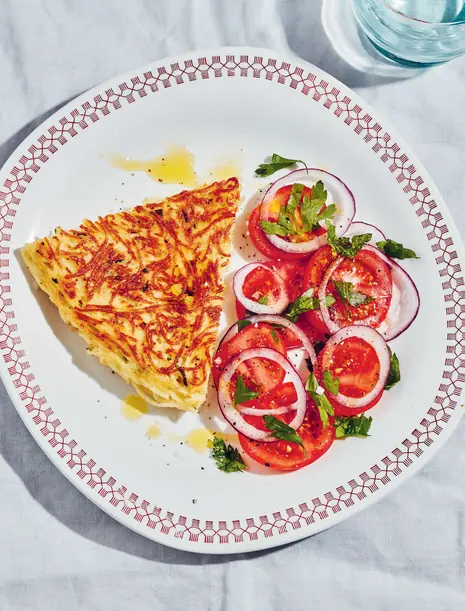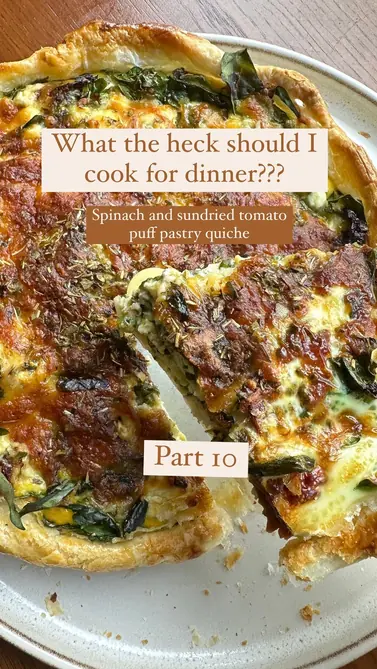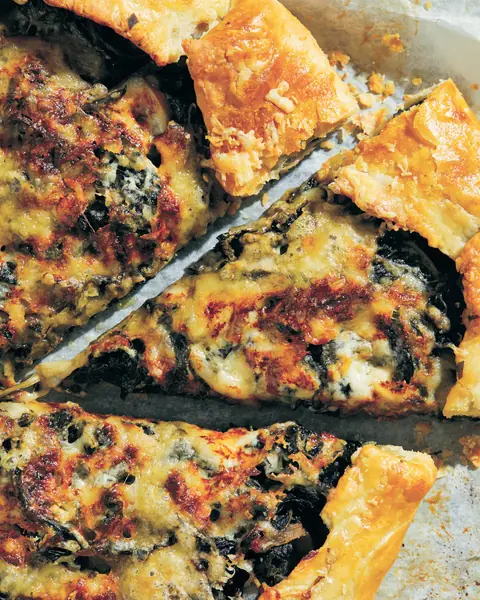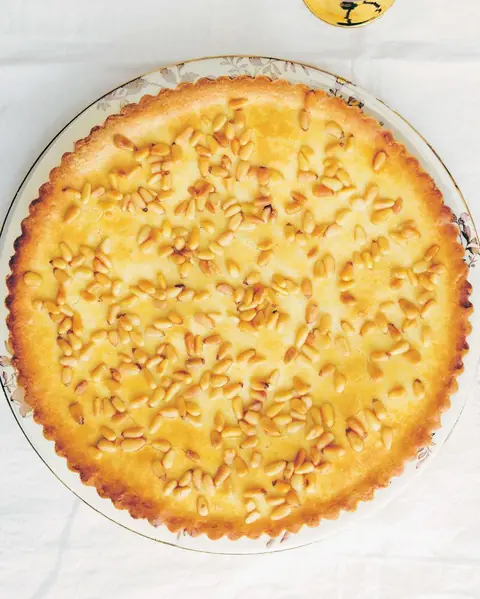
The pastry for this tart is a bit different from the others in my book; it incorporates both butter and sour cream and it just makes the easiest, most delicious, delicate, flaky, buttery tart you have ever tasted. I love this pastry for savoury preparations that are baked in tins as opposed to free-form galettes, which require a sturdier dough.
This recipe is inspired by my friend Martin Boetz. He made a version of this, without tomato, at a lunch we were cooking at. He told me it was his grandmother’s recipe, and it just has that feel about it – it’s old fashioned and I love it.
Ingredients 12
Pastry
Filling
Your new home
for cooking
Turn your recipe chaos into a plan for the week.
Browse 1000+ inspiring creator recipes
Unlimited recipe import from social media, blogs and more
Generate shopping lists and meal plans in seconds with AI
Method 13
Start by making your pastry. In the bowl of a food processor, combine the , and and pulse until the mixture resembles fine crumbs.
Add the and and pulse a few more times until the pastry comes together in a ball.
Shape this into a disc, wrap in plastic wrap and chill for at least 1 hour in the fridge.
Preheat the oven to 180°C (350°F).
Remove the pastry from the fridge, dust with and roll out to a 2–3 mm (⅛ in) thickness. Try to keep as round as possible.
Gently lift this into the base of a 23–25 cm (9–10 in) pie dish or tart tin. You want to leave 1–2 cm (½–¾ in) of excess pastry hanging over the edge to allow for shrinkage as it bakes. Use scissors to trim off any wider bits. Press a sheet of baking paper on top of the pastry and fill with baking weights or uncooked rice or beans to prevent the pastry puffing up as it cooks.
Place the dish on a tray and bake for 20–30 minutes. When the crust is looking golden on the edges, remove the baking weights and continue baking for a further 15–20 minutes. If the crust looks like it’s puffing up, poke a few holes in it with a fork to allow steam to escape.
When golden all over, remove from the oven and leave to cool completely. This step could be done in advance. Reduce the oven temperature to 160°C (320°F), ready to bake the pie.
Peel your by cutting a small X on their base, dropping them into boiling water for 10–20 seconds, then immediately refreshing in iced water. The skin should now peel off easily, starting from the X. Cut into 5 mm (1/4 in) slices. Set aside.
In a sauté pan, sauté your and in the until completely soft and translucent but not coloured. Season with salt and black pepper and set aside to cool.
Once cool, mix with the , , and . Pour the mixture into the base of the tart shell, then layer the sliced over the top.
Finally, sprinkle with the and and place on a tray. Bake for 40–60 minutes, or until the tart is no longer wobbly and is completely set. If the crust is browning too much, wrap the edge in foil to allow the custard to continue cooking.
Remove from the oven and serve warm or at room temperature with a .