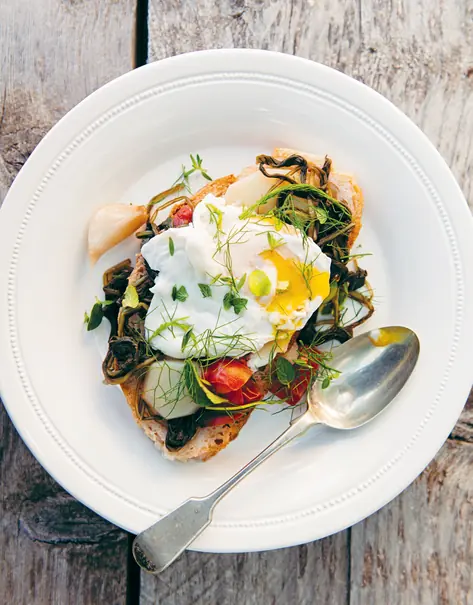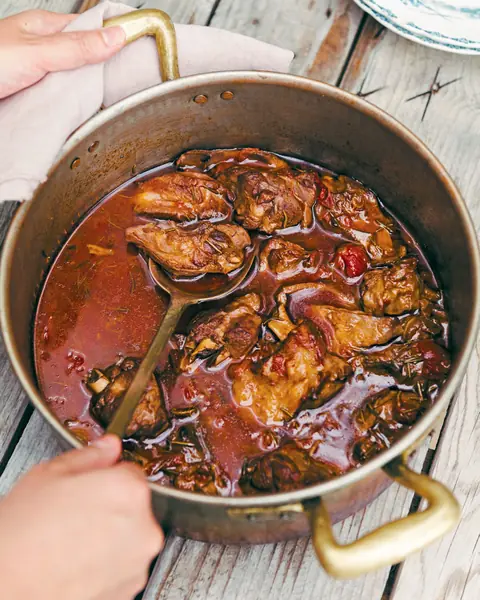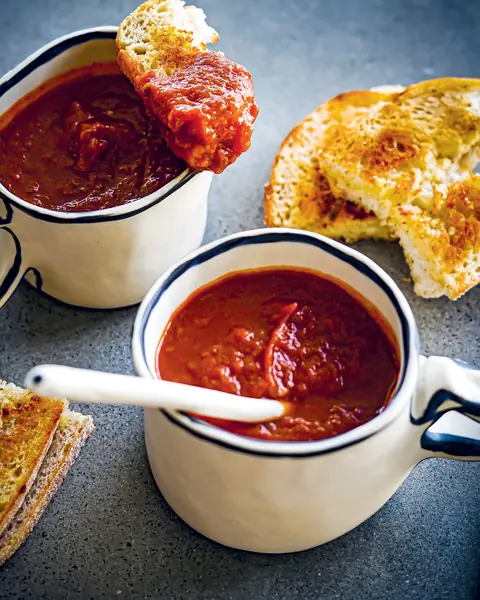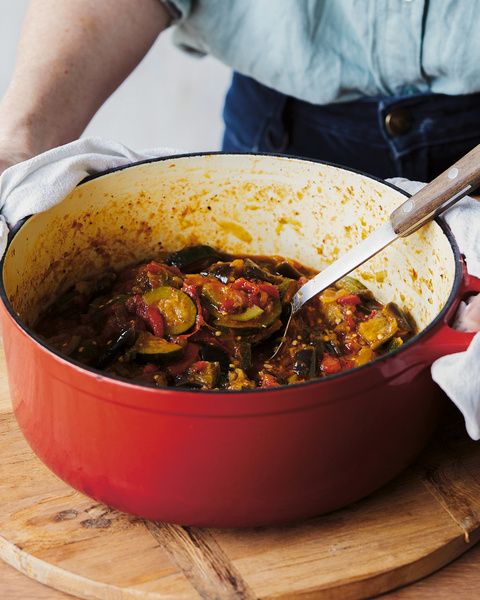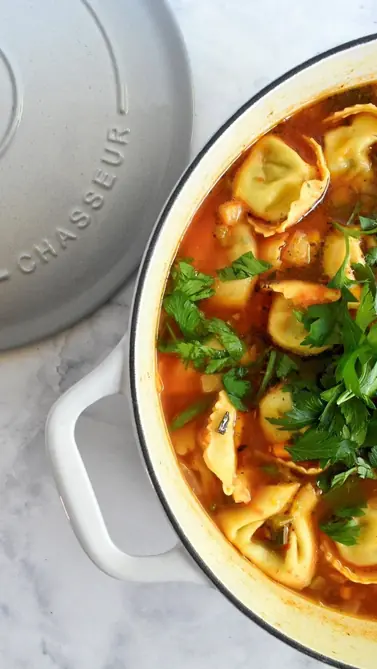
Acquacotta recipes will differ from kitchen to kitchen in Maremma, and partly the idea is to use what you have on hand. But when I think of acquacotta, this is what I have in mind – a thick, slow-cooked stew of vegetables, mostly tomatoes, poured over a slice of stale bread. There’s also a sunken egg ‘in camicia’ (as poached eggs are described in Italian, which makes me imagine the yolks, buoyant and still runny, dressed in oversized, floppy white shirts), nestled in the soup. It’s this soft-yolked egg that makes the dish. Break into it with your spoon and let the creamy yolk run into the soup. It’s warming, comfort food at its best.
One day I had the luck to meet and be invited into the house of Ilena Donati, an elderly woman from Capalbio who spent most of her life working in kitchens. You could see by the way her eyes lit up while talking about food that it was her passion. She told me two secrets for making the perfect acquacotta – one was to leave out the carrot in the soffritto. Onions (and here there are plenty) are naturally sweet, especially when slow-cooked. Carrots are even more so and adding them would upset the balance. So, no carrot. The other was to cook everything piano, piano (slowly, slowly).
Ingredients 12
Your new home
for cooking
Turn your recipe chaos into a plan for the week.
Browse 1000+ inspiring creator recipes
Unlimited recipe import from social media, blogs and more
Generate shopping lists and meal plans in seconds with AI
Method 10
Score a cross on the bottoms of the with a sharp knife. Place them in a pot of boiling water for about 30 seconds, then remove and plunge them into a bowl of ice-cold water until cool enough to handle. Their skins should be very easy to peel now.
Chop them into quarters and remove the watery seeds. Chop the rest of the into cubes and set aside.
Heat a casserole pot with the over low heat. Add the and along with a good pinch of salt and let it cook, stirring occasionally, for about 15 minutes or until the vegetables are soft. Add a splash of water if you see the onions are sticking.
Turn the heat up to medium and add the , simmering for about 3–4 minutes to reduce.
Pour over the . If using tinned whole, peeled tomatoes, use a wooden spoon to break them up once in the pan. Add another pinch of salt and, if using, sprinkle over the . Add half the (or water) and bring to a simmer, then turn the heat down to low and let it cook slowly, uncovered, for about 45 minutes.
During this time, check on it now and then, and stir occasionally. The liquid should reduce to a nice, rather thick consistency, but there should still be enough liquid to be able to poach the in it. Top up with the rest of the the (or water) as necessary.
Taste for seasoning and, if necessary, add salt or freshly ground black pepper. Then crack in the , one by one, not too close together. If you prefer, you can crack the eggs first into a small bowl and then carefully tip the cracked egg into the soup.
Poach them until the whites are cooked and the yolks still soft and runny (this can take anywhere from 3–6 minutes, depending on the pan used and the temperature of the ). Remove from the heat.
Place a slice of stale at the bottom of each bowl. With a ladle, carefully scoop out the poached one by one and place each on top of a slice of bread. Scoop out more soup and pour over the top to soak the bread.
Sprinkle each dish with grated (if desired) and let it sit for a minute or two to allow the to absorb some of the liquid adequately before serving.

Emiko Davies's tips
This is perfect for using up overly ripe fresh tomatoes in summer, but otherwise you can use tinned whole, peeled tomatoes as an alternative (passata or tomato purée is too smooth). Stale bread soaks up the liquid nicely and doesn’t get soggy. If you don’t have stale bread on hand, you can dry it out in a low oven until crisp (don’t toast – this changes the flavour of the bread too much). You can prepare the soup in advance, right up to the point just before you put the eggs in; this can be kept in the refrigerator overnight or you can freeze for later use. Just reheat with a splash of water and, once simmering, add the eggs.