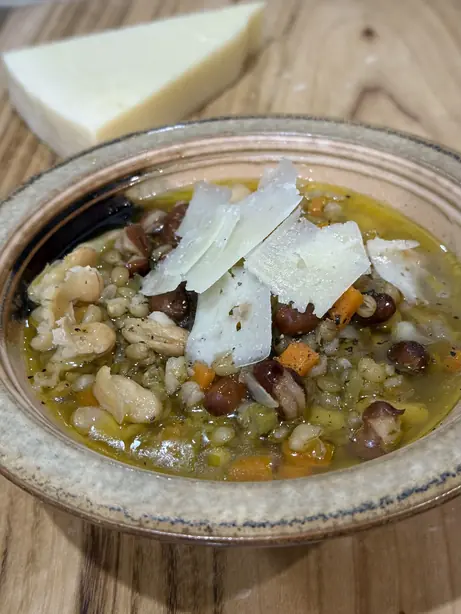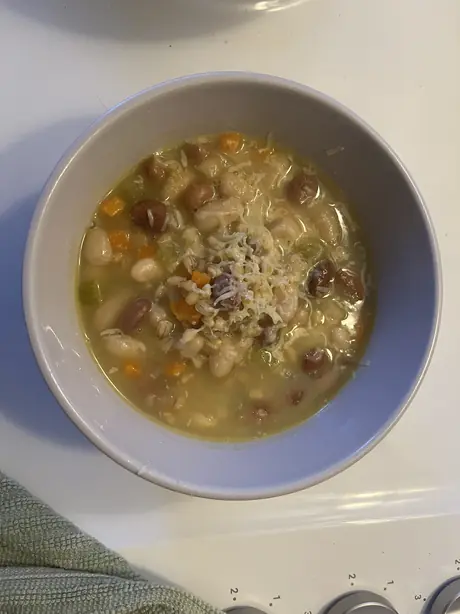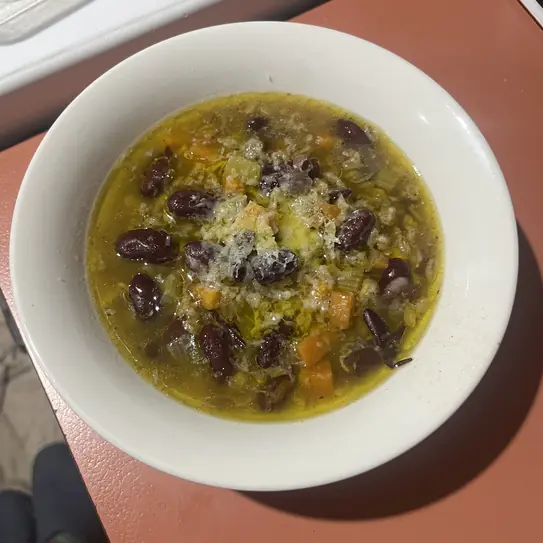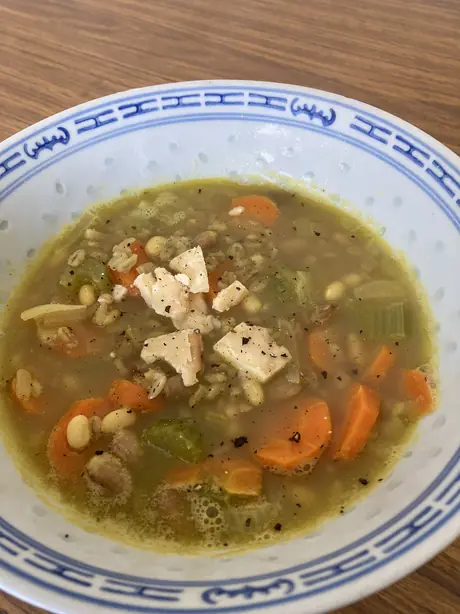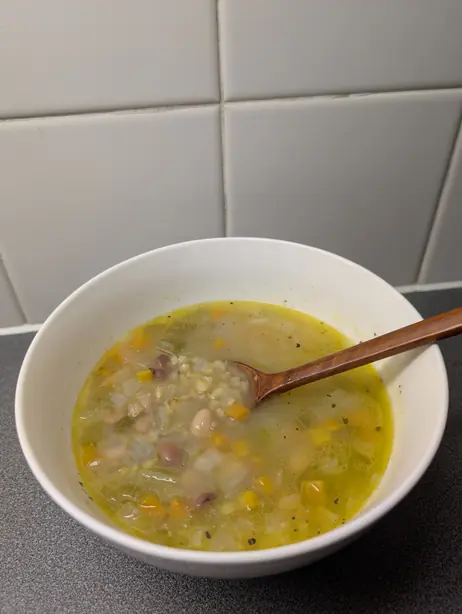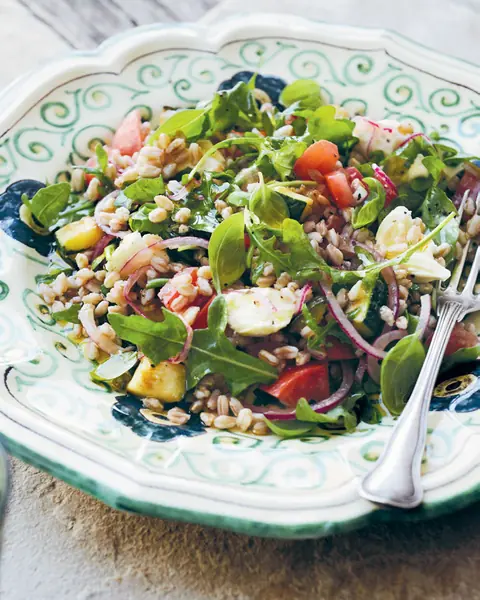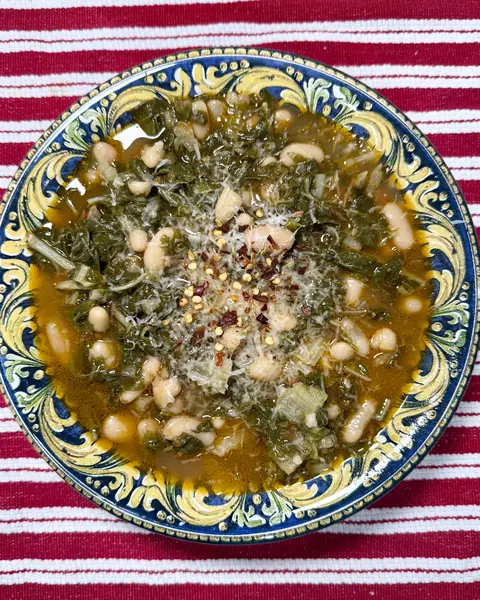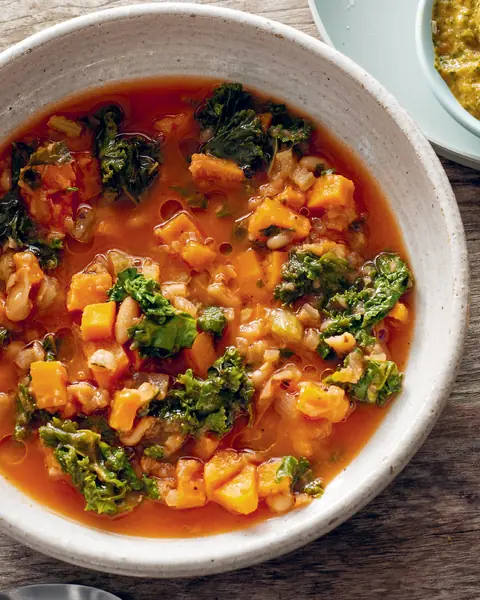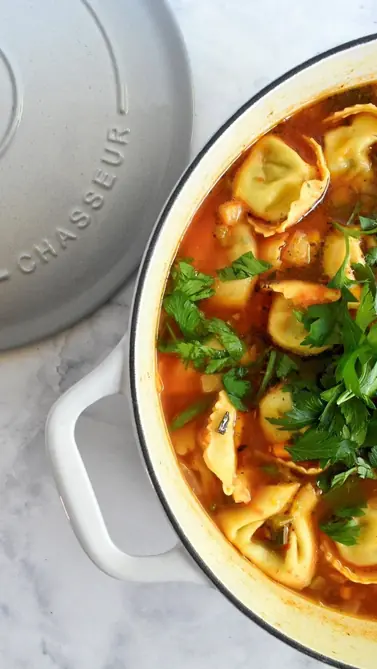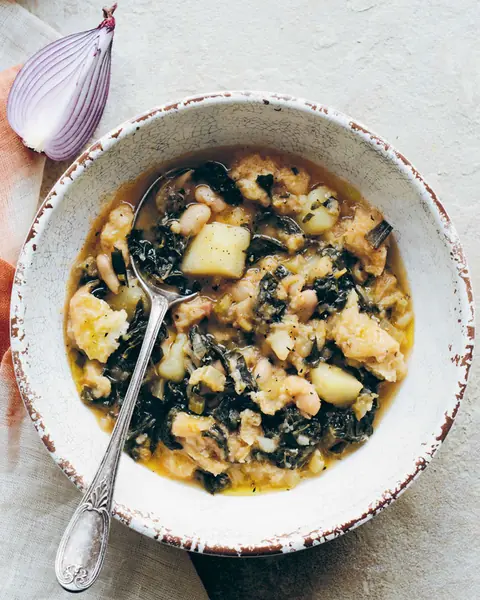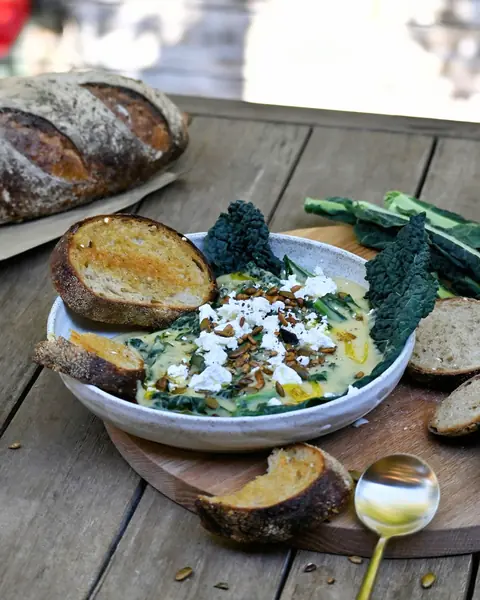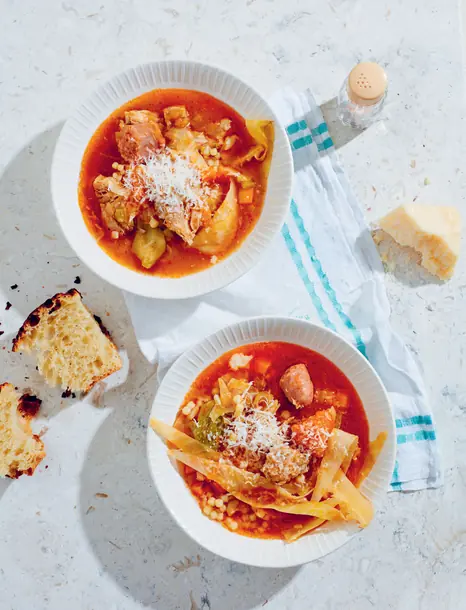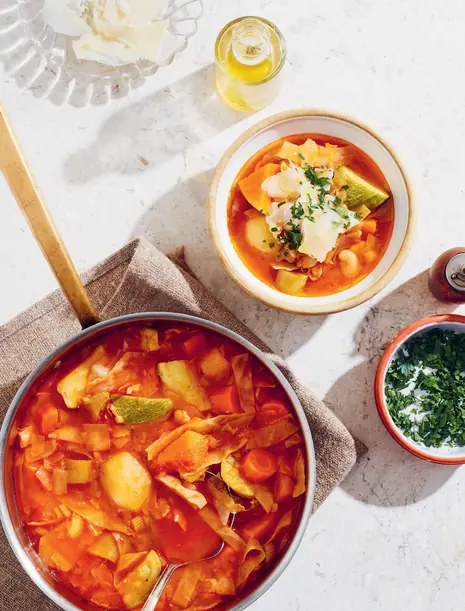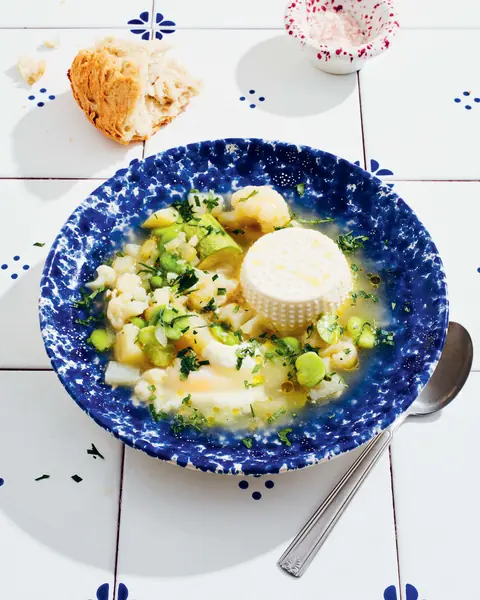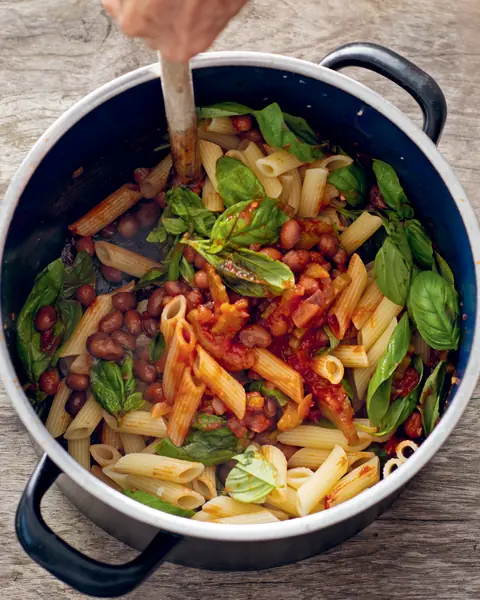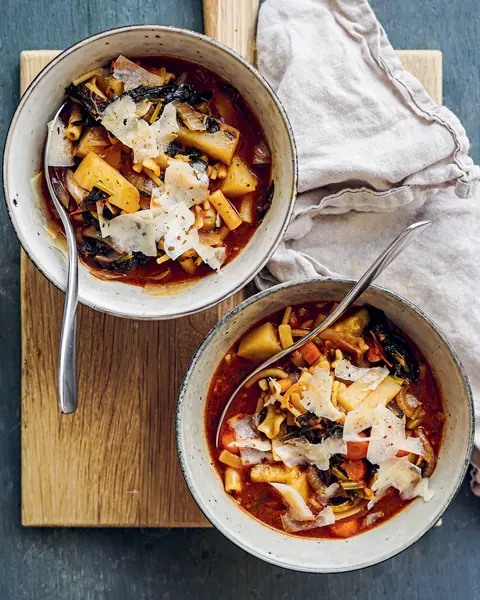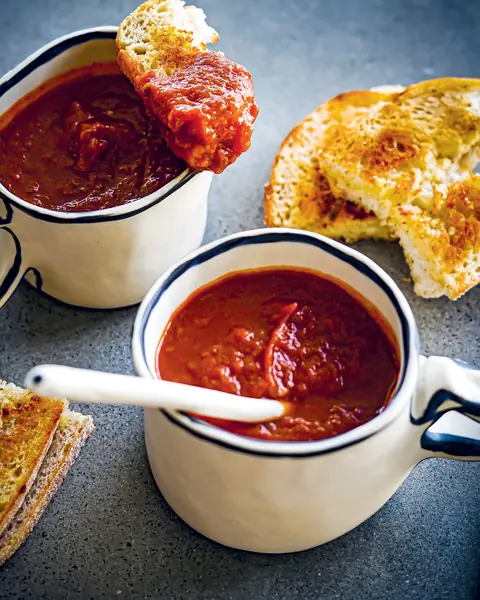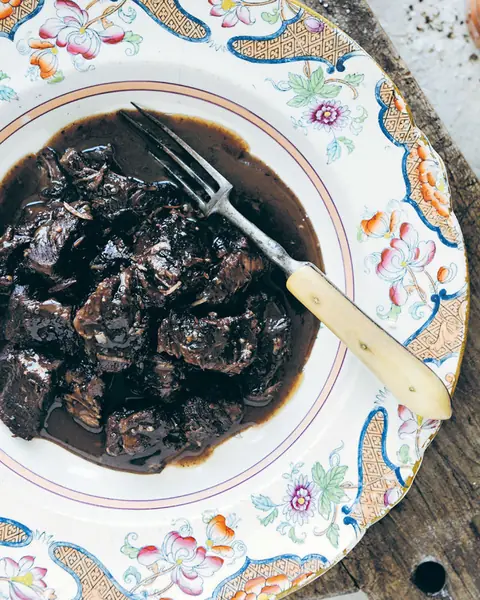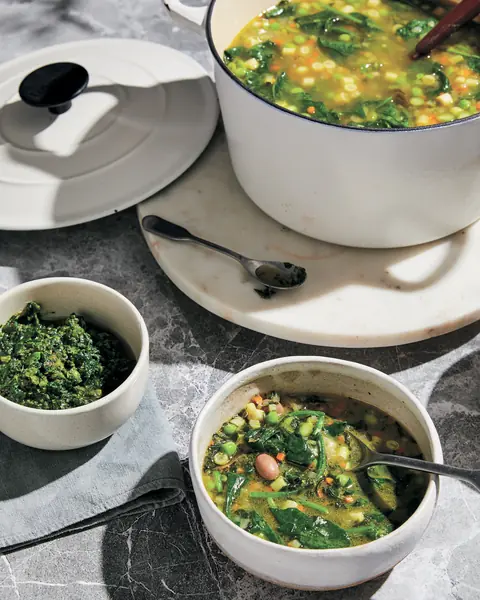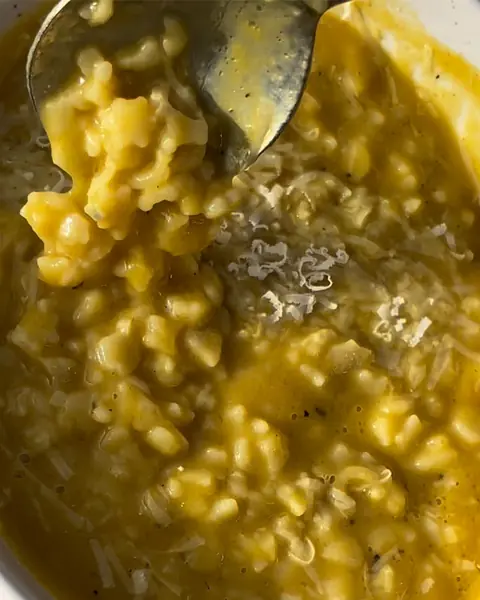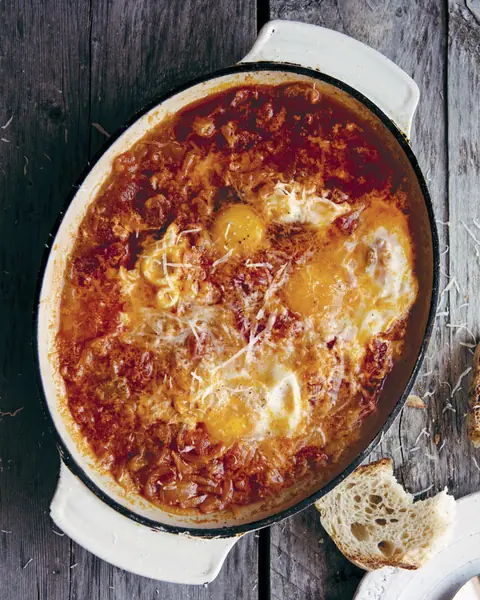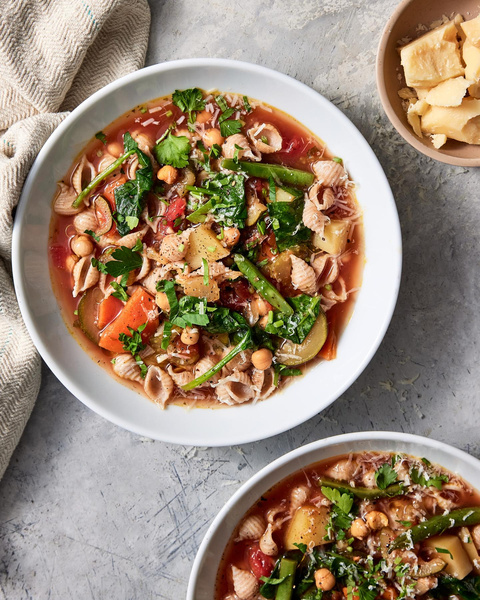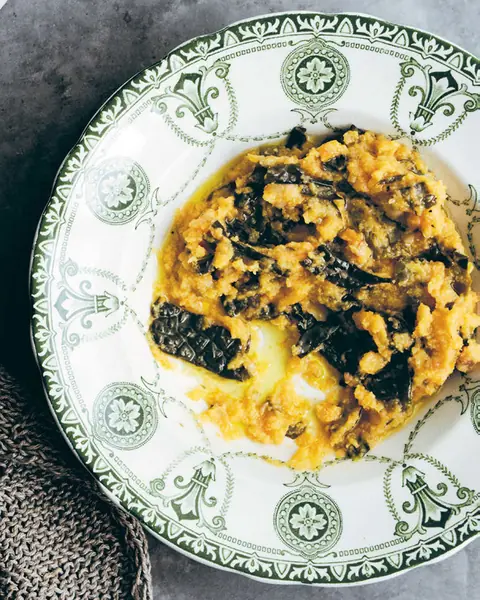
This soup is quite different to the famous farro soup of Lucca that most Tuscans know so well, in which the beans are blended into a creamy purée, making a very thick, hearty soup to warm you to the core in cold weather. Better suited to the warmer months, this farro soup can be served as a cold dish. It’s refreshing, light and nourishing, just perfect for summer eating. However, when served hot, this soup is brothy and warming, ideal for inter-seasonal weather, such as a chilly spring evening. It’s versatile that way. Overnight, the farro soaks up all the broth, and the resulting cold mixture becomes more like a farro salad, delicious eaten just as is with a swirl of olive oil and an extra grind of black pepper over the top.
Ingredients 10
Your new home
for cooking
Turn your recipe chaos into a plan for the week.
Browse 1000+ inspiring creator recipes
Unlimited recipe import from social media, blogs and more
Generate shopping lists and meal plans in seconds with AI
Method 4
Combine the chopped , , and with the and a pinch of salt in a saucepan and put over the gentlest heat you have. Cover and cook slowly for about 20 minutes, stirring and checking occasionally. If you find the vegetables are sticking rather than sweating, you can add a splash of water.
Add the and toss through the , , and . Let the farro toast, stirring, for 1 minute, then add the . Bring to the boil, then simmer on medium heat until the farro is tender, usually about 35 minutes. (Check the instructions on the packet; different kinds of farro have different cooking times.)
Add the drained and (if you find it’s not brothy enough at this point, you can add some more water) and continue cooking for 5 minutes. Check for seasoning, and add salt and pepper to taste.
When served warm, it’s very good with freshly grated over the top (if desired), along with the obligatory drizzle of and plenty of freshly cracked black pepper.

Emiko Davies's tips
Farro (emmer) is a confusing ingredient outside Italy, as there are several different varieties, names and sizes. The naming of grains differs from country to country, so look for farro imported from Italy – Tuscany is a particularly important producer. And try to get farro that is semi-pearled or pearled. This means that the husk is partially or fully removed, which reduces the cooking time greatly. Pearled farro does not require soaking before use and has the quickest cooking time; if you have semi-pearled farro, you can soak it overnight to reduce the cooking time if you prefer (without soaking, it may take up to 35–40 minutes to cook).
Notes
5