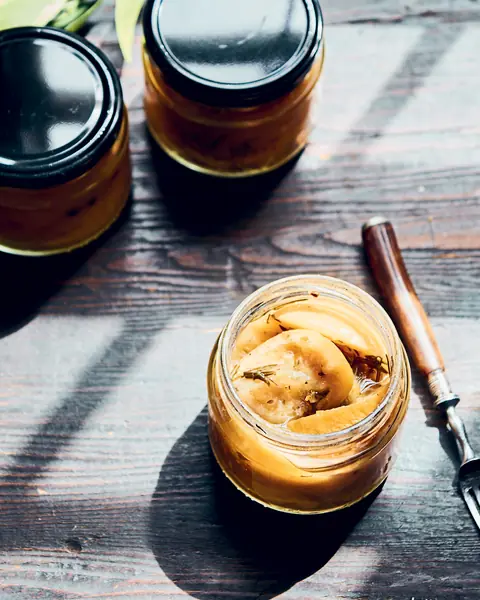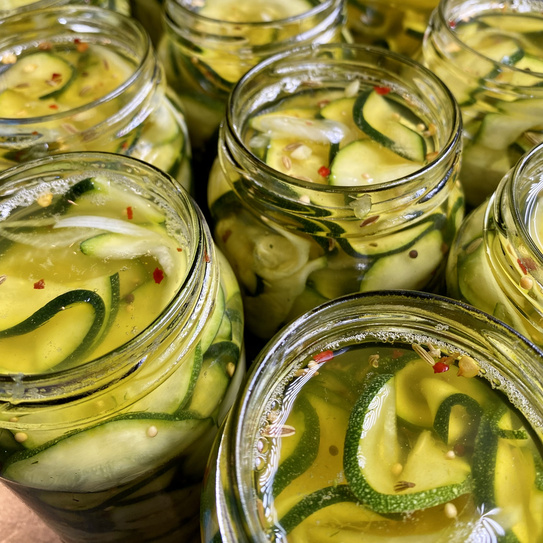
This tastes exactly like sushi train ginger, only better! The ginger reacts to the vinegar and salt and turns a very pretty pink. Use this pickle thinly sliced through noodle salads, stir fries, in dipping sauces or with sushi or fish.
Ingredients 4
For The Brine
Your new home
for cooking
Turn your recipe chaos into a plan for the week.
Browse 1000+ inspiring creator recipes
Unlimited recipe import from social media, blogs and more
Generate shopping lists and meal plans in seconds with AI
Method 12
There is no need to peel the , just give it a good wash to remove any dirt.
Slice the as finely as you can, using a very sharp knife or mandolin.
Place the slices in a bowl, sprinkle over the and mix it through with your hands. Leave to stand for an hour or so.
Meanwhile, sterilise your jars and lids (see Sterilising Jars step below).
Strain any excess liquid from the slices, discard the liquid, then place the slices on a clean paper towel or tea towel and press out any excess and moisture.
Make your brine by combining the and in a small non-reactive saucepan over low heat. Stir to dissolve the sugar, bring to simmering point then turn off the heat.
Pack the into the sterilised jars.
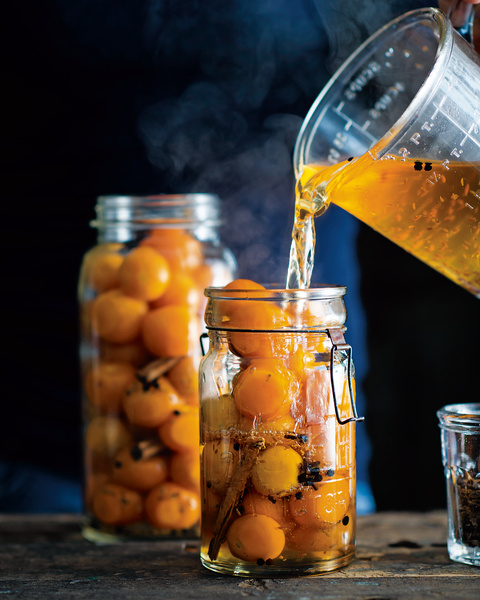
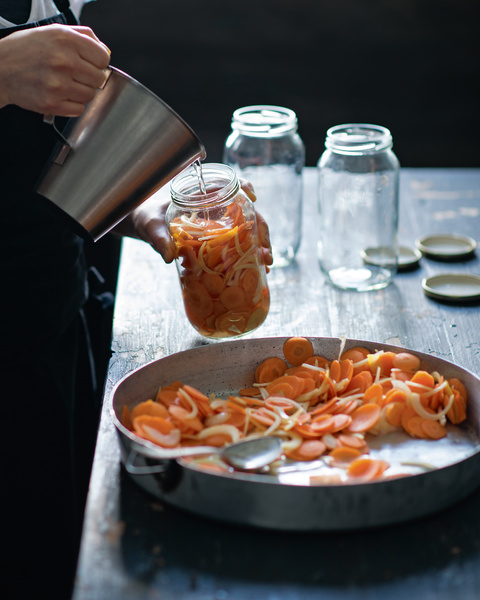
Pour the hot brine over the slices, making sure they are completely submerged.
Remove any air bubbles by gently tapping each jar on the work surface and sliding a clean butter knife or chopstick around the inside to release any hidden air pockets. Wipe the rims of the jars with a paper towel or clean damp cloth then seal immediately.
Leave to cool on the benchtop, then store in a cool dark place for up to 3 months, or the fridge for up to 6 months. To extend storage in the pantry for up to 2 years, follow the heat processing step below. Once opened, store in the fridge and use within 6 months.
Sterilising Jars
You will need 1-2 small jars. Give them a wash in hot soapy water and a good rinse, then place upright in a baking dish in a cold oven. Heat the oven to 110°C. Once it has reached temperature, leave the jars in the oven for 10–15 minutes or until completely dry, then remove them carefully. Let the jars cool slightly before adding your ginger slices. To sterilise the lids, place them in a large saucepan of boiling water for 5 minutes, then drain and dry with clean paper towel, or leave them on a wire rack to air dry. Make sure they are completely dry before using.
Heat Processing
If you want to extend the shelf life of your pickled ginger before you open it, you can heat process the jars. Get the biggest pan you have, such as a stockpot, and put it on the stovetop. Lay a folded tea towel in the bottom of the pan, then sit your filled, lidded jars on the tea towel. Make sure your lids aren’t on too tight! Pour in enough warm water to cover the jars, either completely or at least until three-quarters submerged. Bring to the boil over medium heat and simmer for 15 minutes Carefully remove the hot jars from the water using preserving clamps or a very thick cloth. Line your jars up on the benchtop and let them sit overnight. As they cool, a vacuum will form inside each jar and suck down the lid, sealing them securely. These jars can be safely stored in the pantry for up to 2 years.

Cornersmith's tips
Young ginger can be found at the beginning of the season, and turns hot pink! The older the ginger, the less bright the colour will be, but it will still taste just as delicious.
If the ginger is a bit older and skin is tough or gnarly peel it before pickling.