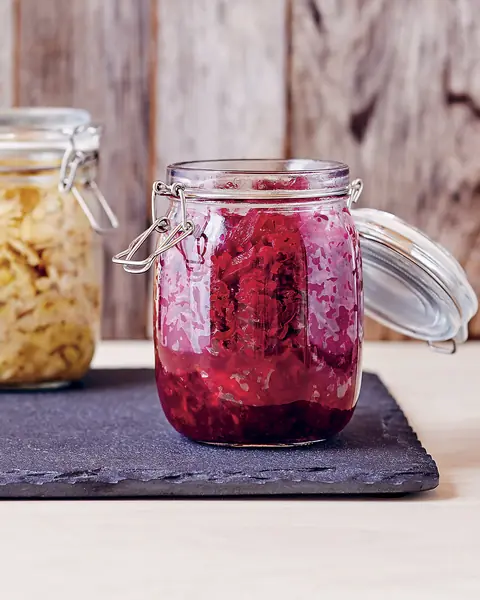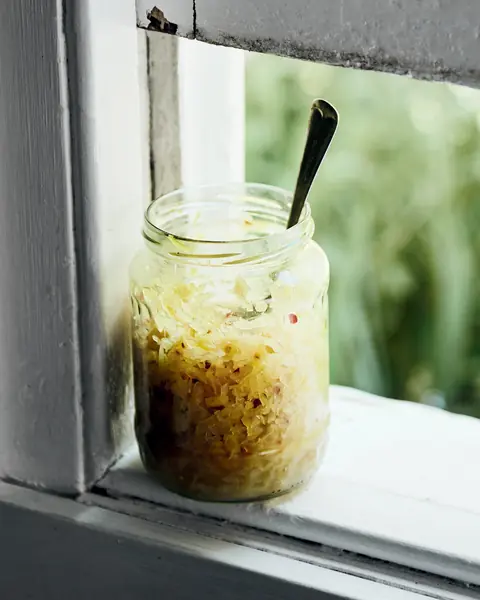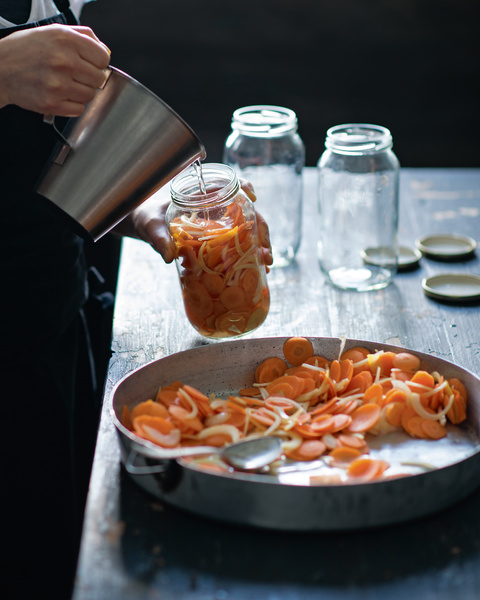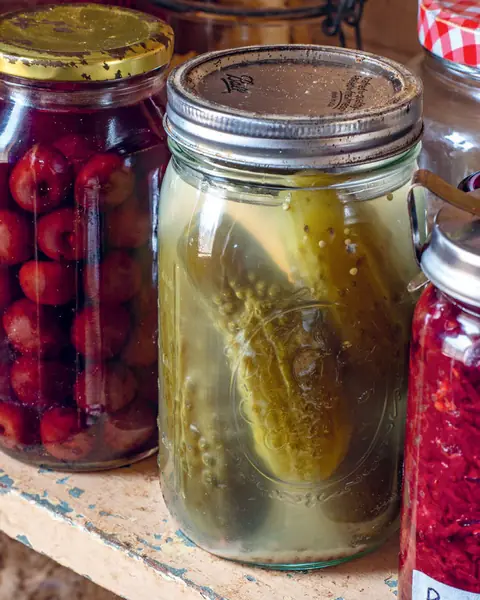
One of the first things Tori taught me to make was sauerkraut, and it was the beginning of a long-time love affair with cabbage. Good sauerkraut is just a perfect balance of salt and cabbage and time.
We know it’s safe because we’re creating favourable conditions for the microorganisms and bacteria to preserve and transform the food while out-racing (and smacking down) putrefying bacteria, which would cause it to spoil. Salt, too, is key in slowing down pathogenic bacterial growth, long enough for lactobacillus and the ‘good’ bacteria to build up and be self- protective.
Makes 1 x 1L jar or 2 x 500ml jars.
Ingredients 2
Your new home
for cooking
Turn your recipe chaos into a plan for the week.
Browse 1000+ inspiring creator recipes
Unlimited recipe import from social media, blogs and more
Generate shopping lists and meal plans in seconds with AI
Method 9
Clean and dry all the jars.
Reserve half a cabbage leaf per jar for submerging the kraut. Thinly slice the and sprinkle on according to its weight (we’re using a 2 per cent ratio; or 1 tablespoon of salt to 1 kg/2 lb 3 oz cabbage).
You can mix it roughly with your hands, and then go do something else for 15–30 minutes. (We never do this, we start ‘krauting’ straight away, but I thought it was friendly to tell you that you could.) The combination of and time will start drawing the juices out of the .
Massage the into the and massage or pound the vegetables until they begin to release liquid and look like they’re in a small cabbage juice pond.
Fill each jar to within 3 cm (1¼ in) of the top, compacting the as much as possible with a spoon or your fist so you squeeze as much into the jar as you can. The cabbage should be covered in liquid. Top up each jar with the remaining sauerkraut juice from the bowl.
Fold the halved reserved cabbage leaves and push into the jar, providing a means to keep the contents below the water line. You may also like to place a plastic bag filled with brine solution or wedge a carrot between the cabbage leaf and the lid to keep the vegetables submerged.
Put the lids on tightly.
After approximately 3 weeks – a typical time frame based on room temperature – taste the sauerkraut for the desired sourness. The cooler your home, the slower it will ferment; the warmer your home, the faster it will ferment.
Refrigerate when it’s done, and enjoy with those you love! It’ll last for at least 6 months in the fridge (except it won’t – you should eat that stuff! YUM!)

Buena Vista Farm's tips
An important note: you HAVE to keep ferments like krauts and kimchi under their own liquid to prevent mould spores from attacking the food. If you are running out of liquid, make a 1–2 per cent brine solution to top it up.