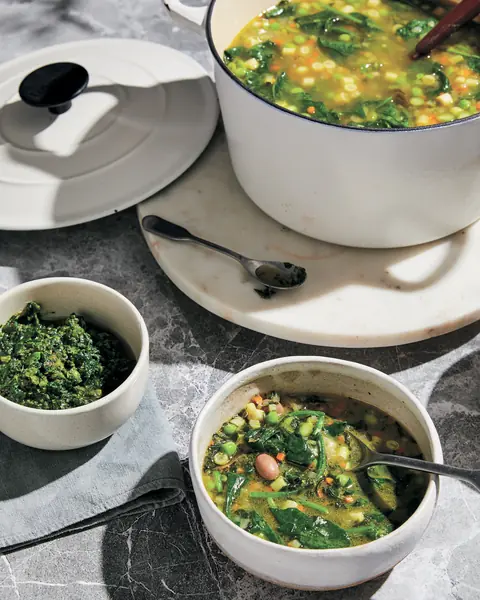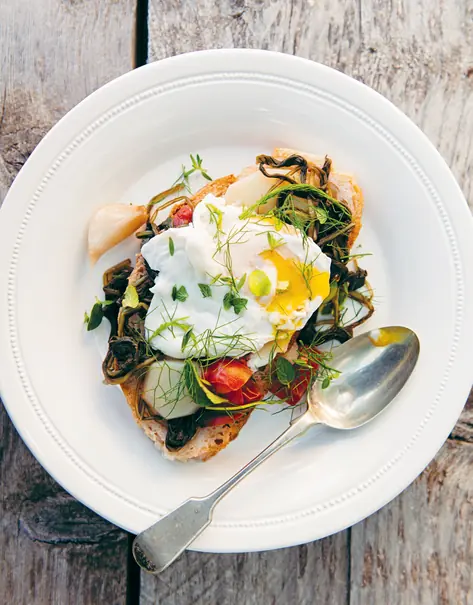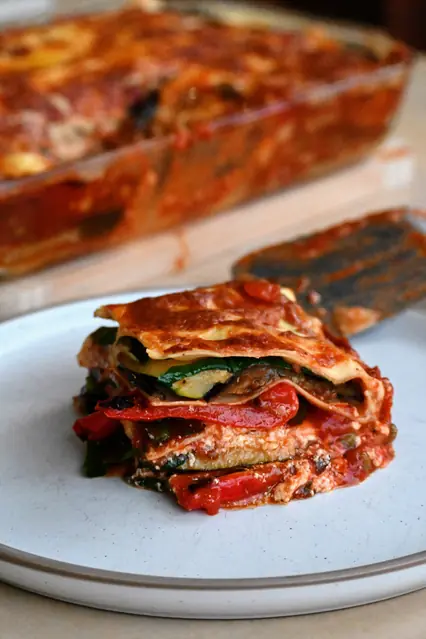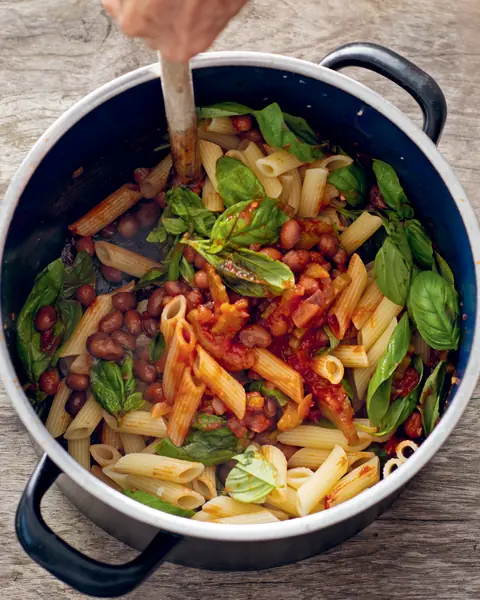
Minestrone dell’Orto (Vegetable Patch Minestrone)
Soup, or minestra, has long had an important place on Tuscan tables. A vegetable minestrone would be the typical meal on fasting days leading up to big Catholic holidays like Easter Friday and Christmas Eve – or, traditionally, simply on Fridays in general when meat was avoided and either fish or vegetables took centre stage.
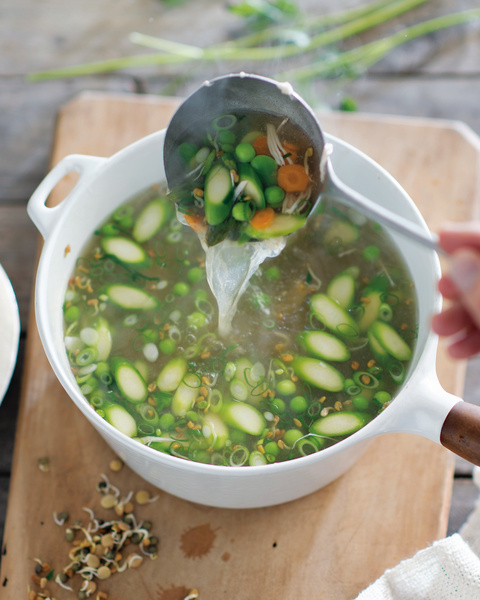
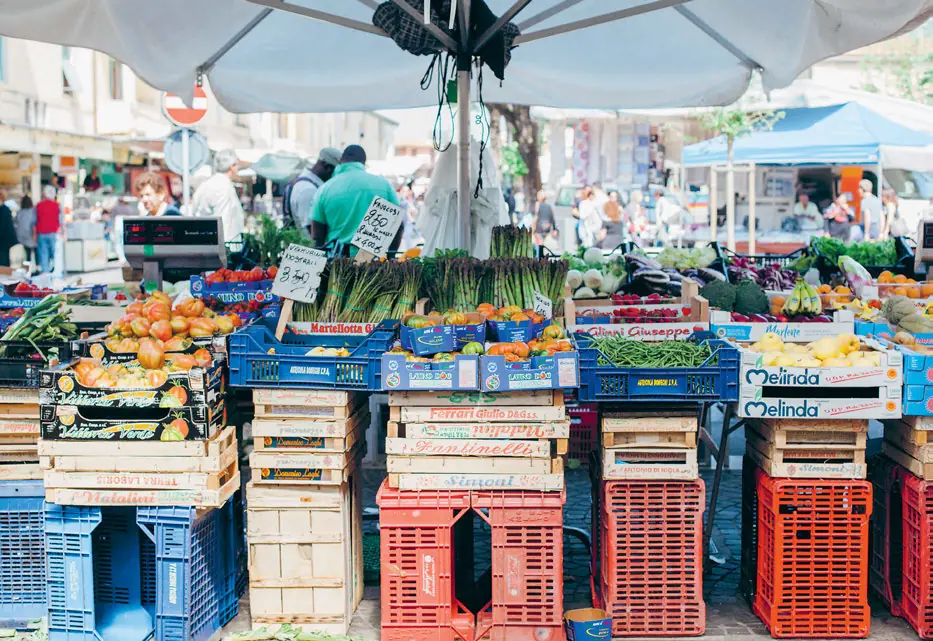
Minestrone is such an adaptable soup recipe, but the idea is to take advantage of the freshest seasonal ingredients springing out of the vegetable patch (or appearing in the farmers’ market) rather than looking at it as an opportunity to clear out the sad-looking scraps at the bottom of the crisper drawer in the fridge.
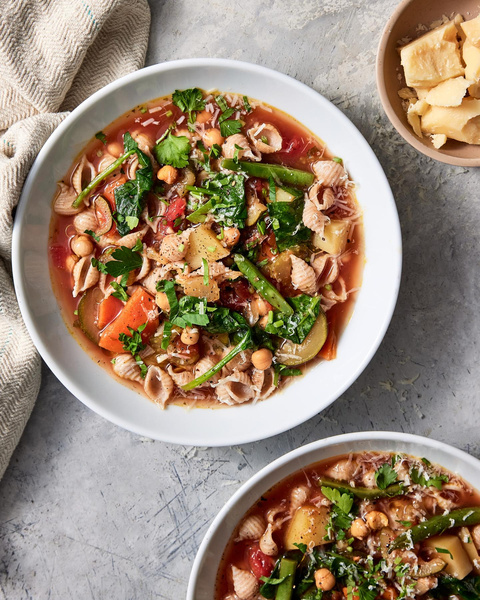
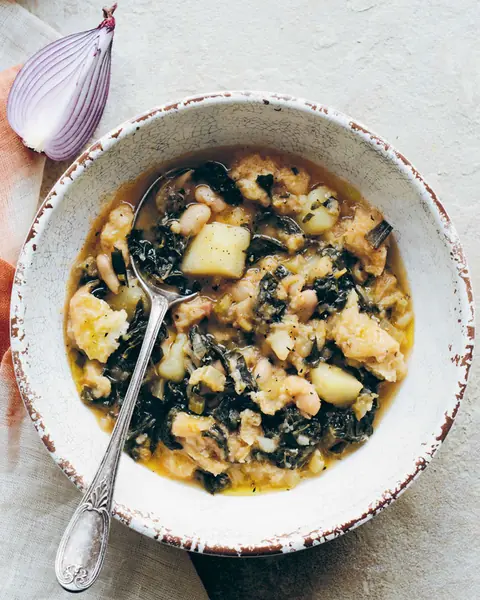
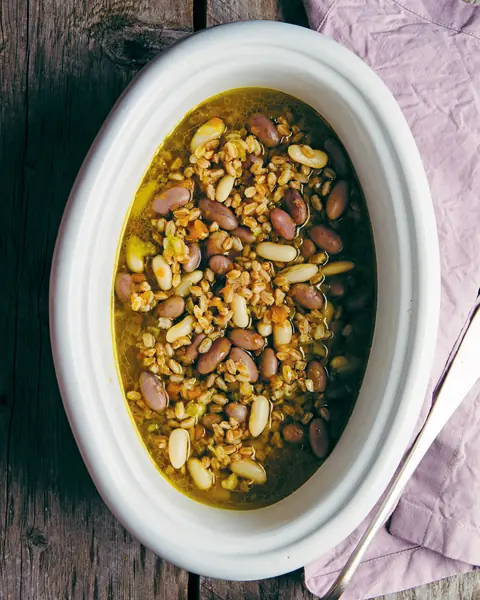
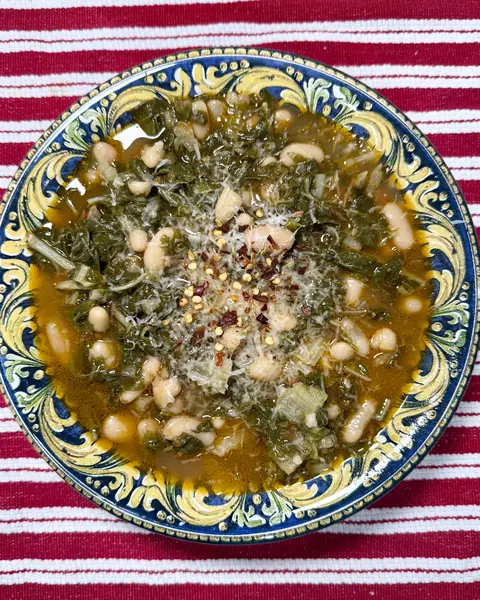
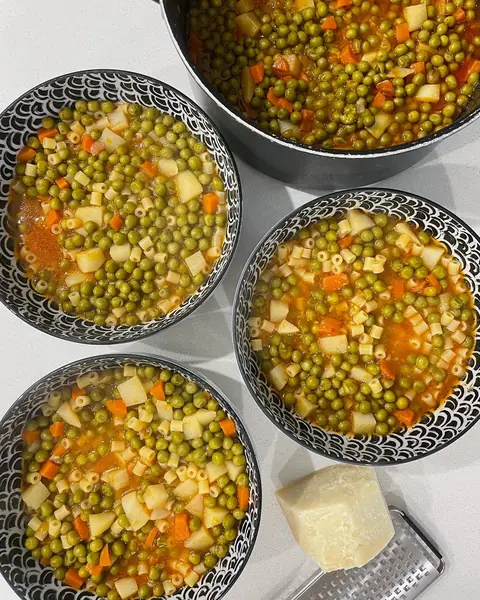
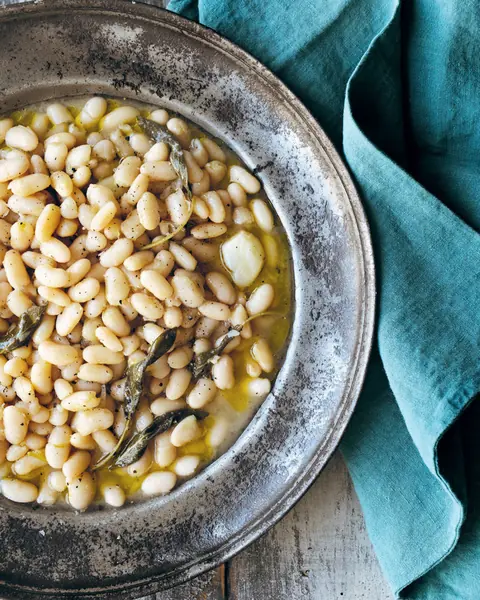
This recipe is my favourite minestrone, but merely a suggestion to work from. Use fresh peas, artichokes or asparagus in spring; basil, zucchini (courgettes) and fresh rather than tinned beans in the summer; pumpkin (squash) in the autumn, and root vegetables and dark leafy greens in winter. You can use chickpeas, lentils or cannellini beans in place of the borlotti (cranberry) beans. Leave out the pancetta to keep it vegetarian, if desired. If you want to make this more substantial, you can use beef broth rather than vegetable stock. If you want something lighter, you can also leave out the starchy things, such as the beans, pasta or farro.
Ingredients 18
2 ‒ 3 tbsp extra-virgin olive oil, plus extra for drizzling
3 slices pancetta, chopped
Sprig flat-leaf parsley (Italian), stalks and leaves roughly chopped
2 garlic cloves, 1 finely chopped, 1 left whole
1 onion, small, finely chopped
1 carrot, medium, chopped
1 stalk celery, chopped
2 bay leaves, fresh or dried
1 potato, small, cut into 1 cm (1/2 in) dice
2 handfuls greens, big, rinsed, roughly chopped
125 g peas
1 zucchini, cut into 1 cm (1⁄2 in) dice
400 g borlotti beans, cooked, tinned, drained
200 g tinned whole tomatoes, peeled, roughly chopped
1 l vegetable stock
50 g soup pasta, small, such as risoni or stelline
Slice toasted bread, 1 per bowl, optional
parmesan, finely grated, to serve, optional
Your new home
for cooking
Turn your recipe chaos into a plan for the week.
Browse 1000+ inspiring creator recipes
Unlimited recipe import from social media, blogs and more
Generate shopping lists and meal plans in seconds with AI
Method 4
Heat the in a large stockpot over a low heat and add the , and . Cook gently for 1–2 minutes. Add the , , and , along with a generous pinch of salt and some freshly ground black pepper, and continue cooking until the onion begins to become translucent and soft but not coloured, about 10 minutes. Add a splash of water or if the vegetables seem to stick or the onion begins to colour.
Add the rest of the vegetables, the , and the . The vegetables should be covered but, if not, add some water to cover. Increase the heat to medium and bring to an active (but not furious) simmer and cook, uncovered, for about 30 minutes, or until the stock has reduced slightly and the vegetables are tender (note that certain vegetables are more delicate and require a shorter cooking time – for example , asparagus, spinach; you may prefer to add these towards the end of the cooking time along with the ).
Drop in the for about the last 10 minutes of the cooking time (the farro can go in from the beginning). Check for seasoning and adjust as you like.
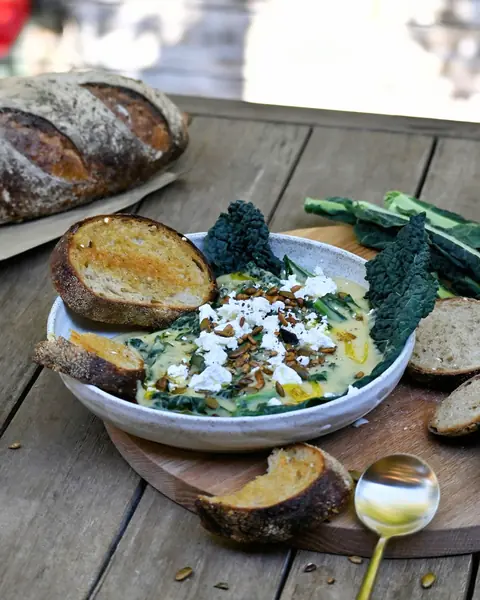
Serve the minestrone with a piece of (rubbed with the whole if you like) in the bottom of the bowl and sprinkle over some grated parmesan, if desired, and a drizzle of .

Emiko Davies' tips
I always like to add the hard rind of parmesan when you can no longer grate anything else from it; I keep a stock of them in my freezer. It adds lovely flavour and, when it’s softened after simmering in the soup, you can eat it, too. If you have one, throw it in.